

Humanity is watching with bated breath the developments on the Israel-Iran front. Global security is at great risk. The interconnection of hot or cold fronts on the great planetary chessboard, combined with the tactical moves of the great powers, can cause the expansion of conflicts, even if this scenario is one that everyone declares they want to prevent.
The tactical moves of the great powers seek to achieve national goals or to prevent the achievement of the goals of their opponents, as this would harm their own interests. The situation that has developed gives the feeling of global involvement – but not conflict – which by definition contains the seed of escalation.
Compared to World War II, the coalitions may be informally formed and there may be differences within them on both sides, but one factor is identified as the central issue: A new global status quo, where the US will be the undisputed hegemon. The Eurasian bipolarity of China and Russia is trying to prevent this and the US is trying to promote it!
The “game” with Iran
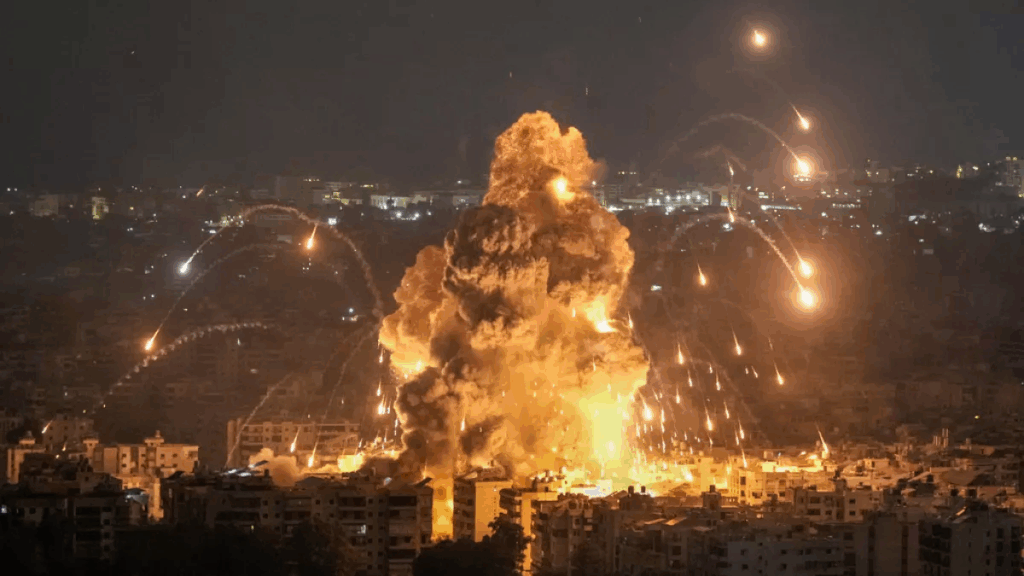
Iran is one of the powers considered “unruly” by the Western world, with a geostrategic position of great importance on multiple levels, which is close to the Eurasian camp. The attempt to acquire a nuclear arsenal ultimately led to a military strike by the geographically tiny but militarily powerful Israel.
The Jewish state has never hidden its certainty that a nuclearized Iran would constitute an existential threat to itself, while committing to prevent this prospect by all means. Typically, preventing Iran from going nuclear is a desirable development for all the major powers on the planet. However, they differ in the intensity of the reaction. Russia and China seem to appreciate that they can live with it if necessary, as in the case of India-Pakistan.
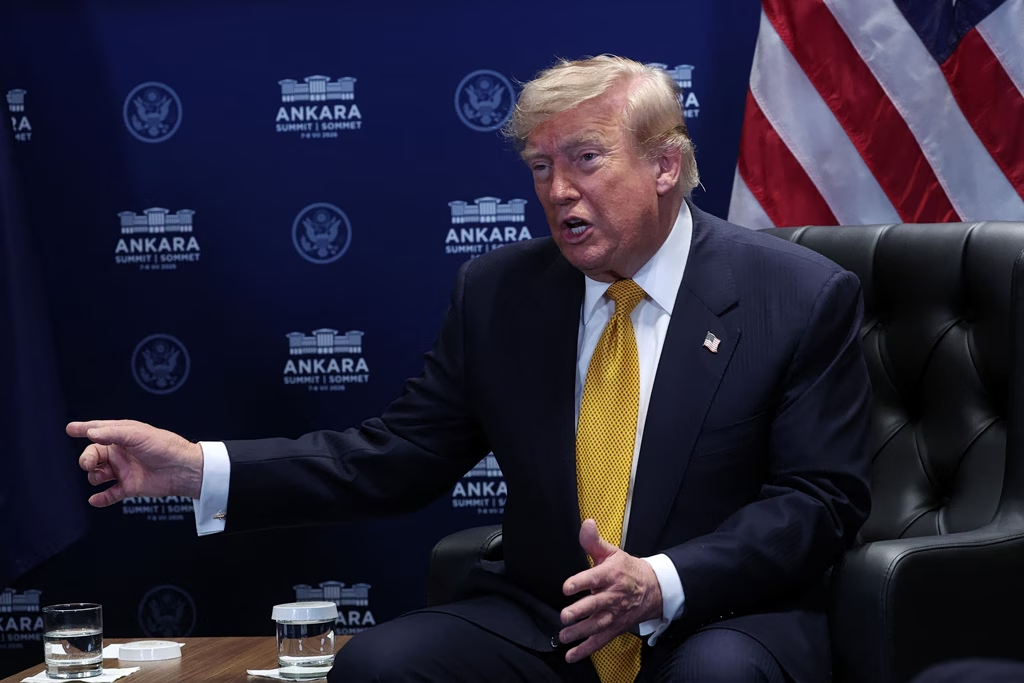
The US, despite its declared opposition to Tehran’s nuclear ambitions, with Trump explicitly “forbidding” it, can hardly be imagined that it would proceed with a military strike to prevent it. However, Israel’s attack acts as an accelerator of developments. A decision that aims to defend its own security dangerously complicates the equation for the great powers, who are called upon to defend their own interests.
In any case, as explained, the competition between the powerful is taking place on a planetary level. Russia and China may not want the collapse of the mullahs’ regime in Iran, but they know that they cannot do much to prevent it. It should be considered certain that they are helping the regime behind the scenes, but their possible direct military involvement could signal a global conflict.
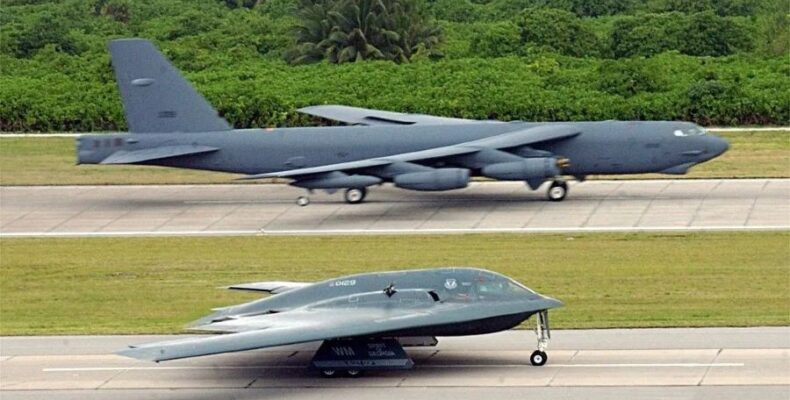
As most analysts correctly conclude, the key point in the outcome of the conflict will be the involvement, or not, of the United States, and indeed for more reasons than the simple possession of the armor-piercing bomb that has the -theoretical, it should be emphasized- ability to destroy the Iranian nuclear facilities located many tens of meters underground.
However, since Israel began to hit Iran hard, destroying military infrastructure, nuclear facilities and “decapitating” the country’s political, military and scientific hierarchy, the case has become much simpler for Washington.
Considering that the chances of Russian and Chinese involvement are very small, President Trump can count on the fact that if he orders the involvement of American forces in offensive operations, he will be credited with protecting Israel, while he will have made a spectacular display of power, which will certainly affect developments in the near future. Power is the most basic “currency” of international relations throughout the centuries.
If the decision is made to engage, which now seems very likely as a scenario, Russia and China can hardly prevent it. However, they can increase the cost of this option for the United States. Russian movements are already being recorded on the Ukrainian front, while weapons and systems that were headed for Kiev were redirected to Israel. Therefore, the Russians on the Ukrainian front are being facilitated.
Just as happened after October 7, 2023, when Hamas’s invasion of Israeli territory was the kick-start that led progressively to the current situation. It seemed from the beginning that Israel considered Iran to be the core of the problem. It proceeded to a massive mobilization of its reserves and began the neutralization of the “arms” of the Iranian strategy against it (Hamas, Hezbollah, Houthis).
The – albeit temporary – neutralization of the ability of the three organizations to strike Israel opened a window of opportunity to turn against Iran. The data from the International Atomic Energy Agency (IAEA) on how close the Islamic Republic was to fulfilling the conditions for building nuclear weapons provided the final impetus. However, the attempt to convince the US to act together against the Iranian regime had failed.
Taiwan
With the attack on Iran, Israel is betting on the already very great damage that it initially estimated it could cause, and on the change of data that – with the appropriate manipulation – will ultimately lead to the involvement of the United States. This is where we are today. The United States is moving forces from the Asia-Pacific region to the Middle East. But what could happen if China considered the situation in the Middle East as an opportunity to move against Taiwan?
A military mobilization would be enough to cause great disruption and concern in Washington. This could be aimed at indirectly contributing to the theocratic regime’s attempt to survive. The goal is not to lose the absorption of almost all of Iran’s oil production at a very preferential price and, in addition, Beijing’s bridgehead in the Middle East.
However, China knows that in order to be effective, the mobilization must convince that the intention to invade Taiwan is real. However, if – with the Ukraine front open – control is lost and such a critical hot spot ignites, the situation will directly point to a global conflict. Does the US have the luxury of leaving Taiwan defenseless? But if they intervene, they will be facing China.
Returning to the Ukraine front, what will happen if at this juncture Russia orders a general mobilization and there is a vertical escalation there too? Given the US involvement in the Middle East and Asia, what are the possibilities of European countries to “assume their responsibilities”, according to the phraseology used by Washington? A Europe that will be threatened with economic disaster since energy prices will likely have skyrocketed as a result of the conflicts.