
We see over time that the liquidity of the geopolitical environment of the Middle East is increasing and expanding outside its geographical context in other areas adjacent to the Middle East such as the Eastern Mediterranean, the outbreak of war between Armenia and Azerbaijan and the influence of Turkey and Iran (both Middle Eastern countries) in North Africa.
The common denominator that is constantly increasing the degree of geopolitical liquidity in the Middle East is the gradual withdrawal of US influence in the Middle East, which decision-withdrawal of the US will continue in its implementation even if Democratic candidate Joe Biden is elected to the US Presidency in November 2020. If Donald Trump is re-elected to the US Presidency, the US withdrawal will take place in a more orderly and hasty manner.
by T.C.
©The law of intellectual property is prohibited in any way unlawful use/appropriation of this article, with heavy civil and criminal penalties for the infringer.

The fact that the US is leaving the Middle East is due to two main reasons. More specifically: First, the US is regrouping and focusing its forces on the Pacific Ocean theatre and China’s halt.
Secondly, US energy self-sufficiency annihilates the degree of dependence of their economy on Middle Eastern oil. So, what the US is interested in is the halt of China and Russia effect equally in the Middle East in every way.
The US geopolitical gap’ in the Middle East is covered by Turkey
The “vacuum” left behind by the US in the Middle East is trying in every way to “fill” Turkey NATO member country by taking the baton from Iran which until the death of General Kasim Suleimani held the lead in infiltration and influence in the countries of the Middle East.
Turkey is already involved in regional wars in the Middle East (Syria, Northern Iraq, Azerbaijan) and in North Africa (Libya) through its mercenary representatives, while at the same time trying to provoke a heated confrontation with two EU member countries, Greece and Cyprus.
At the same time, Turkey is beginning to show its influence in Lebanon by taking the reins (militarily, economically and supportively) towards Hamas, thus sideswiping Iran in Lebanon, which, due to the unaffordable US economic sanctions, was forced to agree in previous months with the US to the placement of a joint acceptance of a Prime Minister in Iraq in exchange for the lifting of part of the economic sanctions imposed on it.
Turkey’s aim is to put all kinds of pressure on Israel by using Hamas for Israel to partly adapt to Turkey’s needs while also being a political satellite.
The fact that the US is ignoring Turkey’s misalities in all these countries is not so much about the fact that they fear Turkey leaving NATO and the West, but about the usefulness of Turkey being used in the future against China by creating another open front within China’s heartland using the 13,5m people Turkish-speaking Uighurs living in heartland of China.
The other front that the US will try to open and maintain with China is its showdown with India over the disputed territories between these two countries located in the Galwan Valley at Ladakh region.
And all these fronts always correspond will have the same importance that had the wars of Vietnam (1955-1975) and Afghanistan (1979-1989) respectively that led the then USSR to “bleed” economically and eventually collapse.

Photo by the website www.wikitravel.org
At the same time, most of the young people and other age groups in the Middle East are below the poverty line and are unemployed. This in itself is a crucial element since these population masses can be the appropriate “matter” for the breeding and giganting of the Muslim Brotherhood movement, Hamas and other radical movements of Islam by directing them to extremist solutions against the governments of the countries they live in.
The fact that current Turkish President Rajip Tayyip Erdogan is claiming the role of “Patriarch” of all these movements and the Muslim world in general in order to be able to put pressure on the governments of Middle Eastern countries in the future was evident recently with the meeting and the accession of Hamas members to the Turkish political “arma”.
It is precisely this tendency of Turkey which through its actions, is creating by rallying against it, the camp opposed to it consisting of heterogeneous forces such as EU member countries (France, Greece, Cyprus) and Middle East states like Egypt, the Sunni states such as Saudi Arabia and the United Arabic Emirates as well as Israel.
In addition, these Middle Eastern states (Saudi Arabia, the United Arabic Emirates and Israel) are trying to thwart in addition to the role of the “father” claimed by Turkey in the region and the other pole of extremist Islam in the region, Iran.
Furthermore, the expansion of Turkey’s influence in North Africa (Libya, Tunisia, Morocco) but also in the Muslim countries of Sub-Saharan Africa such as Mali, Liberia, Congo, Tchad, West Africa, Nigeria etc. necessarily puts France at odds with Turkey.
The country that will largely judge with its stance on whether Turkey will succeed in prevailing as a country of influence in the Middle East is Israel. In the current period, due to the future disposal and sale of Israeli hydrocarbons in the huge EU market, Israel is in the same camp as the EU member countries (France, Greece, Cyprus), Egypt but also with the Middle Eastern Sunni states Saudi Arabia and the United Arabic Emirates to halt, among other things, Iran’s influence in the region.

Photo by the website www.thelevantnews.com
But in Israel there are political forces that want greater convergence and cooperation with Turkey. The political landscape in Israel is unclear since a large portion of the Israeli electorate does not in any way want Benjamin Netanyahu not only in the seat of Israeli executive power but also in the political scene of the country.
These political forces will become even more powerful when Hamas increases attacks on Israel’s heartland, prompting Hamas from Turkey.
The most destabilizing factor in the Middle East
The factor that will completely destabilize the current context of the Middle East is the drastic reduction in the potential for exploitation of energy resources in the Middle East and the Eastern Mediterranean, respectively.
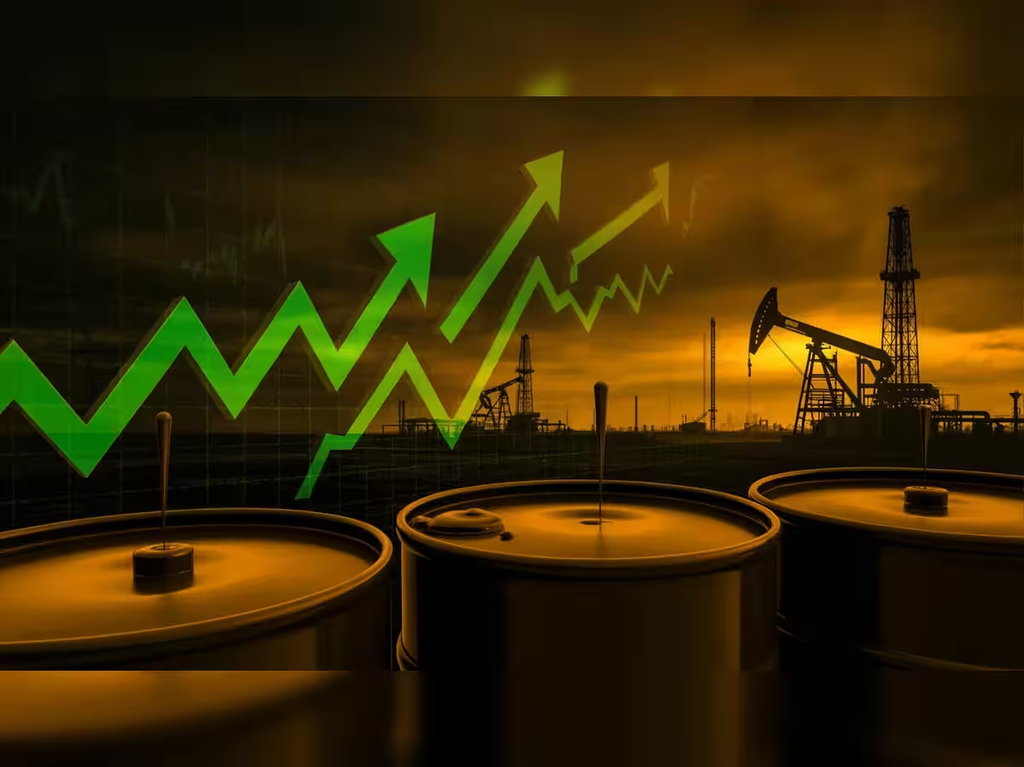
More specifically, the US energy self-sufficiency in natural gas and oil is urging it to drastically reduce oil demand from the Middle East. And the drastic decline in the price of oil which moves in a price corridor $43,01-$45,85 (prices for Crude Oil and Brent on Wednesday 2, 2020) per barrel will not change as the US tries to bring Russia and Iran to its knees economically since their main export product being hydrocarbons and their derivatives.
At the same time, global demand for oil will fall further in the future with its price expected to fall more due to the EU’s political decision to implement the green transition to the EU economy and its increasing economic “detoxification” on the use of hydrocarbons.
The above findings make us believe that countries where the composition of their GDP production is primarily based on the extraction, processing, disposal and sale of oil will most likely experience great political and social destabilisation, namely states such as Saudi Arabia, the United Arabic Emirates and Egypt, which countries in this scenario will then request huge loans and financial support from their Western Allies (US, EU, UK, Canada).

Photo by the website www.moderndiplomacy.eu
These financial supports will be required to initially stabilise their economies and then to be able to move to other ways of economic development and beyond the sale of oil. If the West refuses this financial support, this “gap” will be filled by China asking these countries for political, economic, and military considerations.
But until this future prospect becomes a reality, today’s anti-Western Islamic nationalism will be constantly expanding due to the massive poverty of large populations of Middle Eastern countries, in turn fueling these impoverished population masses of willing mercenary “warriors” so that countries such as Turkey and Iran can extend their geopolitical and military power throughout the Middle East.
The geopolitical solution
The only solution in this future is the EU’s active involvement and penetration in the Middle East and the Eastern Mediterranean due to the ever-increasing geopolitical problems that the EU will face in these regions of the world.
Only in this way the EU will be able to largely fill the “geopolitical gap” left by the US in the Middle East and Eastern Mediterranean respectively while managing to halt the expanded influence of Russia and Turkey, respectively.
This objective, of course, EU will be achieved by the re-emerging its relations with Russia, inviting Russia to participate in a collective security framework for Europe. This proposed policy now finds fertile ground because of the UK’s departure from the EU and the fact that the two main EU member countries, Germany, and France, want it equally.
At the same time, France, by supporting the two EU member countries Greece and Cyprus both militarily and through bilateral security agreements in the Eastern Mediterranean manages to penetrate the Eastern Mediterranean region and the Middle East by halting Turkey’s action.

Photo by the website www.thenational.ae
This is due to the fact that French energy companies have obtained oil extraction licenses from Greece and Cyprus, while historically the Geopolitical European sphere of influence of France, the so-called “living space”, includes in addition to Germany, the Benelux countries (Holland, Belgium, Luxembourg) and the Iberian peninsula, Italy, Greece and Cyprus if France wants to have stable presence in the Eastern Mediterranean Sea and Middle East respectively.
In addition, French President Emmanuel Macron plans to visit Iraq, Northern Iraq, and Lebanon during this week, indicating the EU’s tendency through France to gradually increase its influence in the Middle East.
On the other hand, Germany, using its global political and economic weight, is trying through the EU to use all available economic, political and trade levers of pressure (sanctions) to pressure the weak economically and politically Turkey to limit its expansionary aspirations to the geopolitical areas from which the trade corridors for the transport of natural gas and oil in the Eastern Mediterranean and the Middle East to the EU will pass in the future.
The future is bleak, but it can change for the better for everyone if the right strategy-policy is implemented in the Middle East.