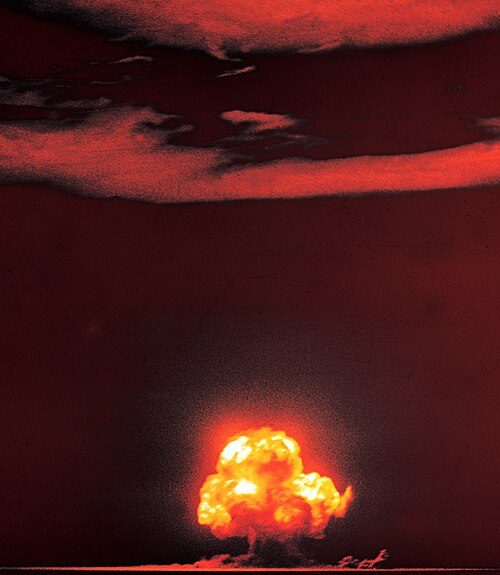
In California, the military is training local leaders and simulating attacks on critical infrastructure, warning that Beijing’s first strike could strike the “heart” of American aerospace power. The nightmare of a US-China war is no longer a theory; it is a date that is counting down.
The US is “testing” the dark scenario of California!
In fact, the US military is preparing for the possibility of Chinese strikes in California and is warning local authorities. Earlier this month, U.S. Air Force Lieutenant General Doug Wickert summoned local government leaders to Edwards Air Force Base in California to inform them that:
“If China attacks Taiwan in the next few years, you should be prepared for the region to experience very large-scale disruption, right from the start.”
In a briefing note posted on the base’s social media pages and a related press release, Wickert—one of the U.S.’s most experienced test pilots and now commander of the 412th Fighter Wing—described China’s rapidly growing military power and its preparations for a major conflict.
Reconfiguring weapons factories
As he explained, the most advanced American aircraft being built in California’s greater Aerospace Valley—including the B-21 Raider bomber, which will replace the B-2—are critical to deterring Beijing.
But if deterrence fails, Wickert warned that China will likely strike the United States—including the nearby Northrop Grumman factories that build these strategic aircraft.
U.S. military engineers are already working feverishly to rebuild runways, some dating back to World War II, in the Philippines and at various locations in the Western Pacific.
China dominates from the Arctic to space – The US in a historic survival test
Meanwhile, American generals warn that the US empire is creaking dangerously — not just geopolitically, but now militarily as well. As Beijing invests massively in cutting-edge technologies, drones, naval power and cutting-edge weapons programs, Washington is drowning in a crisis of “readiness” and productive weakness.
The US military leadership publicly admits that it can no longer keep up with the speed and ambition of Xi Jinping, while the People’s Republic of China is pushing all limits in the race for global strategic dominance. The era of unipolar Western dominance is ending — and ending with a bang.
US at crossroads as China reshapes global military landscape
During a high-level meeting of the Council on Foreign Relations in Manhattan on May 19, top US military leaders delivered a clear and alarming message: the US military is at a historic crossroads. The global battlefield is transforming at breakneck speed as new technologies, emerging authoritarian powers and, most importantly, the People’s Republic of China’s rapid military modernization are upending geostrategic relationships.
“The battlefield is changing as fast as the technology in your pocket. In every domain—from space to the sea, the sky to the Arctic ice—the common thread was clear: If the US does not adapt quickly, it risks being drawn into a new era of strategic competition. And in that equation, no threat looms larger than China.” So said Gen. Randy A. George, the U.S. Army Chief of Staff.
The Chinese Challenge
The panel, which included senior officials from the Navy, Marine Corps, Air Force, Space Force and Coast Guard, focused on the imperative for rapid adaptation amid a “readiness crisis” that has been developing for years. The primary concern: China’s People’s Liberation Army (PLA), which is steadily increasing its technological superiority and operational capability.
“They are undoubtedly spending enormous resources to acquire capabilities,” said Gen. David Allvin, the U.S. Air Force Chief of Staff.
Particular concern was expressed about Chinese advances in naval power, aerospace technology and integrated command and control systems. In response, the The Pentagon aims to accelerate the integration of both manned and unmanned platforms to maintain deterrence and ensure strategic superiority.
The message from Manhattan was clear: the United States must evolve technologically, doctrinally, and operationally — or risk being left behind.
The U.S. Navy’s Dilemma
Although the U.S. Navy maintains a qualitative edge — better-trained crews, more sophisticated systems — its leaders are sounding the alarm about the volume of China’s shipbuilding output.
“I have no doubt about our ships or how we train them and how we use them. But in terms of quantity? That’s the problem. Almost every class of ship we build is behind schedule,” admitted Adm. James W. Kilby, the deputy chief of naval operations.
Kilby expressed deep frustration with the inability of the U.S. industrial base to scale production, especially when China now has the world’s largest navy in terms of ships and exceeds U.S. shipbuilding capacity by more than 200 times.
To bridge the gap, the U.S. Navy is turning to a “hybrid fleet” — a mix of manned warships and unmanned surface, underwater, and aerial vehicles.
“This approach has already paid off in Ukraine,” Kilby noted. Continuing, “There is tremendous value in combining manned and unmanned assets. We are already experimenting with how to effectively integrate them into battle groups.” As China advances, the U.S. Navy is betting on innovation, not just volume, to maintain dominance at sea.
The Drone War: The U.S. and China in a Race for Air Dominance
Drone warfare is fundamentally reshaping modern conflict — and both the U.S. and China know it well. Beijing is deploying the Wing Loong and Chang Hong in conflict zones as well as export markets. In response, the U.S. is changing strategy.
The U.S. Air Force is moving away from aging autonomous systems and toward integrated human-machine teams designed for speed, precision, and lethality.
At a recent Council on Foreign Relations event, the Commandant of the Marine Corps, Gen. Eric Smith, outlined a shift in priorities: a focus on long-range precision strikes and unmanned reconnaissance platforms, at the expense of traditional artillery power.
“The conflicts of the future will be judged on range and detection,” Smith said.
That’s why the Marine Corps has invested heavily in systems like the MQ-9 Reaper — a long-endurance drone equipped with advanced sensors and targeted strikes capability.
Space: The New Line of Defense
“Threats to the homeland are increasing — perhaps more than at any time in a generation,” warned Gen. B. Chance Saltzman, head of Space Operations, describing the new and ominous reality for the U.S. Space Force.
Speaking at a recent defense forum, Saltzman stressed that space is no longer a neutral haven. The PLA has developed sophisticated anti-satellite weapons designed to “nullify” U.S. access to satellite systems — systems that for decades have powered everything from military operations coordination to GPS and weather forecasts.
To address this rising threat, the Space Force is investing in “Golden Dome” — a next-generation initiative to defend the homeland from attacks originating in space.
Saltzman argued that the cost is justified by the seriousness of the stakes: “We must prepare for the worst day the United States could face — when adversaries unleash their most advanced weapons on us, even from orbit.”
As the PLA turns space into a frontline of conflict, the US Space Force is accelerating to ensure that America is not caught off guard in the vast expanse of space.
Arctic: Ambitions on the Ice but Margins… Melting
At the same time, in the far North, US readiness in the Arctic is weakening, as Russia and China are systematically increasing their presence in the region.
“We are at the lowest level of readiness since World War II,” warned Adm. Kevin Lunday of the US Coast Guard, citing underfunding and a shortage of icebreakers and patrol ships. The Arctic, he stressed, is becoming a strategic theater — where US presence equals power.
As an Arctic power, the US must strengthen its capabilities, with icebreakers at the core of that mission. The Coast Guard is actively seeking to expand its fleets to meet growing threats.
Without immediate investment, Lunday noted, the US risks “strategic failure” in a region critical to future trade routes, energy security and the geopolitical conflict between great powers.
The Big Taiwan Issue
One date is increasingly appearing in military analyses: 2027 — as a potential point of escalation for Chinese action against Taiwan.
Although Beijing has not announced an official timeline, U.S. military planners see it as a potential window for conflict.
“Time is of the essence,” Kilby said. “It’s a factor that is often underestimated — but it shouldn’t be.”
The Pentagon’s response is not to prepare for a battle, but for a new type of war: fast, decentralized, and deeply interconnected across all domains. The Air Force’s investments in unmanned systems, flexible bases, and mobility reflect this transition. “The war of the future is not about numbers — it’s about speed and coherence,” Gen. Allvin emphasized.
The American Advantage: Experience and Interoperability
Despite China’s rise, U.S. military leaders tout one major American advantage: battlefield experience.
“Our last war was recorded on an iPhone 14. Theirs is painted on oil and canvas,” Gen. Smith quipped, noting the PLA’s complete lack of combat experience.
In contrast, American forces bring decades of hard-won knowledge from Iraq, Afghanistan, and beyond — and have proven their ability to operate together, across branches. That operational coherence, the generals say, remains a key advantage.
Can Asia Help? The Strategy of Collective Deterrence
Chinese aggression has achieved what diplomacy could not: it has brought the Indo-Pacific together.
From Tokyo to Manila, and from Canberra to New Delhi, regional powers are gradually aligning around a common concern — and a common opportunity. With the right investments and diplomatic maneuvers, Washington can harness this momentum to build a stronger, united front.
No country can balance China alone. But together — through shared technology, shared training, and collective deterrence — the United States and its allies can shape a regional order based on stability and resilience. In the end, perhaps the most powerful weapon is not the missile or the drone — but unity.