




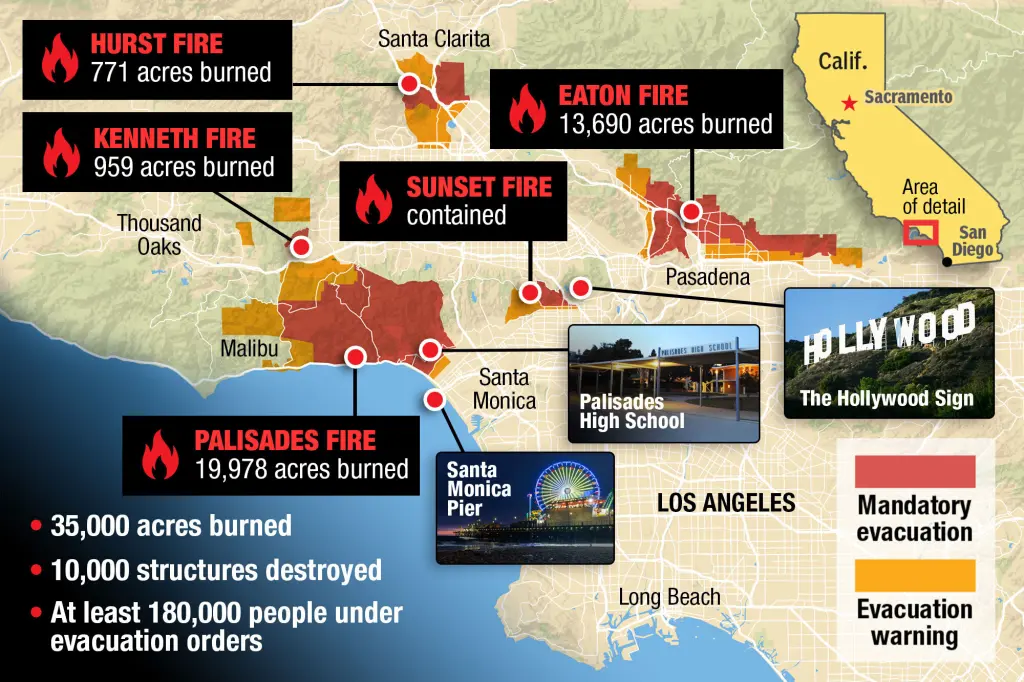
Fires have not been uncommon in the greater Los Angeles area of Southern California, but the total devastation we have seen unfolding in recent days is unprecedented, but also absolutely painful for residents.
What is happening this year is that a cocktail of weather phenomena and chronic problems brought tragedy to the state, which has spent enormous amounts of money on forest firefighting and has the largest fire department in the world.
Despite the fact that the authorities ask residents to prepare in some way, such as by cleaning their yards, many have neglected or ignored the calls.
There are four main causes that caused incalculable destruction and swept away entire communities in a matter of minutes.
1. Uncleared Land (plots)
Before a home is threatened, experts say one of the few fire-prevention steps homeowners can take is to clear it of combustible grasses and brush.
In California, people living in fire-prone areas are required to keep a 1.5-meter (5-foot) zone clear around their homes.
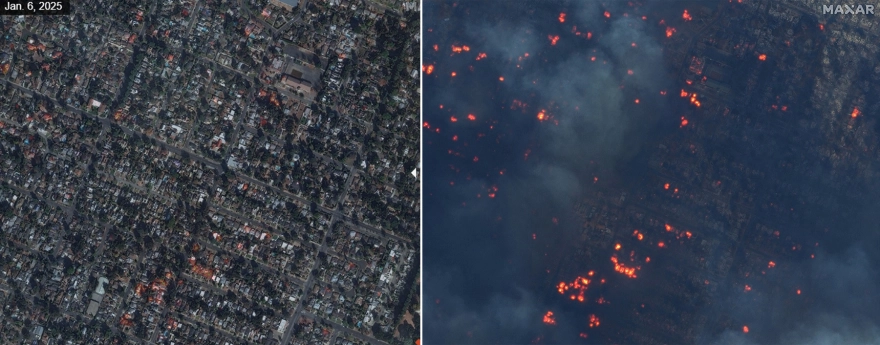
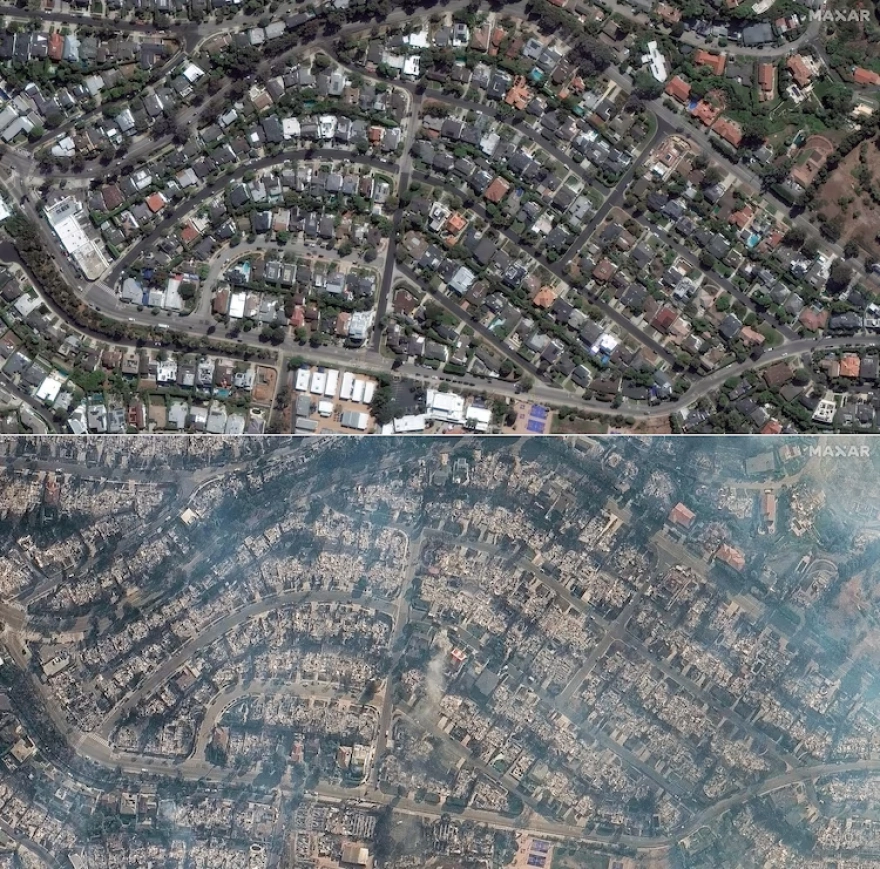
In practice, the rules are not uniformly enforced. Many homeowners are hesitant to remove wooden fences, replant their gardens, and prune the lower branches of pine trees. Aerial photos of the Palisades neighborhood taken before the fire show homes surrounded by greenery, a common sight in affluent areas where residents value privacy.
For nearly two decades, volunteers in Altadina have gathered every spring to mow the lawn and remove weeds around their neighborhood. Not all neighbors appreciated their gesture—many did nothing at all.
But there are also those who did everything right, but their house burned down.
2. Urban planning
The communities that burned were not built to withstand mega fires.
In fact, the two communities that were literally leveled by the fires, Altadina and Pacific Palisades, were built decades ago in the foothills of mountains that burn frequently. They had mostly single-family homes on narrow, winding streets, which are difficult to evacuate, but also difficult for firefighters to “defend.”
Some of the most desirable homes in the Palisades were built high on bluffs or in deep valleys that run from the mountains to the ocean.
However, these homes were perfectly aligned with the direction of the Santa Ana winds, which sweep across Southern California with winds of 80-100 kilometers per hour and gusts of up to 160 kilometers per hour. At the time of the fire, the homes were easy victims of the fronts that were “running” at incredible speeds.
Although the county now takes wildfires into account when considering zoning plans, almost 90% of the homes were built before 1990, before the new and stricter requirements went into effect.
3. Underfunding
Scientists say climate change is making wildfires bigger and more destructive. The severity of wildfires in California increased by 30 percent between the 1980s and 2010. Another contributing factor: state and local policies.
For more than a century, federal policies have required that all fires, no matter how small, be extinguished, which has contributed to the accumulation of dead vegetation. At the federal and state levels, the approach has changed, with governments using thinning and controlled fires to remove fuel.
But this is expensive work, and federally underfunded.
Water shortage
The Los Angeles water system was never designed to fight wildfires, and it became apparent when multiple fires broke out and it couldn’t cope.
Instead, it was designed to supply water to homes and businesses and help firefighters fight a fire in a large structure or many homes, not several neighborhoods at once.
As homes burned, water continued to flow through their pipes even as they burst or melted: the system “bleeded.”
Even more, residents and officials in Palisades expressed outrage when they learned that a large reservoir that supplied water to local hydrants had been shut down.
Low humidity – terrifying speed of winds
Usually in Los Angeles, the humidity ranges from 40%-50%, at that time the humidity was very low, close to 10%. A terrible element, which shows how easy it was for the pre-existing combustible material – vegetation on plots and villas – to catch fire very easily and quickly, which then spread with the help of the terrible winds. The winds on those nights and days of the terrible fire moved at a speed of 160 km/h. Any force of firefighters, no matter how well prepared they were and had the best fire extinguishing equipment at their disposal, would not have been able to do anything. The only thing they could do was to flee quickly so as not to be surrounded by the flames, which were being driven at terrifying speed by the fierce winds that were blowing in the area.
Overhead electrical cables
The overhead electrical cables that carry electricity throughout the Los Angeles area are certainly one of the reasons why the fire spread so quickly. Given that the power transformers, which are also above ground, can explode when overheated by the fire and simultaneously create new fires, which then spread rapidly, due to the winds, in different directions, creating new fire fronts everywhere.


