The India-Pakistan war may not be ongoing at the moment, but the situation between the two countries remains tense.
Regarding the timeline of the attack, the reason for the attacks on both sides was the terrorist attack from Pakistan, which took place on April 22, 2025. Five terrorists opened fire on a group of tourists in the Baisaran Valley near Pahalgam, killing 26 people and injuring more than 20. The attackers, dressed in military uniforms, mainly targeted Hindu tourists, while the victims included a Christian and a Muslim resident of the area.
The Terrorist Resistance Front (TRF), a terrorist organization that is an offshoot of Lashkar-e-Taiba, initially claimed responsibility for the attack. However, a few days later, the TRF denied responsibility.
India responded to Pakistan on May 7 with Operation Sindoor, which is considered India’s largest and most sophisticated operation, as it was a combination of missiles, drones and air strikes.
Tensions between India and Pakistan peaked with attacks from both sides, including air and missile strikes, as well as shelling along the Line of Control (LoC), causing at least 66 deaths.
However, on May 10, a ceasefire was achieved through direct military contacts between the two sides, despite statements by the US that they played a significant role.
In this volatile situation between India and Pakistan, it is necessary to assess the military means that each side has in its quiver, in order to safely predict the outcome of a conflict between the two countries if the situation between them escalates again.
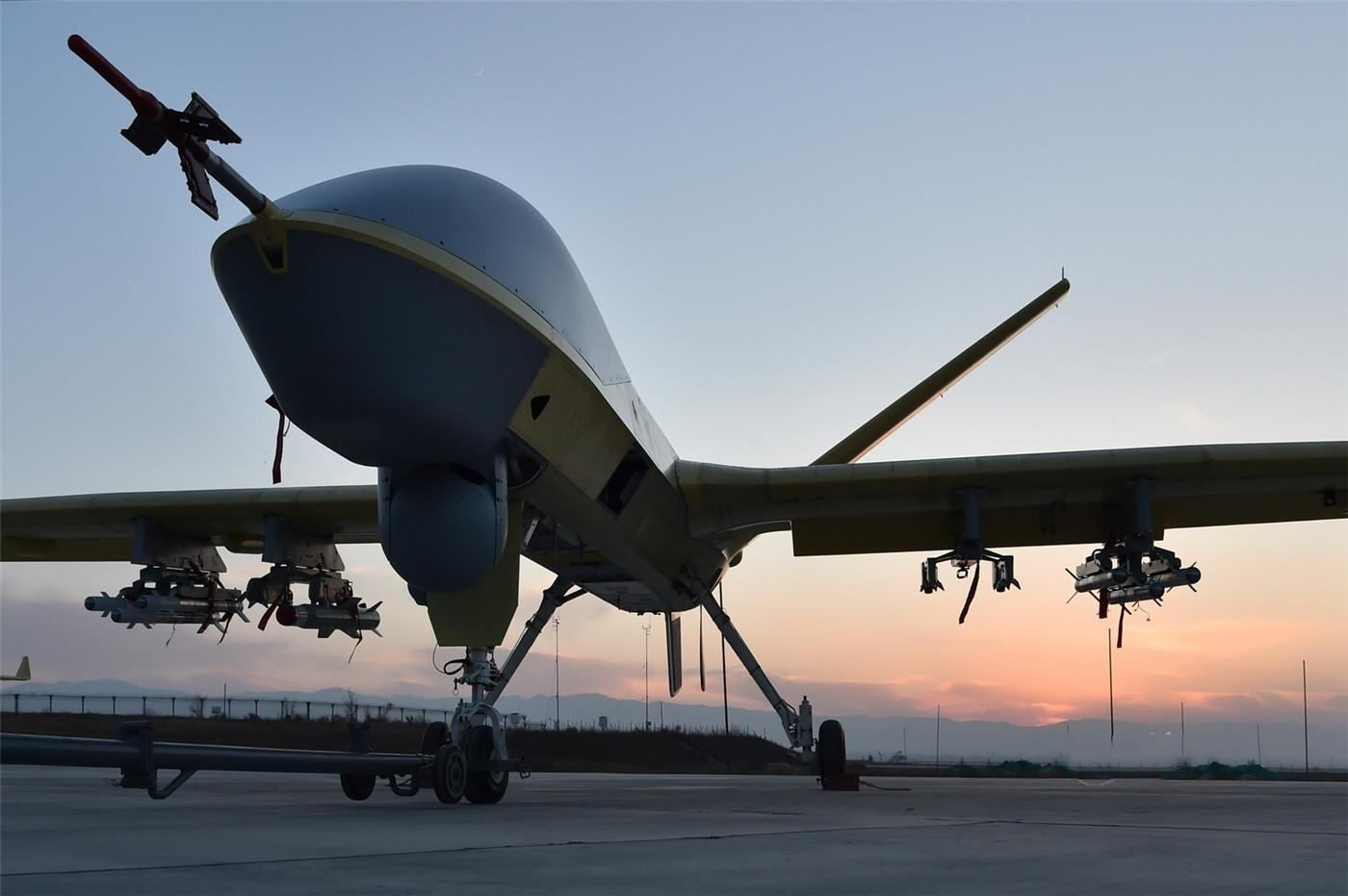
Pakistani drones have proven ineffective during recent military clashes with India, with almost all of them failing to hit targets in the enemy country. In contrast, Indian drones have carried out attacks on Pakistani military installations with precision.
This has created an embarrassment for the Pakistani military, as drones manufactured by Turkey and China have proved useless as the debris of Pakistani drones that were intercepted by India after the attack was visible from everywhere.
International news correspondents have reported that Pakistani drones, which appeared as orange dots over the Indian sky, flashed and faded as Indian missiles intercepted them.
Pakistan has a limited number of drones and depends on China and Turkey for their supply. In contrast, “India’s drones are much more sophisticated, as they can be used in all three forms – land, air and sea,” said James Patton Rogers, a Cornell University special adviser on drone warfare.
Turkish-made Biker YIHA III kamikaze drones were easily shot down by Indian security forces as soon as they entered Indian airspace.
In fact, some Turkish drones have fallen inside Pakistan.
“It is no wonder that India’s air defenses easily destroyed the large-scale drone attack from Pakistan. Turkish drones are only useful against militias, not against any country with a semi-functional air defense system.”
Pakistani drones struggled to inflict serious damage on Indian military installations, although they managed to hit some residential areas. “The threats were quickly neutralized … No casualties or material damage were reported,” the Indian Defense Ministry said of the Pakistani drone and missile attacks.
On the other hand, Indian drones have damaged some military posts in Pakistan, creating panic in the world. Indian drones are based on Israeli-made UAV reconnaissance drones.
“Around 300 to 400 Pakistani drones were used to attempt to infiltrate 36 locations in India. The Indian armed forces shot down many of these drones using mobile and fixed assets. Initial reports indicate that they are Turkish Asisguard Sogar drones,” said Colonel Sofia Qureshi of the Indian Army.
Turkish drones have proven inadequate in the past as well. Several Turkish Bayraktar drones were shot down in Syria in 2019.
In addition, UN investigators found that the drones also performed poorly in Libya in 2021, where they were easily destroyed in the air.
“The Bayraktar TB-2 combat drones that Turkey supplied to Pakistan proved vulnerable to ground attack. When launched, they were easily destroyed in the air by the Pantsir S-1 air defense system,” according to a UN assessment report.
The inadequacy of the Turkish drones has resulted in a deterioration in the reputation of Turkish UAVs. Turkish drones have proven to be not the “game-changing tool” that the Turkish government has long heralded.
Furthermore, Turkey’s support for Pakistan has provoked political reactions in India, such as the Shiv Sena party’s demand for the removal of a Turkish company from Mumbai airport.
Overall, this conflict has called into question the effectiveness of Turkish drones in modern military operations.
Furthermore, shortly before the war broke out in 2024, India accused Pakistan, with evidence, of using drones to smuggle drugs, weapons, and improvised explosive devices.
About 90 such drones were shot down by Indian forces using a manual static anti-drone system.
Most of these drones were Chinese, said Nitin Agrawal, the then director general of India’s Border Security Force (BSF). “The drones that we shoot down and capture are largely made in China and are severely damaged,” he said.
“Although Pakistan has developed drones domestically, its drone supply is still largely dependent on foreign imports, and its domestic production capacity is constrained by a weak domestic drone industry,” said Zohaib Altaf, a research fellow at the Washington-based Center for International Strategic Studies (CISS).
This dependence on external sources could become a vulnerability in a protracted conflict, such as a full-scale war with India,” he said.
In conclusion, it is understandable that due to the economic and military asymmetry that currently exists between India and Pakistan, Pakistan relies on low-cost drones, while India invests in technologically advanced UAVs (such as the Heron or MQ-9 Reaper).
The use of drones between India and Pakistan will be accompanied, as is becoming clear, by attempts at interference, hacking and attempts at downing by electronic means, technological areas in which India excels.
It is therefore considered prudent for Pakistan, given the outcome of things so far, not to proceed with further strikes against India.