
The empires – China, the US, Russia – are back, and Europe, which seems to stand fragmented, seems unable to gather its forces to face this new global reality. It did not need to evolve this way, and perhaps there is still time to reverse its declining fortunes.
Why didn’t Europe itself become an empire?
A few decades ago, Europe seemed poised to become a kind of empire itself. After the collapse of the Soviet Union, the European Union embarked on a policy of territorial expansion that resembled a benevolent imperial project. The EU expanded its reach not by force of arms, but through economic aid and the export of its legal framework.
The states of Central and Eastern Europe and the Balkans were gradually integrated into the EU’s common space, but under strict conditions: democracy, the rule of law, and free trade were paramount. Their scope for diplomatic negotiation remained largely theoretical, partly because of the significant wealth disparity between the EU and its member states. and candidate countries and partly because of the absence of truly attractive alternatives.
The enlargement of the EU coincided with the deepening of its integration project. The Union established a single market and a single currency, common external borders (Schengen) and a common foreign and security policy. When the conflicts in the Balkans sharply revealed the EU’s military limitations, it decided to create its own defence capability. This resulted in the decision of the Helsinki Summit in 1999 to develop an autonomous capacity to deploy 60,000 soldiers within sixty days for operations lasting up to a year.
The era of dominance and Euroscepticism
At the turn of the 21st century, the EU began drafting its own constitution, an effort aimed at consolidating and strengthening the European legal, economic and institutional architecture. However, the promised military capability was never fully realised and the proposed European Constitution was subsequently rejected by voters in referenda held in two of the founding members of the integration project, the Netherlands and France.
The failure of the European Constitution in 2005 signalled the arrival of a new phase in European politics: the era of sovereignty. From that point on, the Eurosceptic right began to make significant electoral gains across the continent, campaigning against the supposed superpower of the European Union, which they argued was undermining democratic states.
Brexit, the most striking manifestation of this trend, was explicitly framed as an attempt to reclaim Westminster dominance from European bureaucrats in Brussels. While the significant costs of Brexit prompted Eurosceptics on the continent to adjust their strategy, the underlying ambition to restore nation-states as the ultimate arbiters of power was not diminished.
The aim shifted to weakening Brussels’ influence from within the EU, notably by vetoing joint initiatives and undermining European institutions. The vision was a Europe of proud and sovereign nations, finally putting an end to the specter of a federal Europe. According to this view, unelected European commissioners and judges should not dare to question the sovereign will of the people, as expressed through national elections that brought dominant parties to power.
Putin and Trump’s “imperial” enterprise
The rise of populists has led many liberal politicians to become timid, often adopting a milder version of the domineering rhetoric themselves. It has never been sufficiently explained how further integration could proceed, with 27 member states zealously defending their narrow national interests. Nor was it clear how the EU could truly assert its influence on the world stage, with its community institutions effectively paralyzed.
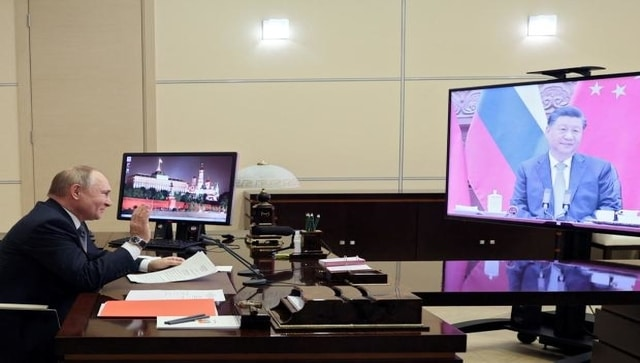
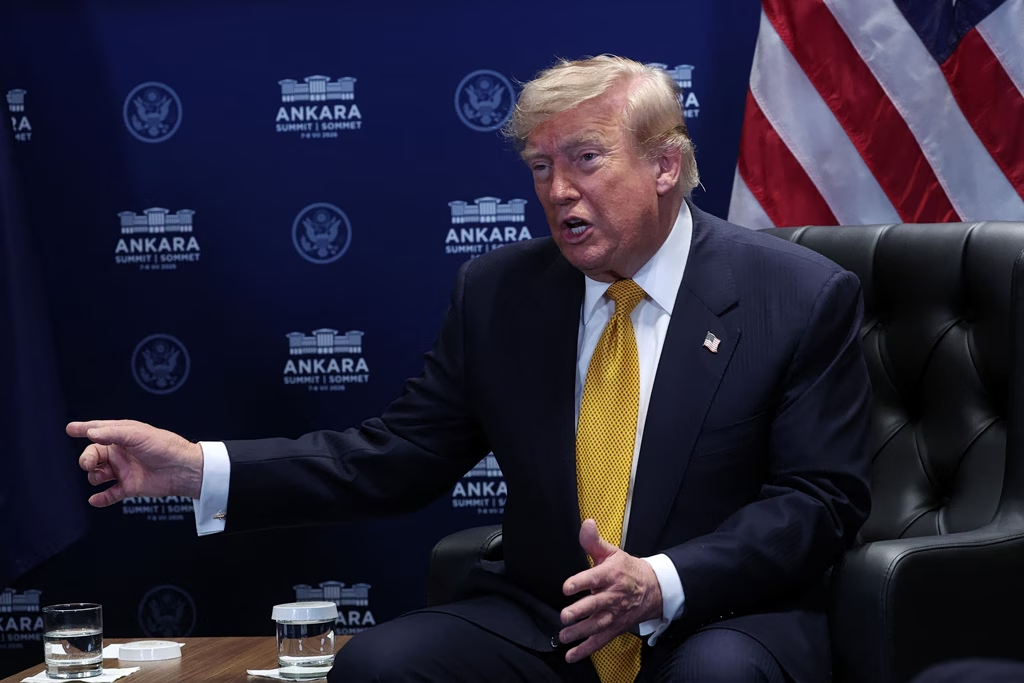
Then, in 2022, Vladimir Putin launched his invasion of Ukraine in a manner that seemed purely imperial, seemingly aided by the emerging power of China. As if that were not enough, Donald Trump has also embarked on his imperial enterprise, characterized by the claim of new territories, the bullying of long-standing allies, and the disregard for international commitments and norms.
This confluence of events has caused a profound shock to the European public and political order, provoking a belated recognition that the old continent now resembles a fragmented mosaic of relatively small and poorly equipped states, seemingly incapable of unified action when faced with the resurgence of imperial politics.
The urgent need for the EU to strengthen its military capabilities
Empires, by their very nature, impose constraints – legal, economic, and political – on actors who may be formally sovereign. Consider, for example, the US vice president’s endorsement of Alice Weidel, the leader of Germany’s far-right party, ahead of the German parliamentary elections.
Sovereignty, in an age of empires, is at best a relative concept, if not an outright illusion, especially for the weaker players. A European entity, even an imperfect one, would undoubtedly be better equipped to navigate this historic imperial turn than a patchwork collection of small, self-serving, divided, and seemingly lethargic European nations.
It would be misguided to assume that the only effective response to imperial resurgence is the creation of a highly centralized, authoritarian, and heavily armed European superstate. History shows that imperial power politics has taken many forms, tailored to the specific circumstances and unique characteristics of the empires themselves.
The actions of Presidents Trump, Xi and Putin seem to have prompted Europe to recognize the urgent need to strengthen its military capabilities. However, for the foreseeable future, the EU’s most powerful asset will likely remain its economic and regulatory power.
The former has a reasonable chance of withstanding the challenges posed by an imperial America and China, provided that the EU follows recommendations such as those outlined by Mario Draghi, aimed at strengthening the Union’s innovation, productivity and competitiveness.
Their prosperity and security cannot be taken for granted
Meanwhile, the EU’s regulatory power has recently been eroded by the rise of xenophobic, inward-looking and self-serving political movements. The original intention behind the EU’s 2003 Neighbourhood Policy was to cultivate “a circle of friends”, creating pan-European “prosperity zones” that would lead to an “indivisible”, “wider” Europe. Achieving these highly desirable goals requires reactivating the EU’s enlargement process, radically rethinking migration policies and revitalising economic investment in neighbouring regions.
This is admittedly easier said than done in today’s political climate, but Europe’s citizens must face the reality that their prosperity and security cannot be taken for granted when wars, poverty and authoritarianism persist just beyond their borders. Ukraine is the most immediate test of Europe’s resolve, but the Middle East, North Africa and the Balkans cannot be ignored.
Europe’s military weakness must be addressed, but not necessarily by simply buying more American weapons. Instead, the focus should be on integrating European military structures and building a strong industrial base capable of meeting the demands of modern warfare.
Rule of law and protection of human rights, the EU’s strengths
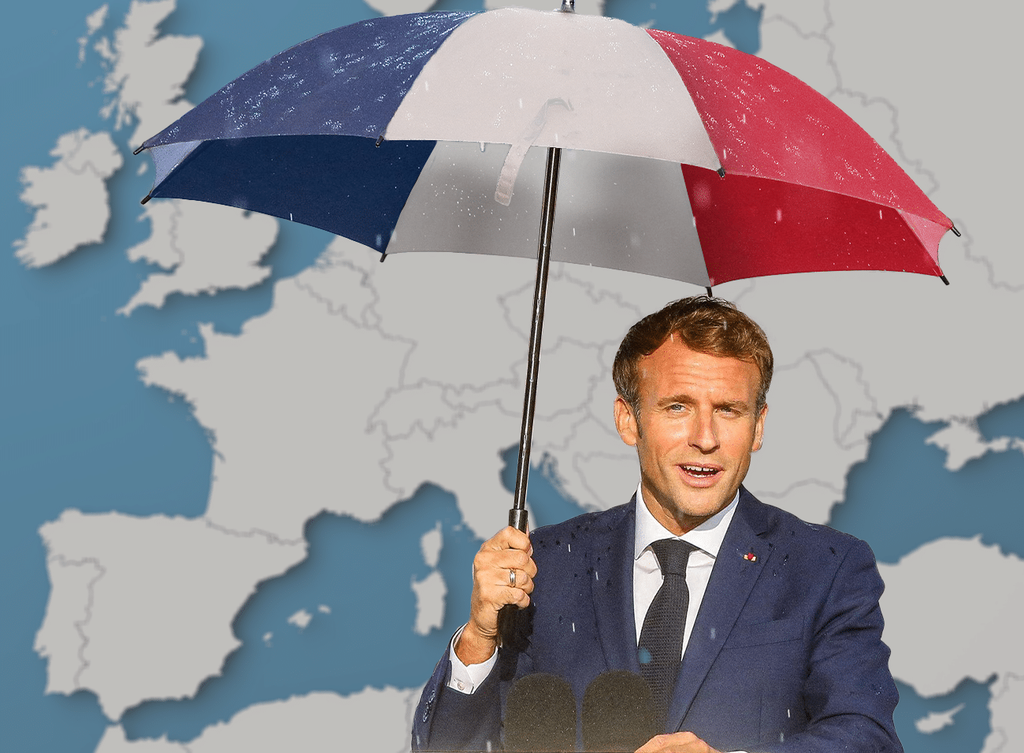
Given that the EU significantly weakened without the UK’s military capabilities and hampered by Hungary’s veto power, the exploration of new regional solutions becomes imperative. This underlines the value of supporting informal coalitions of the “willing”, such as the one launched by the UK and France – in response to Trump’s “imperial” behavior to “solve”, as he thinks, the Ukrainian issue, ignoring not only Europe, but also Ukraine itself – which could, in time, develop into a real European pillar of defense, either operating within or independently of NATO.
Europe should neither pretend nor aspire to become an empire similar to modern Russia, China or even America. The EU’s greatest asset has always been its ability to lead by example, a strength demonstrated by the successes resulting from its policy of open borders, for goods, services, capital and labor.
Europe was once the object of global admiration when it created a democratic sphere governed by the rule of law and the protection of human rights. Its unwavering commitment to multilateral cooperation and a rules-based international order has also won applause in various parts of the world.
It would be profoundly foolish for Europe to abandon its greatest assets – transparency, cooperation, the rule of law – in favor of policies based on building walls and exercising intimidation, tactics that have historically proven to be its greatest failures.