

Taurus is a high-precision subsonic cruise missile with a range of at least 500 kilometers and a warhead of 450 kilograms. Chancellor-elect Friedrich Merz recently announced that Ukraine must be given the opportunity to “overcome the situation”, that is, defeat, and that Taurus missiles are ideal for destroying the Kerch Bridge as an important supply route for Russian troops, something that as far as we know has not been achieved by other means.
But is this German weapon really that miraculous?
Since 600 Taurus were built for the German armed forces and transferred to their bunkers between 2005 and 2010, these cruise missiles have not yet been used in real combat and have hardly been used at all. Already 300 Taurus from the production years 2005, 2006 and 2007 are operationally non-functional. By 2028, even the last of the Taurus will no longer be operational, which would not be a loss for the Bundeswehr if it handed them over to Ukraine now, where they are very likely to end up in one way or another.
One of the known disadvantages of the Taurus when used by Ukraine is that this cruise missile is designed as an air-to-surface weapon, i.e. a fighter aircraft is required to direct it to its destination. But not just any fighter, whether a Tornado or a Eurofighter Typhoon or the American F18 in the version specially converted for Spain for the Taurus, or a Swedish Saab JAS 39 Gripen, is required. Does Ukraine have one of these aircraft? No. Does Ukraine have pilots who could fly one of these aircraft? No. Can the programming and technical coordination of Taurus targets be done without German specialists? No.
The Russians know this too. They probably even know every serial number of the Taurus stored in underground bunkers in the Hagenauer forest, near the town of Schrobenhausen. The Russians are probably laughing at Chancellor-elect Merz and the statement about the supply of Taurus missiles to Kiev. But the issue is not one of the military robustness of this particular weapon, but a deeply geopolitical one.
Who could have the means to launch German Taurus missiles and attack targets in Russia, and do so in full awareness of the fact that this would likely signal the start of World War III or a general war in Europe?
So if Germany surrenders and takes aim, Russia will not strike Ukraine, but Germany. The Russian leadership cannot afford to leave this step unanswered, as non-reaction will be seen as weakness. What if what starts as “support for Ukraine” ends up as a bomb crater in Berlin or a state capital of the Federal Republic of Germany?
On April 17, 2025, Maria Zakharova, a spokeswoman for the Russian Foreign Ministry, issued an unequivocal warning: “The delivery and deployment of Taurus missiles means Germany’s direct participation in the war with all the consequences.” Such clarity is rare in diplomatic rhetoric, yet it is indicative of the situation.
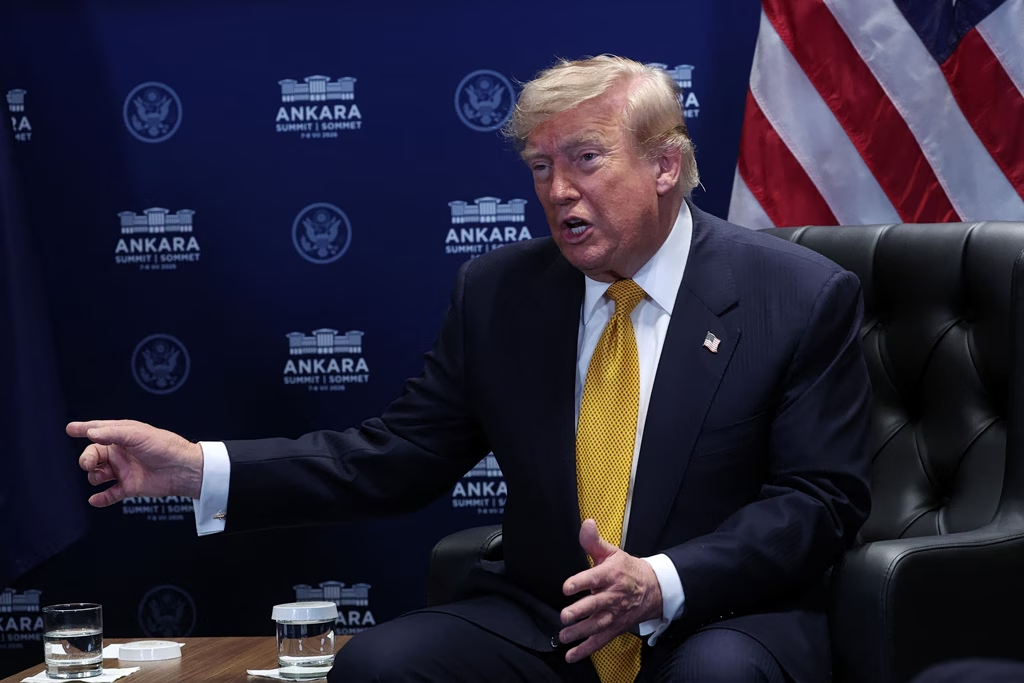
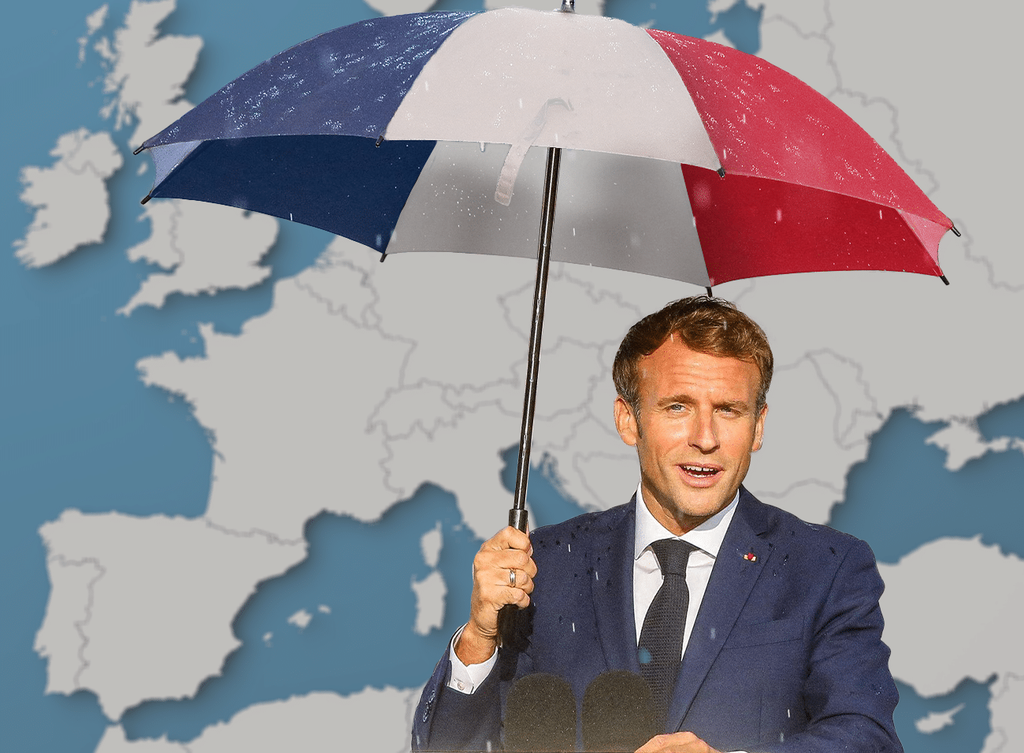
In this context, the assumption that a Russian counterattack on Germany will be reliably responded to by NATO’s Article 5 is extremely dangerous, as the new reality with Trump is causing the collapse of the US protective umbrella for Europe. Donald Trump rhetorically plays the great peacemaker and at the same time maneuvers, hesitates, shifts the blame to the Europeans, to France, Britain and Germany. This coalition of the “willing” is militarily useless, but politically dangerous. Because where substance is lacking, the temptation for symbolic politics grows, to the detriment of the security of all of Europe.
The Russians will continue the war until the objectives of their invasion of Ukraine are achieved. And if German Taurus missiles play a role in this, Europe could become an immediate theater of war, with Germany in a role of self-destruction.


