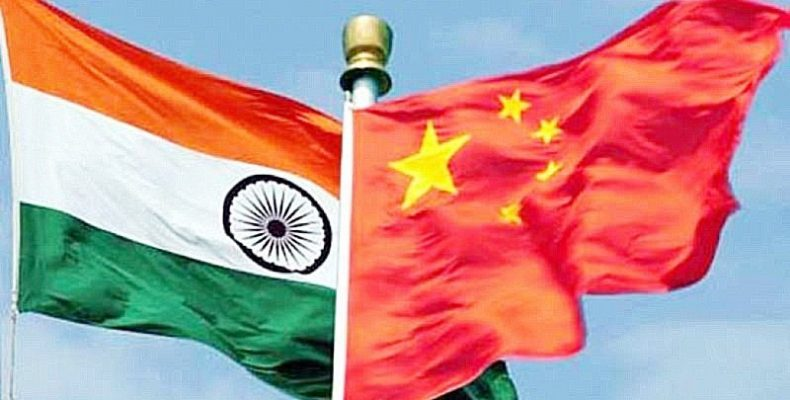
By mid-2023, India will overtake China in population, adding 1.425 million citizens. Among them, half are under the age of 25, a challenge for China’s increasingly aging population. A report published in 2021 by the Center for Economic and Business Research points to India as the largest economic superpower at the end of the 21st century, with a Gross Domestic Product (GDP) up to 90% higher than that of China. India’s achievement has once again put on the table the question of whether the country will succeed in usurping the superpower position from Beijing. The figures are promising: economically, its GDP grew between 2021 and 2022 at a rate of 6.1% per year compared to 4.5% for China.
All the prospects would seem to work in India’s favor, were it not for the fact that, taken separately, the country still has a long way to go to achieve what in Hinduism is called moksha (enlightenment). Although China faces a comparative disadvantage with India in terms of birth rate and economic growth, the current situation of both the countries cannot be limited solely to these two variables. At present, the Asian dragon economy has an estimated GDP of $18.56 trillion compared to India’s $4.11 trillion, and by 2023 Beijing has exported up to eight times more manufacturing and services. The United Nations Development Program reports that in 2021, 14.96% of the population in India was at the poverty line, which adds up to its per capita income, which is about one-sixth that of China.
The Hindu nation is also at the tail end of the technology race, key to spurring economic growth. According to the World Economic Forum’s human capital report, China graduated twice as many STEM (Science, Technology, Engineering and Mathematics) students as India in 2016. Similarly, Beijing has an advantage in space, a cutting-edge science in terms of military development. In 2021, the Asian giant carried out more scientific exploration missions than the United States by a ratio of 53 to 43. Meanwhile, India averaged five launches per year over the past decade. However, the New Delhi government has also benefited in recent years from a positive macroeconomic environment that has increased its international weight.
As competition between China and the US increases, many investors see India as the next big economy. In fact, ” After China, it has the largest startup system and digital user market in Asia. However, now that its economic growth is “declining”, its benchmark “is less attractive to developing countries”. If one thing is certain, it is that the birth rate in China has fallen drastically. The demographic structure of the country’s 2020 census reveals that the ratio of the number of minors to the total population has declined by 20% over the past 40 years, with 100 million fewer children compared to India.
This phenomenon also has to do with the processes of women’s empowerment in which women, embedded in the urban logic, have begun to have greater economic power, which has helped them to change the traditional dynamics regarding their reproductive “duty”. In addition, Chinese men account for 51.24% of the total population, causing a marked imbalance in fertility rates. It is now that the population pyramid begins to invert, and although it is not yet a danger, it may happen in about 20 or 30 years. On the other hand, in China there is a relocation of national funds to third countries, which raises the question of what all the young people who graduate from universities will do. 21.3% of Chinese between the ages of 16 and 24 are unemployed, an alarming rate that has caused “the Chinese Communist Party to stop publishing these statistics because it challenges Xi Jinping’s Chinese dream.
Narendra Modi’s government seeks international recognition as much as China, although its ambition is not to redefine the rules of the international game, but rather to have its country seen as a “leader” for the world. Indians have a word for it: Vishwa Guru (world teacher). In Chinese foreign policy there is an institutionalized vision of “shared destiny”, where the Asian country claims a project of international governance through the global south.
For her part, the revitalization of Indian foreign policy comes directly from Modi. Before him, you would ask for a statement about something from an ambassador in any Indian diplomatic mission and then from someone within the Ministry of External Affairs and you would be told completely different things. Modi’s foreign policy seeks to vindicate India’s national image while trying to put the other powers on an equal footing. It does not intend to challenge or reverse the international order, but it also does not want a world where there is one hegemonic power that prevents others from developing.
Modi’s ambitions act as a driving force behind his popular support and his image as a “proactive leader”. China’s rise and border clashes are causing potential tension in India between two intersecting cultures in political, social, insurance and economic spheres. According to a 2023 Pew Research Center study, 67% of the Indian population has a negative opinion of China and 48% have “no confidence at all” in Chinese President Xi Jinping. In recent years, fears have grown in Beijing that India was getting very close to the West. After the 2020 standoff in the Himalayas that saw deaths for the first time in decades, India realized that China is not necessarily a benevolent neighbor.
I don’t think the relationship between China and India is going to stabilize anytime soon because it is a fundamental structural challenge. The border dispute has become a manifestation of a larger problem as China believes that India may challenge its supremacy in the Indo-Pacific and is therefore trying to squeeze it. China believes it has “many difficulties in dialogue” with India. In fact, although both countries are present in organizations such as BRICS or the Shanghai Cooperation Organization, there is almost never a Sino-Indian bilateral meeting in these venues, which shows their difficult relationship.
This is somewhat unique when you consider that, for example, China and the United States, despite their huge rivalry, have managed to find ways to communicate. For the United States, the New Delhi government’s rivalry with China has prompted a shift in its strategy in the Indian Ocean, becoming its main trading partner. During the so-called Asian pivot in the Obama era, the United States increased its relations with India in an effort to continue Bush’s socio-military initiatives. China has become very important, very big and very powerful, which is bringing India and the United States together in unprecedented ways.
Today, India conducts the largest number of military exercises with the US in its history, has agreements on how to address maritime security and even one on sharing strategic resources and emerging technologies. Moreover, India has the advantage of being in a position that is not entirely alternative to the West, apart from being embedded in many of its frameworks. India still has a long way to go before it reaches the “superpower” status predicted by some analysts and reports. India will not replace China in the near future, but it is making an effort to be there and trying to project itself as an alternative. Allies and rival countries look curiously at New Delhi and wonder if the 21st century will belong to both these great countries.