What happened on April 2, with Trump’s announcements to impose tariffs on products imported into the United States, is not a trade war, it is a revolution to overthrow the dominant system of globalization.
In a trade war, the system of capital accumulation and production of goods is not questioned, it is simply an attempt to redistribute shares between the warring parties.
Now we have something very different. The interconnected world is questioned, the global economic structure is questioned, the famous supply chains are questioned and another order of things is created.
Trump, in attempting to defend the national interests of the United States, is demolishing (consciously or unconsciously, it is immaterial) the edifice of globalization as it has been shaped for at least the last thirty-five years.
The Trump revolution has just begun and it is not certain that it will prevail, despite the undeniable economic and military power of the United States. The globalists are rallying from Europe to China and seeking “the restoration of the Bourbons”. They are also organizing popular demonstrations against him, in America and Europe.
The American tariffs, we are told, are an attack on global prosperity! Have they really seen this global prosperity? They probably mean the prosperity of multinational corporations. The tariffs, we are told, will cause recession and inflation.
They mean the inevitable turmoil caused by any radical change in the economic model, until the new one stabilizes.
The tariffs, we are told, which will increase prices, will ultimately be paid for by consumers. True, but only as long as the latter continue to buy the more expensive imported products and do not replace them with cheaper domestic ones. Habits certainly take some time to change, but consumers are not that masochistic.
Domestic supply, we are told, will not be able to meet the increased demand. The truth is that in some sectors it may take some time to restructure production and make new investments. However, the American economy has enormous production potential and will quickly adapt to the demands of increased demand.
That is why the revolution against globalization could only begin in the USA. Any other smaller country would be crushed by the onslaught of the markets.
Trump did not discover tariffs. They have existed throughout the historical path of humanity. From city-states and ancient empires to the modern era.
The great powers and colonial empires imposed tariff walls with two goals:
a) To protect their domestic production from foreign competition and
b) To increase their state revenues, which were used for further development.
When powerful states achieved sufficient concentration of production (large corporations) and capital (banks), they demanded the establishment of free trade in order to exploit everyone else.
Free trade is not fair trade, because the same products can be produced in countries with very different labor costs, different energy prices, different tax regimes, different environmental legislation, while in some cases they are favored by direct or indirect subsidies.
Free trade is profitable for the big ones and destructive for all small producers. As Aristotle said: “The greatest inequality is equality among unequals.”
After World War II, in 1947, the General Agreement on Tariffs and Trade (GATT) was created under the UN with the aim of reducing tariffs and freeing trade from restrictions, barriers and other administrative measures.
Many multi-year rounds of negotiations followed, each time achieving a reduction in tariffs.
In the Uruguay Round (1986-1994), agricultural products and services were included in the tariff reductions, while GATT was replaced by the World Trade Organization (WTO). The last Round, the Doha Round (1996-2008), ended in a stalemate.
During his first term, Donald Trump refused to ratify the Transatlantic Trade and Investment Partnership (TTIP) between the EU and the US, which had been prepared by the Obama administration. He withdrew the US from the Trans-Pacific Partnership (TPP) and revised the North American Free Trade Agreement (NAFTA) between the US, Canada and Mexico. He had them all figured out and everyone tried, “tooth and nail”, not to re-elect him.
From the beginning of his second term, Trump imposed 25% tariffs on steel and aluminium imports and 25% on car imports before we got to the day of April 2 that “shocked the world” or “Independence Day” as Trump called it. In addition to a general 10% tariff on all US imports from any country, much higher tariffs were imposed on the US’s main trading competitors.
- China 34%,
- Taiwan 32%,
- India 26%,
- South Korea 25%,
- Japan 24% and
- EU 20%.
If one takes into account the suppression of illegal immigration, the universal rejection of the WOKE agenda, the denial of the false narrative of “anthropogenic climate change” and the rapprochement with Putin’s Russia, then President Trump is a truly mortal threat to the system of globalization.
Many globalists are already expressing the wish that: “This chapter will last as little as possible.” What are they hoping for?
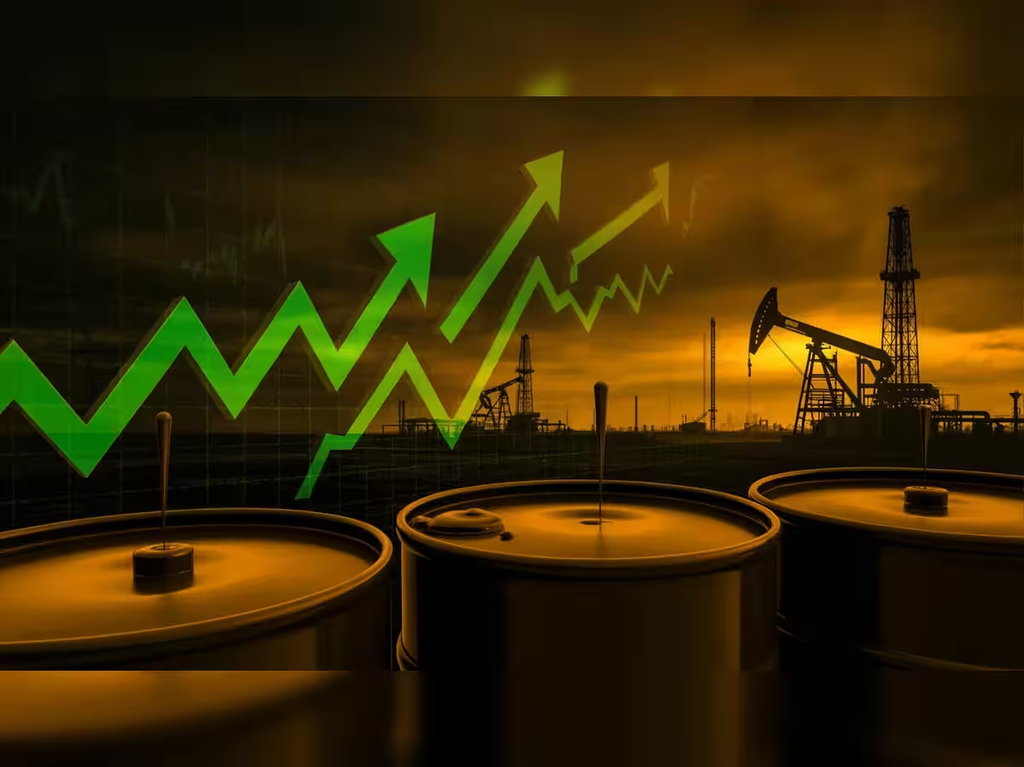
PS. Two days after Trump’s announcements, last Friday, April 4, the price of precious metals (gold, platinum, silver) after falling, then stabilized. On the contrary, the prices of industrial metals (aluminum, nickel, copper, lead, tin, etc.) fell. The prices of most basic agricultural and livestock products also fell. Finally, the price of oil (Brent) fell by 5.37% to $ 66 per barrel and natural gas by 7.25%. The stock market bubble continued to deflate at a rapid pace. All this may mean market forecasts of economic stagnation or even recession, but not of inflation. In the coming days we will see how the markets will move.