

The world may be consumed in the West, but in the East there seems to be an alliance that is off the radar. India, the world’s fastest-growing economy, is also growing in its understanding of itself. And as it does so, its “grand strategy”—the way it sees its place in the world—is being shaped in large part by China.
China looms ever larger in India’s strategic consciousness, and it is China’s rise that is likely the primary factor influencing India’s grand strategy today.
Five are the goals that have defined India’s “grand strategy” since 1947 (the year of its independence) until today:
1. Strengthening India at home, militarily and economically, is the number one priority.
2. The second is ensuring a stable neighborhood, which has been a major challenge.
3. Maintaining a balance of power is India’s third priority.
4. The fourth is addressing legacy issues related to the partition of India, which led to the formation of Pakistan and created larger regional consequences.
5. The fifth is to support India’s adequate participation in global rule-making institutions.
Today’s India has more opportunities and resources to achieve these goals than it has ever had before.
Articulating India’s Grand Strategy
Every great power has a grand strategy that sets its trajectory, looking 20 to 25 years ahead. Along with its planning for economic, technological, and military development, the grand strategy details a country’s national ethos.
How much of a nation’s strategy is revealed depends on the purpose attributed to it by that nation. For example,
- Τhe Americans have the Four-Year National Security and Defense Strategy.
- The Russians have one.
- The United Kingdom has.
- China has also framed it in terms of national rejuvenation by 2049 (“Global China 2049” or “China 2049.”) and has many steps—from 2021 to 2035.
India’s grand strategy has rarely been explicitly articulated, and various writers have attempted to articulate the country’s vision. Indian Prime Minister Narendra Modi has termed India’s strategy as “Viksit Bharat 2047.” The phrase “Viksit Bharat,” which means “developed India,” conveys the Indian government’s vision of transforming the country into a self-reliant and prosperous economy by 2047. Τhe areas identified in Viksit Bharat 2027 as “soft areas of the grand strategy.” Meanwhile, many of India’s security-related issues are being kept under wraps and not disclosed, he said. Some of the unknown areas involve China.
The Biggest Obstacle – China
Despite its potential, India faces many challenges in achieving its grand strategy. China looms large among them, which they define as a major challenge to India’s rise on the world stage. Geography and history provide the context for the challenge from China.
China challenges each of India’s grand strategy goals. The biggest obstacle to each of these five goals today, arguably, is China. Thus, China is the biggest obstacle to India’s defense procurement, its technology policy, its trade policy, its industrial policy.
Since 2009, India has seen China as a “long-term threat” to its strategic plans. He defined short-term threat as a threat within five years, medium-term as 15 years and long-term as a threat with a time frame of about 35 years. It was in 2009 that the Indian position shifted to a two-front war – meaning against Pakistan and China – “below the nuclear threshold”, because both are nuclear.
But this is the strategy of the armed forces, rather than the national strategy given that India faces enormous challenges from China on all other fronts. In the context of India’s grand strategy, the China factor is “uncertain or even negative” because of the territorial dispute with India. This dispute is long-term.
This is not going to be resolved [in the short term]. So you have to factor China into the territorial dispute in grand strategy. At the same time, there is active competition in India’s neighborhood – in countries like Nepal, Sri Lanka, Bangladesh and Myanmar. Meanwhile, the balance of power in the Indo-Pacific has also been altered by China’s rise.
The involvement of other countries
India is working with other countries to address this. Even in international institutions, China is trying to block India’s rise. China is ultimately the major power most responsible for blocking, say, UN Security Council reform, India’s entry into the Nuclear Suppliers Group on certain trade issues and things like that. There is a conflict of interest.
But India’s role in global institutions is growing. During its 2023 presidency of the Group of 20 (G20) international forum, it played a critical role in an expanded BRICS and other global governance platforms.
However, China is using a two-pronged approach to challenge this growing influence. India’s democracy and its inclusive model of global governance make it attractive, he said.
However, China’s sheer economic size and influence pose a challenge for New Delhi to navigate global institutions. China’s grand strategy is to be number one: to replace the United States, in particular. Beijing also wants to be number one in Asia.
But there are powers in Asia—India, Japan, Indonesia, the Philippines, and Vietnam—that can compete for that influence and do not want China to reduce their footprint.
China’s role in South Asia, Southeast Asia, where it wants to marginalize India, is not acceptable to India.
India’s grand strategy will therefore involve countering Chinese grand strategy in terms of territorial issues and competition in Asia. There are many elements to the strategy.
- One element is the QUAD alliance between India, the United States, Japan, and Australia in the Indo-Pacific.
- Another element is the Malabar exercise—joint maritime military exercises among the QUAD countries.
- Another element is the individual free trade agreements between India and various nations.
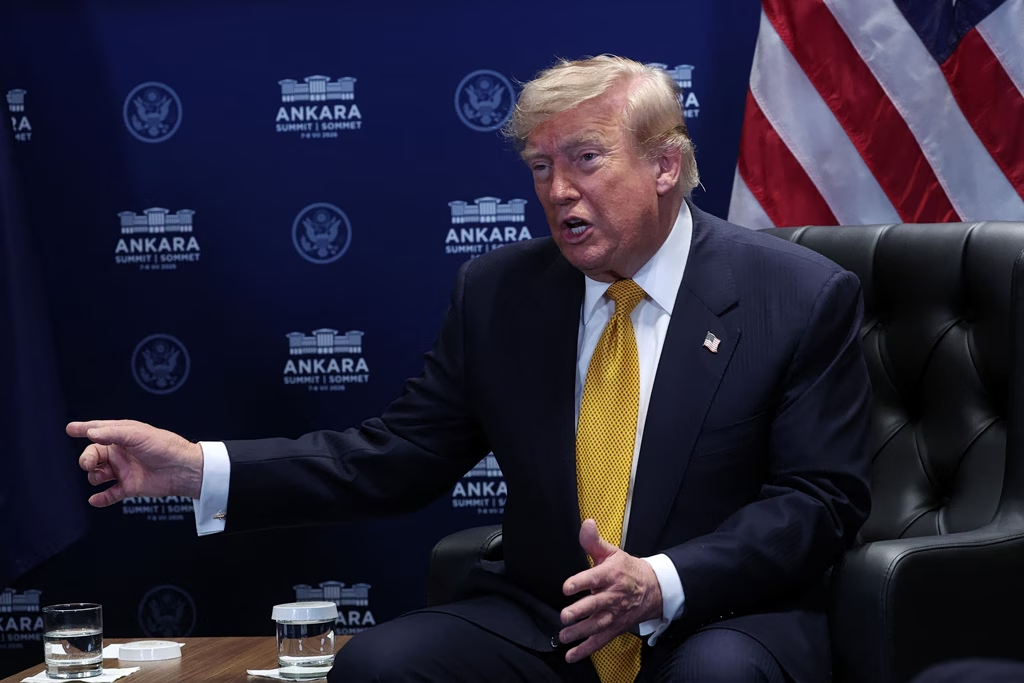
- Another element is the recent Modi-Trump meeting.
Looking Towards a Multipolar World
With its rapid economic growth, India is projected to be the world’s third-largest economy by 2030, behind the United States and China.
Unipolarity, bipolarity, and multipolarity describe three systems of geopolitical power distribution for the three likely leading global economies of the next two decades: the United States, China, and India.
A unipolar world is dominated by one power, a bipolar world is dominated by two great powers, and in a multipolar world, power is distributed among many states.
India’s grand strategy must be understood in the context of its expectations that it will join the list of leading global powers in the near future.
The United States “is number one.” In an ideal world, the United States wants a unipolar world. But it has a clear competitor in China today. Meanwhile, China—despite its long-term ambition for a unipolar world in which it is number one—recognizes the bipolarity of today’s world. Its ambition to be the leading global power does not contradict this recognition.
When China says it wants a new type of great-power relationship, or talks to avoid the Thucydides Trap, it is in fact acknowledging a bipolar world, but asking the United States not to challenge it.
The Thucydides Trap is the theory—made popular by Harvard scholar Graham Allison—that when a rising world power threatens a dominant one, war often results.
Moreover, India, being number three, wants a multipolar world. “So essentially that part of it just depends on where they sit. While China supports multilateralism on some issues and forums, its support is aimed at mitigating American influence.
India, on the other hand, aims to create a more inclusive global order. India wants to create an externally favorable security environment for its economic rise, and its support for a multipolar world order recognizes the interdependence of economies.
Broadening its basket of economic partners, without compromising its core security interests, is at the heart of India’s support for effective multilateralism in a multipolar world.
The Rise
With India’s imminent rise as the world’s third-largest economy, a new global economic paradigm will evolve.
The US economy is currently worth over $30 trillion. The Chinese economy is worth over $19 trillion. India is currently the world’s fifth-largest economy. It is expected to overtake Japan’s fourth-largest in the next year or so.
And, according to a report by S&P Global Ratings, by 2030, India is expected to surpass $7 trillion and become the world’s third-largest economy. However, there will be a wide gap between the US and China, on the one hand, and between China and India, on the other. There will also be a wide gap between India and everyone else on this list. But precisely because of this gap, India will play a leading role in a multipolar world.
The situation will secure a unique position for India. India will guard this place to prevent its interests from being marginalized in decision-making by the United States and China. India will fight for a more multipolar world, meaning a world where everything is not decided simply by the United States and China.
How India will secure and advance its interests in a multipolar world order will be the “roads of fire” for India’s grand strategy.
India’s role in the global order
India’s role in the quest for a multipolar world would include:
- taking a leadership role in Southeast Asia,
- securing the Indian Ocean,
- engaging with its neighbors and the Middle East,
- and using “carrots and sticks” to persuade Pakistan to move away from supporting terrorist groups.
- managing India’s relationship with China in a way that promotes competition but does not lead to conflict.
Going further, India’s approach to multilateral forums is guided by its interests. Both India and China are part of various multilateral forums. They are not supposed to be there to discuss bilateral issues or sovereignty issues. Instead, their engagement implies that problems can be resolved through confidence-building measures and peaceful strategies. Multilateral forums can be useful for advancing bilateral issues.
One example is the meeting between Modi and China’s Xi Jinping on the sidelines of the BRICS summit in Kazan last year. The two leaders decided to let their national security advisers discuss their territorial dispute.
India’s thoughtful leadership in a multipolar world would include working with countervailing powers, such as the United States, Japan, Australia, the EU and others, to “diversify and strengthen” supply chains.
It would also mean confronting China by diversifying India’s strategic interests. Having multiple strategic or economic partners would ensure that if China threatened to disrupt supply chains or investment, it would not unduly affect India.

