



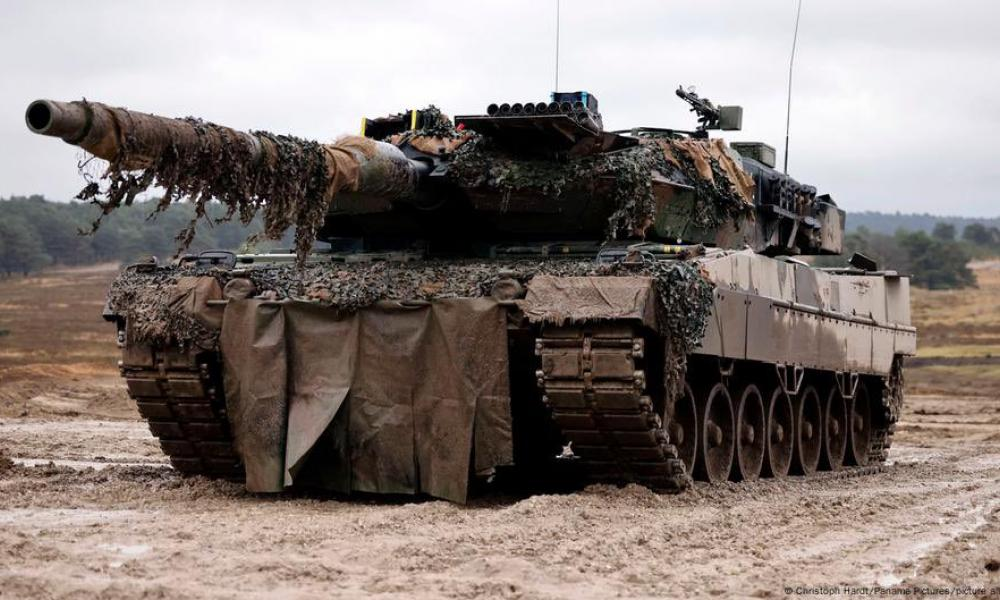
Germany has implemented its first permanent troop deployment since World War II, creating a 5,000-strong armored brigade in Lithuania. The decision follows German Defense Minister Boris Pistorius’ announcement in 2023 to boost troop presence on NATO’s eastern flank in response to the ongoing Russo-Ukrainian War.
The deployment demonstrates Germany’s willingness to take a leading role in Europe’s conventional defense, with German Brigadier General K. Haber emphasizing: “We are not only moving towards operational readiness, but we are taking responsibility for the country.”
According to the German army, or Bundeswehr, the Brigade will consist of three major combat units, including a mechanized infantry battalion, a tank brigade, and the multinational reinforced battle group Foreign Presence Lithuania, and will be supplemented by combat and support elements.
The German Brigade aims to be at full operational capability by 2027.
The need for additional NATO forces in Lithuania is largely due to its geographical location between Belarus and the Russian exclave of Kaliningrad.
Kaliningrad, an isolated port city, was once part of Prussia and was ceded to the Soviet Union after World War II under the Potsdam Agreement.
After the collapse of the Soviet Union, the region was incorporated into Russia, and is now home to the Baltic Fleet, as well as troops, fighter jets, and nuclear-capable Iskander missiles.
The narrow corridor between Lithuania and Belarus, known as the Suwalki Gap, is widely seen as NATO’s most vulnerable point.
If Russian forces were to launch an attack on Lithuania, Latvia or Estonia, all NATO members, they could potentially cut off their supply lines from Poland connecting Belarus and Kaliningrad via a single axis.
The permanent deployment of NATO troops in the three Baltic states serves as a long-term security guarantee, German officials say.
Germany’s new policy, dubbed “Zeitenwende,”
Given its historical responsibility after World War II, Germany has traditionally maintained a cautious and restrained military posture. Massive defense cuts in the 1990s and 2000s further weakened its defense capabilities.
In response to new geopolitical challenges, Federal Chancellor Olaf Scholz introduced the Zeitenwende bill in 2022, which is a “turning point” in German security policy.
This new strategy aims to strengthen defense capabilities, increase military spending to achieve NATO targets, which Germany achieved for the first time in 2024 by reaching the 2% threshold, and strengthen European security cooperation.
The recent deployment of German forces in Lithuania is its flagship project.
Germany has made significant progress and a clear change in thinking is evident in the German defense establishment, particularly through initiatives such as the creation of a special defense spending fund to kick-start military investments.
Europe and US Plans to Shift Focus to the Indo-Pacific
“At a time when European politicians are expressing concerns that the US is indifferent to Europe’s fate, it is important to remember that the current administration is encouraging allies to step up and ensure they are able to deter potential threats on their own terms,” says a Western defense analyst.
This is a task that all sovereign nations must undertake.
“The United States must shift its strategic focus to the Indo-Pacific to deter China, so Berlin and other European NATO members would do well to take primary responsibility for their own conventional defense.
Washington should welcome the new German base in Lithuania, and encourage other wealthy Western European countries to follow suit with bases in Latvia and Estonia,” he concludes.
The US and EU plan to encircle the western part of Russia is currently being implemented, along with German reports that after 2029, Moscow will attack Europe.
Europe must as soon as possible form a European army, which, together with a political union, would make the old continent independent from the games and conflicts of the Americans, Chinese and Russians.
An example is the war in Ukraine, which is a US-Russian “conflict” in a country within Europe. All the rest about enemies, coalitions, etc. is for simple consumption by the television flock.

