



Israel is pressuring the US to keep Syria weak and for the Russians to maintain their bases in the country. Israel’s aim is to counter Turkey’s growing influence in Syria. Turkey’s often bad relations with Israel deteriorated further during the Gaza war, while Israeli officials have told Washington that Syria’s new Islamist leaders, who are supported by Ankara, pose a threat to Israel’s borders.
Israel’s intense campaign in the US – Turkey is a big fear
Israeli lobbies in the US are waging an intense campaign to influence US policy at a critical juncture for Syria, as the Islamists who overthrew Bashar al-Assad try to stabilize the fractured state and persuade Washington to lift sanctions.
Israel conveyed its views to top US officials during meetings in Washington in February and in other meetings in Tel Aviv with US Congressional representatives. Israel’s great fear is that Turkey steps in and protects this new Syrian Islamic order, which then ends up being a base for Hamas and other militants.
Tel Aviv has a good chance of convincing Trump
It is not yet clear to what extent the administration of US President Donald Trump is considering adopting Israel’s proposals, the same sources said. He has said little about Syria, leaving uncertainty about both the future of sanctions and whether US forces deployed in the northeast will remain.
Israel has a good chance of influencing US thinking, describing the new US administration as extremely pro-Israel.
Israel’s Attacks on Syria and Erdogan’s Alliance
Israel has publicly expressed its distrust of Hayat Tahrir al-Sham (HTS), the Islamist terrorist organization that led the offensive that toppled Assad and which emerged from a group that was affiliated with Al Qaeda until 2016, when it severed ties.
Israeli Prime Minister Benjamin Netanyahu has made it clear that Israel will not tolerate the presence of HTS in southern Syria or any other forces affiliated with the new rulers, and has called for the demilitarization of the area.
Following Assad’s overthrow, Israel carried out extensive airstrikes on Syrian military bases and moved forces into a UN-monitored demilitarized zone inside Syria.
In recent days, Israel has also struck military positions south of Damascus.
Now, Israel is deeply concerned about Turkey’s role as a close ally of Syria’s new rulers, three US sources said, describing the messages conveyed by Israeli officials.
Turkish President Recep Tayyip Erdogan, who leads the Islamist AKP party, has declared that Islamic countries should form an alliance against what he called a “growing threat of expansionism” from Israel.
Israel wants Russian bases to remain in Syria
In February 2025, Israeli Foreign Minister Gideon Saar said that Tel Aviv was concerned that Turkey was supporting Iran’s efforts to rebuild Hezbollah and that Islamist groups in Syria were creating another front against Israel.
For its part, Turkey claims it wants a stable Syria that does not pose a threat to its neighboring states.
It has repeatedly said that Israel’s actions in southern Syria were part of its expansionist and interventionist policy and accuses Tel Aviv of threatening regional peace.
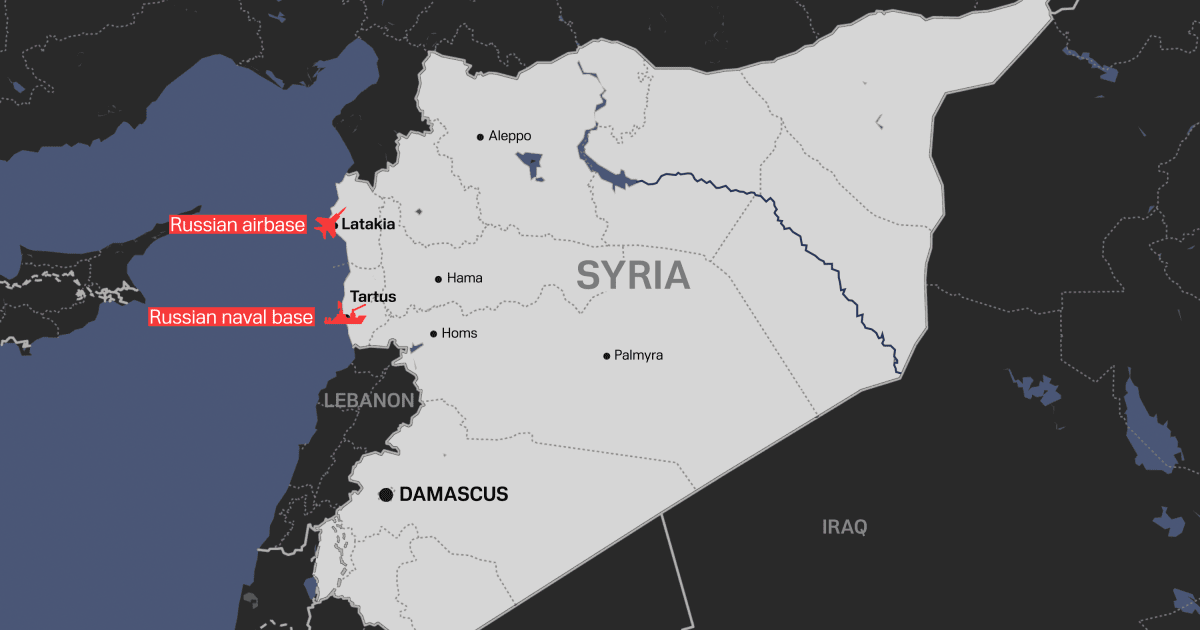
To contain Turkey, Israeli officials have tried to convince U.S. officials that Russia should maintain its Mediterranean naval base in Syria’s Tartus province and its Hmeimim air base in Latakia province, the sources said.
When Israeli officials presented Russia’s continued presence positively in a meeting with U.S. officials, some attendees were surprised, arguing that Turkey – a NATO member – would be a better guarantor of Israel’s security.
Talks with Russia over fate of bases
Syria’s new leadership is in talks with Russia over the fate of military bases. Syria’s Islamist-led government has sought to reassure Western and Arab states of its intentions, promising an inclusive state and seeking to restore diplomatic ties with governments that have shunned Assad.
Syria’s jihadist leader Ahmed al-Sharaa told a group of foreign journalists that Damascus does not want conflict with Israel or other countries. Israeli officials, however, have expressed concern to U.S. officials that the new government could pose a serious threat and that Syria’s new armed forces could one day attack.
Balance of Power
Assad kept the border with the Israeli-occupied Golan Heights quiet for years despite his alliance with Tel Aviv’s arch-enemy, Iran, which had a dominant role in Syria until his fall upended the Middle East’s balance of power.
In the final weeks of former US President Joe Biden’s term, his administration considered offering sanctions relief to Syria’s new leaders in exchange for the closure of two Russian military bases.
Biden’s team failed to secure a deal before Trump took office on January 20, and they expected the new US president, who has grown closer to Russian President Vladimir Putin, to be more open to Russia’s presence.
Israel’s lobbying to keep Syria weak shows a starkly different approach than other US allies in the region, notably Saudi Arabia, which said last month it was in talks with Washington and Brussels to help lift Western sanctions.
