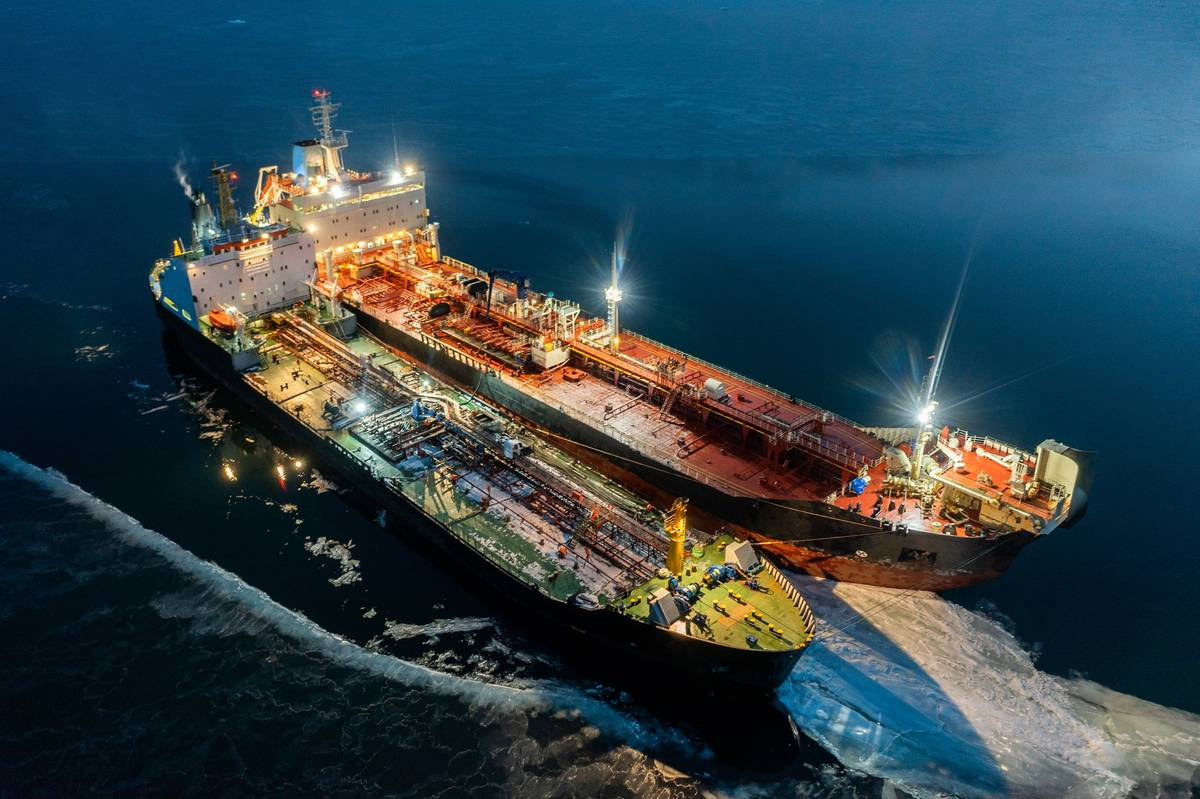
European states with access to the Baltic Sea are developing legal measures that would allow them to carry out mass “seizures” of ships that are allegedly part of Russia’s “shadow fleet” that illegally transports Russian oil.
The proposals under consideration include using international law to seize ships for environmental or piracy reasons.
If these efforts fail, then states could go it alone, establishing common rules and laws that would allow them to seize ships, even if they are located a long distance from their coasts.
And all this with the ultimate goal of Russian oil, which is also the main source of income for Russia.
Half of the trade from the Gulf of Finland
Almost 50% of the sanctioned Russian seaborne oil trade passes through the Gulf of Finland. There are the environmental threats, there are the attacks that have taken place against European underwater infrastructure.
Under Europe’s Nose
The talks reflect Europe’s growing frustration that Russia continues to transport its oil and evade Western sanctions by relying on a growing “shadow fleet” – that is, aging ships with unclear ownership and unknown insurance.
In this way, Moscow has managed to maintain a vital lifeline for its war effort in Ukraine, given that oil and gas generate about half of the Kremlin’s revenue. And all of this is happening right under Europe’s nose, on its own waterways.
Over 80% of Russian crude
In 2022, the EU ordered a ban on all Russian oil imports and, together with the G7, imposed a price cap on Moscow’s international crude sales, hoping to squeeze the Kremlin’s revenues after its invasion of Ukraine. But Russia quickly found ways to circumvent these measures.
Moscow’s shadow fleet – which often relies on dubious insurers to avoid the oil price cap – now accounts for up to 17% of all oil tankers worldwide. The shadow fleet now carries over 80% of all Russian crude.
Baltic Sea is a key artery
The Baltic Sea is a critical artery for this illicit trade. Ships are usually loaded with Russian oil at ports such as Ust Luga near St. Petersburg, before making their way through the Gulf of Finland and the Baltic Sea to the world’s oceans via the North Sea.
Last year, 348 ships from the shadow fleet, which accounts for 40 percent of Russia’s total oil sales, left Baltic ports – a figure equivalent to a third of Moscow’s annual defense budget. By not attacking the shadow fleet, Western allies are allowing Russia’s main source of revenue, which is generating incredibly high and rising military spending on the war in Ukraine, European officials have argued.
The three categories
The proposals fall into three categories.
1. Αuthorities could “seize” vessels that threaten to harm the local environment, such as by causing oil spills. Given that most of these tankers are at least 15 years old and prone to defects, such accidents are a possibility and may have already occurred.
2. Οfficials said, authorities could use piracy laws to seize ships that threaten critical undersea infrastructure, as they have been doing since late 2023, as many vessels have been damaging vital power and internet cables.
3. Ιf international law fails, countries are also discussing jointly enforcing new national laws to make it easier to “seize” ships.
These could include requiring tankers in the Baltic Sea to use a designated list of reputable insurers, officials said, allowing countries such as Estonia and Finland to seize ships that rely on other, less reputable carriers. In all cases, those states would ask the EU to coordinate efforts.