




US President Donald Trump is pushing for a deal to secure Ukraine’s mineral wealth in exchange for US aid to Kiev. Ukrainian President Volodymyr Zelensky has reportedly responded positively to the proposal.
To increase pressure on the Ukrainian side, Trump is citing the nearly $300 billion that Washington has reportedly provided to Kiev in military and economic support.
“Ukraine has very valuable rare earths,” Trump said, hinting at a possible deal for resources for aid. “We’re trying to make a deal where Ukraine gets what we give them in exchange for rare earths and other things,” he added, leaving the definition of “other things” ambiguous. “We’re going to stop this ridiculous war,” he stressed.
In response, Zelensky signaled an openness to “investment” from allies — as long as it bolsters Ukraine’s war effort against Russia. He confirmed that discussions on minerals have been underway for months. “I talked about this in September, when we met with President Trump,” he revealed.
Zelensky had the idea of giving away Ukraine’s mineral wealth
Interestingly, Ukrainian media reported that the idea may have come from Kiev — not Washington — as a way to ensure continued arms supplies from the U.S. Reports suggest that Zelensky’s team even delayed a crucial minerals deal with the Biden administration in order to use it as leverage if Trump were to return to power.
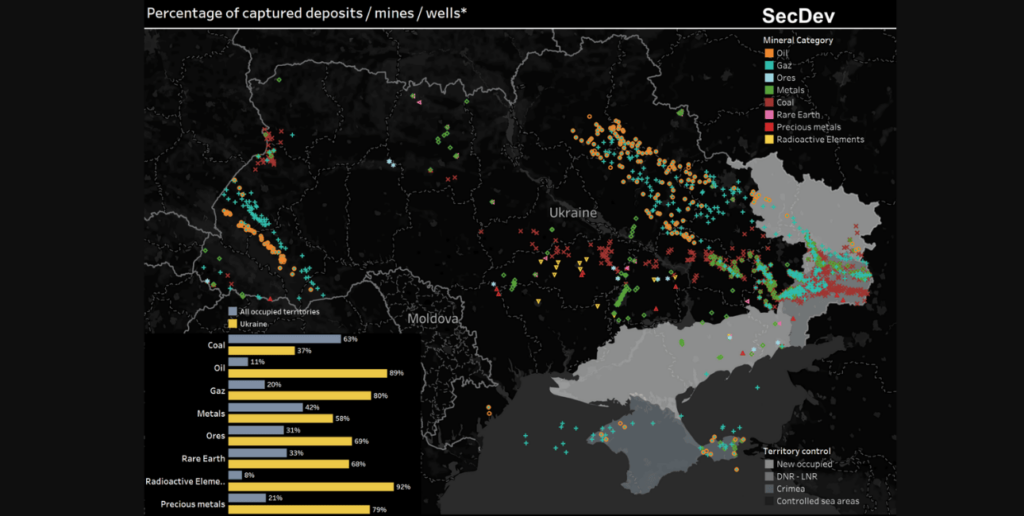
However, there is a major obstacle to the deal Zelensky wants to strike with the U.S. Russia has seized up to 70% of Ukraine’s mineral wealth, with the richest deposits located in the annexed regions of Donetsk, Dnepropetrovsk and Lugansk.
What lies beneath Ukraine’s soil?
What exactly does Ukraine have beneath its soil that has captured the world’s attention? A veritable gold mine of important minerals – making the country a major power in the global raw materials market.
Ukraine is rich in critical minerals and rare earth elements essential to a variety of modern technologies, including batteries, magnets, catalysts and electronic components. These materials are vital in sectors such as consumer electronics, healthcare, transportation, power generation, oil refining and military technologies.
The country has 20 critical minerals and metals, placing it among the top 10 global suppliers with around 5% of the world’s total supply. Among them are rare earth metals such as titanium, lithium, beryllium, manganese, gallium, uranium, zirconium, graphite, apatite, fluorite and nickel, according to the World Economic Forum.
Titanium: Ukraine leads Europe in titanium reserves and ranks among the top 10 in the world, producing 7% of the world’s supply. With 28 known fields, it also yields zirconium as a by-product. The main titanium-bearing minerals are ilmenite and rutile.
Lithium: Ukraine holds one-third of Europe’s lithium reserves, accounting for almost 3% of global supplies.
Graphite: Ukraine holds 20% of the world’s graphite resources, with reserves of about 19 million tons of ore containing 5-8% natural graphite. The country is one of the top five holders of global reserves.
Nickel & Cobalt: Ukraine has 12 nickel silicate fields, which also contain cobalt as a by-product. The country’s cobalt reserves are estimated at 9,000 tonnes. However, Ukraine’s Pobuzhsky ferronickel plant still relies on imported nickel and cobalt raw materials for its industrial needs.
Rare earth elements: Ukraine also has deposits of rare earth metals such as tantalum, niobium and beryllium. Six fields are known to contain these metals, with non-commercial mining taking place alongside that of titanium.
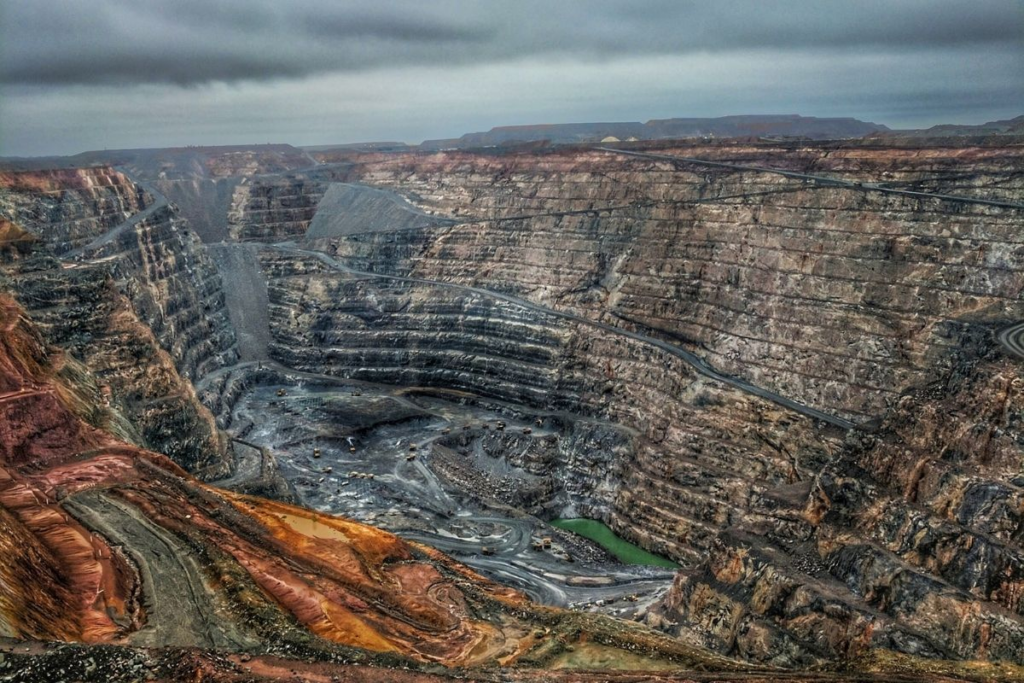
Ukraine’s mineral wealth is valued at $26 trillion
Ukraine also has significant deposits of copper (4th in Europe), lead (5th), zinc (6th) and silver (9th), according to the country’s Ministry of Finance. For example, the reserves of lithium and graphite discovered in Ukraine are sufficient for lithium batteries, with a total capacity of 1,000 GWh, enough to support the production of about 20 million electric vehicles.
Ukraine’s critical materials are valued at $12 trillion, based on estimates that highlight the potential for expanding the global raw materials market. If we include other natural resources such as coal and natural gas, this figure increases to $26 trillion.
According to the Kyiv School of Economics (KSE), Ukraine’s rare earth deposits are concentrated mainly in the central regions. However, they remain largely untapped and their total value remains uncertain.
Therefore, the estimate of $12 trillion, presented at the Davos forum in January 2025, should be treated with skepticism. A significant part of these reserves is unexplored, while the quality and quantity of the resources are still unclear.
The full extent and viability of Ukraine’s critical materials remains unclear, and further exploration is needed to assess their true potential.
Russia owns over 70% of Ukraine’s mineral wealth
Russia has seized up to 70% of Ukraine’s mineral resources, with the highest concentrations in the Donetsk, Dnepropetrovsk and Lugansk regions. These resources are valued at around US$15 trillion.
A recent report in The Moscow Times cites an April 2023 estimate by Forbes Ukraine that puts Ukraine’s total mineral resources at 111 billion tons, worth US$14.8 trillion, consisting mainly of coal and iron ore. However, more than 70% of these are in territories annexed by Russia, which is steadily advancing.
US-China-Russia: Competition for Critical Minerals
Trump’s proposal is not just about Ukraine, it is also about dealing with China and Russia. Ukraine is the world’s fifth-largest producer of gallium – essential for semiconductors and LEDs – and a key supplier of neon gas, supplying 90% of the US chip industry’s needs.
Russia’s full-scale special military operation has caused a global shortage of neon, disrupting US chip manufacturing. The country also has deposits vital to the nuclear industry, including 1% of the world’s zirconium production and significant reserves of beryllium and uranium.
Beryllium is vital to the nuclear, aerospace, military, acoustics and electronics industries. Uranium remains essential for both nuclear and defense applications.
The US president’s interest in Ukraine’s critical materials is likely driven by China’s dominance of the rare earths market. As of January 2024, China accounted for 60% of global rare earth production and processed about 90%, according to the Center for Strategic and International Studies.
As part of his “America First” policy, Trump has sought to boost US competitiveness by reducing dependence on Beijing. Meanwhile, Russia, a major supplier of titanium, nickel and platinum, has also felt the impact of Western sanctions.
These restrictions have exacerbated global shortages of critical materials such as titanium, which is vital to the aerospace and electronics industries.
Future Impact
According to the World Economic Forum, the global market for critical minerals, currently valued at $320 billion, is expected to double in the next five years.
Before 2022, Ukraine was a major supplier of steel plates, titanium, lithium, gallium, iron ore, and manganese to Europe. However, the Russian military operation has severely disrupted these supply routes, leading to more expensive and slower alternative rail lines.
Thus, the battle for Ukraine’s mineral resources represents more than territorial control. It is a critical factor in global technology supply chains and geopolitical power dynamics.


