


The ice in the Arctic is melting and the world is witnessing the emergence of a new ocean, something that had to emerge on Earth since the Ice Age. This new fifth ocean promises to create new sea routes between Asia, Europe and America and the conditions for the exploitation of new energy resources. The so-called Northwest Passage plays a special role in the Arctic, which for hundreds of years has been the dream of sailors, explorers and traders. Until recently, this Passage was frozen and impossible to cross, except by specialized ships, but without commercial viability. In recent years, with the effects of climate change, the ice layer has been sufficiently removed and the dream of navigation through the Northwest Passage has begun to become a reality. In addition to the lucrative commercial transit through the Arctic, this region contains, according to the latest research, 30% of the world’s natural gas reserves and 15% of the world’s oil reserves.
All Arctic countries (Russia, Canada, Denmark, Norway, Iceland, Sweden, Finland and the USA), have agreed through the international organization “Arctic Council” to resolve the problems of sovereignty in the region in a peaceful and diplomatic way. So far, the possibility of a military confrontation is remote, but knowing the recent practices of Washington and its allies, it is not at all unlikely. It is very likely that in the near future the Arctic continental shelf and the two Passages, Northwest and Northeast, will become a negotiating issue that can be used in conjunction with other international developments on the world stage, such as developments in Ukraine and Syria.
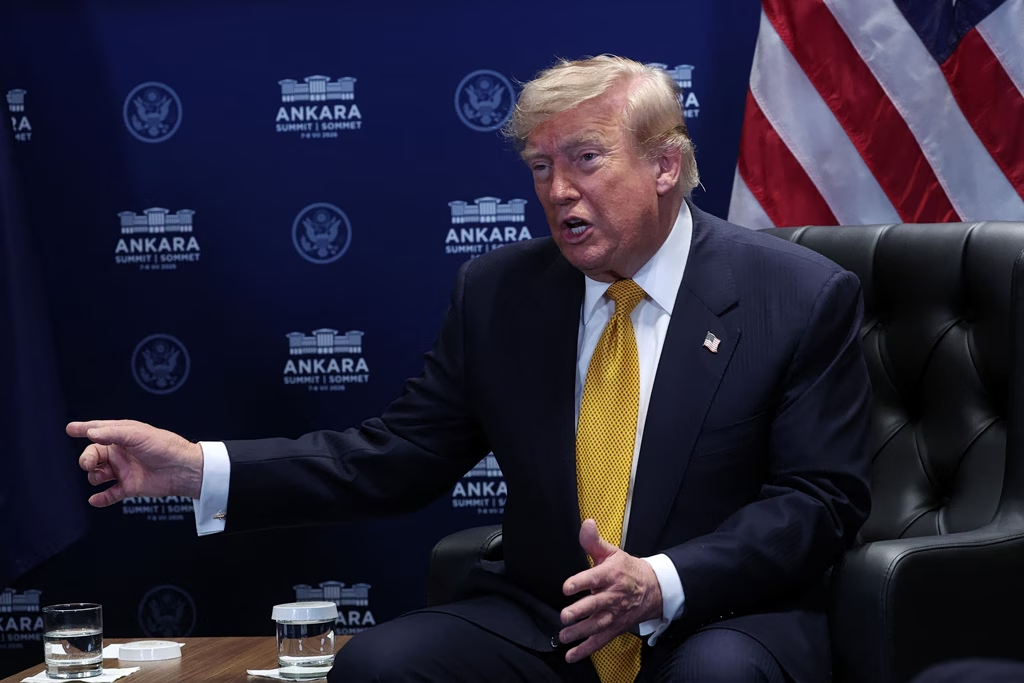
President-elect Trump’s interest in Greenland is neither coincidental nor particularly surprising. Obviously, the way he expresses it is more show business than diplomatic, but we recall that he had expressed his interest in buying Greenland since 2019. Fear of China was the main motivation then and now.
Greenland is a country, but not an independent state. Originally, the Scandinavian settlements in Greenland were part of Norway. When Norway gained independence in 1814, Greenland, Iceland, and the Faroe Islands remained under Danish control. Today, Greenland is still part of the Kingdom of Denmark, but it enjoys extensive autonomy and can decide on many policy areas without interference from Copenhagen. Greenland, for example, left the EU in 1985, while Denmark remains in the Union.
Greenland is considered important to the US. Geographically, the world’s largest island is part of the North American continent and therefore a piece of the North American defense system. The US has had the military base “Pituffik” (formerly Thule Space Force Base) on the northwestern tip of the island since 1951. Today, the base is part of the US Space Force and central to monitoring missile and space activity. The island could also be an important link in maintaining supply lines from the US East Coast to Northern Europe. Last summer, the US Pentagon presented a new security strategy for the Arctic in response to the changing geopolitical situation following the Russian military operation in Ukraine in 2022. However, the first country that worries the US is not Russia, which undoubtedly has direct geopolitical interests in the Arctic, but China, a non-Arctic state.
From Greenland’s perspective, other interests are at stake. The dream of independence lives on, but not everyone shares it. The relationship between Copenhagen and Nuuk has not always been good, and discussions of independence from the Kingdom are regularly discussed. This has intensified as interest in the Arctic has grown. Some also point to Copenhagen’s indifference and lack of understanding of Greenlandic and Arctic issues. US interference in this internal political issue adds fuel to the fire. Greenland is unlikely to become part of the US. But if some form of independence were to materialize, closer economic and military cooperation with both Canada and the US could be a natural progression.
Greenland, as part of the Arctic Circle, along with the rest of the “High North”, is strategically located on the shortest routes connecting Asia, Europe and North America. While 80% of Greenland remains covered year-round by three kilometers of ice, the melting of Arctic glaciers is increasing the island’s habitable surface area and unlocking new natural resources such as oil and minerals.
It is natural, then, that global powers such as the United States, China, and Russia, which are striving to expand their military and economic influence in the Arctic region, are increasing their interest in Greenland as it becomes more habitable. Thus, control of Greenland offers military, economic, and political advantages for these three superpowers who want to keep an eye on their global rivals. The ability to secure the optimal geographical base is transforming Greenland from a barren land of ice into a geopolitical hotspot. Understanding the historical and current Arctic interests of the US, China, and Russia will shed light on the direction the region will take in the future.
Of course, this is not the first time that Greenland has caught the eye of the superpowers. When Germany occupied Denmark, the US supported its ally by increasing its activity in Greenland to ensure that it would not fall under German control. In 1941, US forces established a permanent military presence in Greenland to support its European allies against German naval activity. The US saw Greenland as valuable because it offered natural resources and geographical proximity to US enemies across the Atlantic, as well as meteorological data on the weather over Western Europe. Initially, the US invested mainly in cryolite mining infrastructure, thus securing the supply of minerals critical for the production of aluminum (and, consequently, US aircraft). As the German occupation of Denmark left Greenland vulnerable, Denmark made Greenland a U.S. protectorate in 1941, allowing a greater U.S. presence on the island.
After World War II, U.S. forces returned to Greenland to establish a secret polar base known as “Camp Century.” The base housed about 200 residents and was located far north of the Arctic Circle. U.S. government officials described it as a “remote research community,” but in reality the U.S. stationed nuclear weapons capable of reaching the Soviet Union there during the Cold War. Under the covert “Project Iceworm,” the U.S. hid missiles under ice and snow and hid them from Moscow. However, engineers quickly realized that storing nuclear weapons under shifting layers of ice was dangerous. After construction was completed in October 1960, the project only operated until 1966, when the base was buried under ice.

