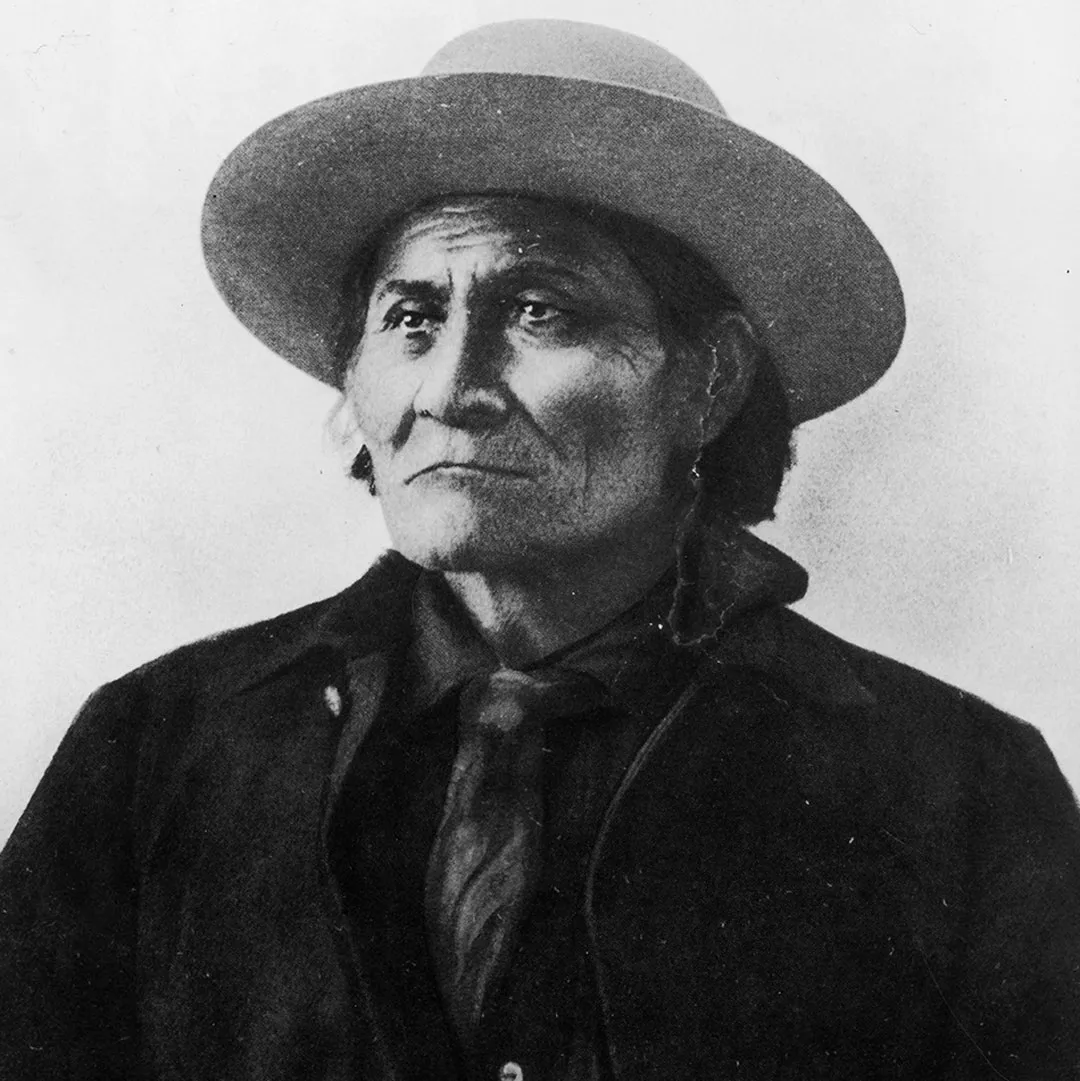
A total of 25 years of bloodshed, from 1861 to 1886, marked the southwestern regions of Arizona and New Mexico and determined the fate of the Chiricahua Apache people, as for their long, stubborn and furious resistance to the power of the American state, they were punished as no other Indian tribe.
The final phase of this war was to be the most famous, as it was associated with the most uncompromising, unyielding and relentless Apache warrior, Geronimo.
The last five months of the war are – rightly – regarded as the most admirable and effective guerrilla warfare ever waged on the North American continent, as 5,000 American soldiers and 3,000 Mexicans fought against 37 Apaches, consisting of 18 warriors, 13 women and 6 children, under Jeronimo , resulting in their complete disorganization and demoralization, as during this time the combined military force of the two states suffered successive defeats, while not managing to kill or capture a single Apache!
The campaign against Geronimo and the last free Apaches is the swan song of the Indian wars.
The Apache people were first exiled to Florida, then Alabama, and then Oklahoma, only to settle after 27 years of wandering and captivity in New Mexico. Geronimo himself died as a prisoner of war in Oklahoma in 1909.
But what were the Apaches? A race of killers that terrorized the regions of Arizona and New Mexico or a people that fought desperately to hold their place from the conquering thirst of the “white” settlers? And who was Geronimo anyway?
A bloodthirsty “savage” who killed anyone in front of him or a warrior who tried to survive under adverse conditions, avenging the injustices against his people?
According to many scholars, the name Apache comes from a Zuni Indian word meaning “enemy”.
Their real name was En-de (Nde) which means “the people”. It should be noted that they were never a single race and they never totaled more than 10,000 souls, while they were made up of 4 groups, completely separate culturally from each other.
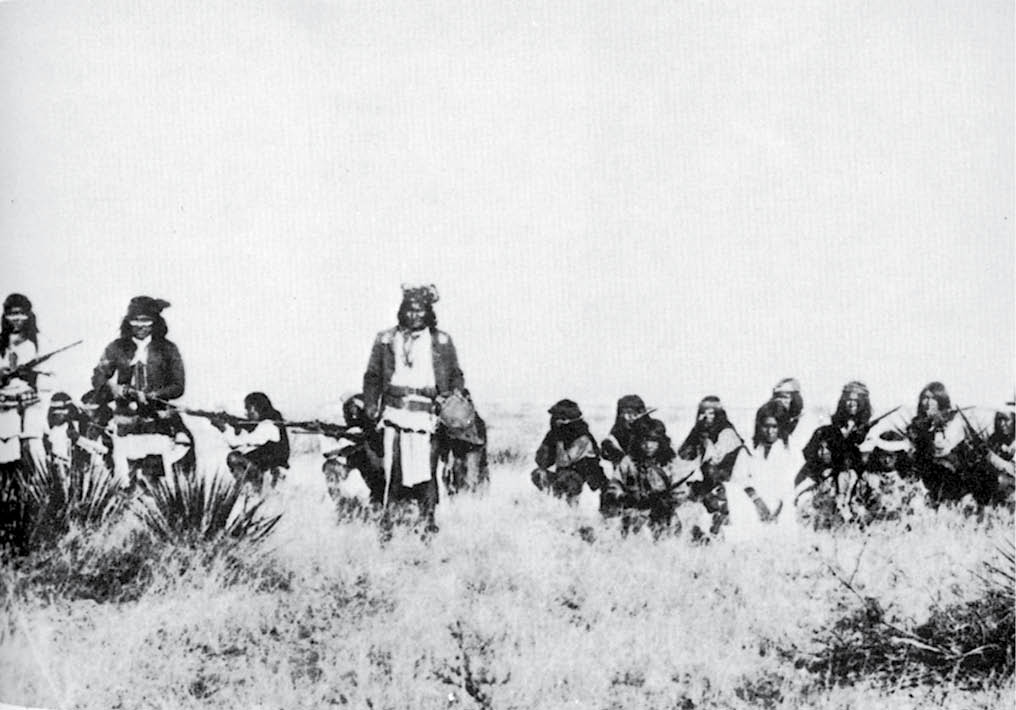
These were the western Apaches who inhabited Arizona and are generally referred to as the Coyoteros, the Mescaleros who occupied the southeastern part of New Mexico which included the Sierra Blanca mountain range, the Hicarrias who occupied the northern part of New Mexico and were completely different from the rest of the Apaches, since they were more like the Plains Indians and the Chiricahuas, who were the “real” Apaches, as they called themselves, whose territories extended from southeastern Arizona which included the Chiricahua Mountains, the southern part of New Mexico , up to the mountains of Mexico.
The Chiricahuas were the fiercest warriors and those who fiercely resisted the US government.
On the contrary. the Coyoteros and Mescaleros (with the exception of some warriors) were used in the campaigns against the Chiricahuas by the American Army, as scouts.
It should be noted that the relations of the Chiricahua with the other groups were often antagonistic and possessed by a feeling of fear on the part of the rest, as the Chiricahua lived with different customs and traditions, rarely maintained close contact with any of the other groups, and often attacked and against them.
Although few in number, the Apaches were formidable warriors. They were trained in war from a very young age.
Their fighting prowess and endurance were legendary, as evidenced by the testimonies of the white soldiers who fought them.
General Crook, one of the best American military men in the wars against the Indians, described them as the “tigers of the human race.” Their warbands were not of fixed size.
US Army Scoutmaster in Arizona Al Sieber boldly stated that even one Chiricahua warrior was enough to cause a disturbance in all of Arizona.
When their camp was threatened, they dispersed with incredible speed. They would then leave dozens of different tracks to confuse their pursuers and then converge at some point elsewhere. There they usually set up a false camp, lighting false fires and ambushing their pursuers themselves.
The water sources were visited only at night. If pressed, the Apaches usually left their horses and climbed into difficult areas in the Sierra Madre range, the Dragon Mountains, or the Pinos Altos, where, according to Lieutenant Burke’s testimony, “not even a wild goat would climb.”
The Apache warrior covered about 90 miles a day and according to Lt. Davis “the thought of following an Apache into the mountains made me despair.” Holding a piece of cactus in his mouth to quench his thirst, the Apache could “walk without water almost like a camel.” In addition, thanks to his deep knowledge of the area, he could find water in seemingly arid areas.
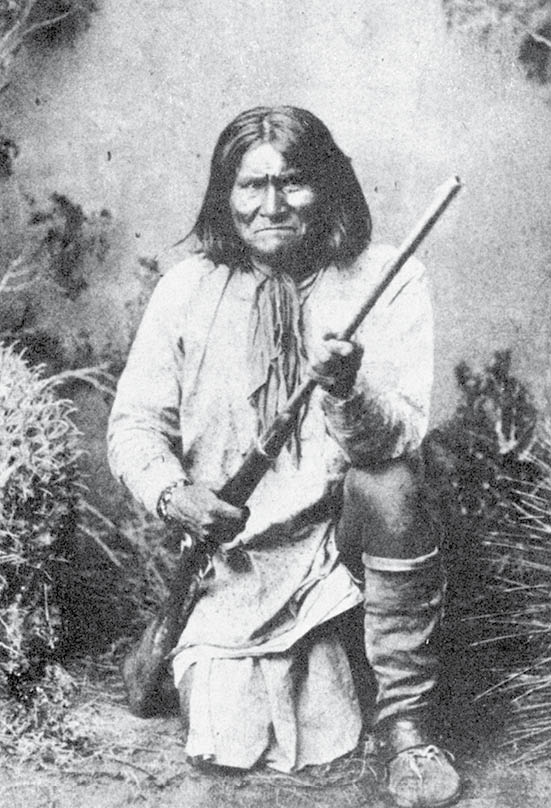
The wars of the Chiricahuas against the Spanish and the Mexicans
The Chiricahua Apache were a nomadic, warlike people whom everyone who came into contact with them wanted to subjugate: the Spanish conquistadors, the Mexicans, and finally the Americans.
The Spaniards over a period of two centuries, with continuous campaigns, tried to conquer them while adopting a policy of genocide against them, but they suffered very serious losses and were defeated. They then cultivated a policy of “divide and rule,” trying to turn the various Apache groups against each other by offering supplies and weapons to whichever group allied with the Spanish.
In addition, they used the tactic of feeding the Apaches with food and supplies and setting them up in camps near the Spanish settlements, in exchange for the Apaches’ peaceful behavior and cessation of raiding. These measures did not work, since the Spaniards themselves violated the treaties and after short periods of peace, the war began with greater ferocity.
After the declaration of Mexican independence, the situation worsened, as the Mexicans treacherously tried to exterminate the principal Chiricahua chiefs, while at the same time the states of Sonora and Chihuahua invited bounty hunters to exterminate them.
To them they offered 100 pesos for the head of a warrior, 50 pesos for the head of a woman, and 25 pesos for the head of a child.
Many massacres took place as bounty hunters like Johnson and Kirker raided the villages with Mexican soldiers when the warriors were away hunting and unleashed their fury on the defenseless women and children.
The Apache response was just as harsh. Since their raids, entire Mexican cities were leveled and it is estimated that large parts of Sonora and Chihuahua were completely destroyed. The hatred of the Apaches for the Mexicans exceeded all bounds, and their attacks upon them were conducted with the greatest vehemence.
The wars against the Mexicans were led by the greatest figures in Chiricahua Apache history, Big Cochise, Mangus Colorado, Victorio, Nana, and a formidable warrior, Geronimo, emerged.
Geronimo
“The most controversial figure of the Indian Wars and certainly the most famous,” a journalist wrote of Geronimo in 1913.
Geronimo was never a Chiricahua chief, but a formidable warrior, visionary and healer.
All the Chiricahua chiefs took his advice because of the power that appeared in his visions. He did not possess the strategic genius of Cochise or the military tactics of Victorio, nor the political clout of Mangus Colorado, but he was insubordinate, uncompromising, a sharp speaker, and restless by nature.
He was troubled by things he did not understand, he had an inexhaustible curiosity, but at the same time he was also a realist.
He was the chief spokesman of the most intransigent group of Chiricahuas and the one who cleared up all disagreements in his group.
His courage in battle was unsurpassed, and, whether with rifle or revolver, he was one of the best marksmen of the Apaches. But what really made him special was his ability to maneuver and not submit to the most desperate situations.
Geronimo was born in 1823 on the banks of the Gila River in Arizona. His real name was Goyakla. As a youth, he was quiet and aloof, perhaps because he lost his father at an early age. Trained as an Apache warrior, he single-handedly cared for his mother and sister.
His life gained meaning when he met Alope and married her, having three children with her.
The event that marked Geronimo’s life happened in the Mexican town of Hanos, in northern Chihuahua. In 1850, residents of Hanos invited a group of Apaches, among whom Geronimo was, to exchange products.
While the men were in town, a Mexican Army unit under Colonel Carrasco attacked the defenseless camp and massacred over 70 women and children.
Geronimo, when he returned from the city, found among the dead the bodies of his mother, his wife and his three children. Not knowing what to do, he retired to the mountains, mourning the loss of his loved ones, when – according to the testimony of his cousin, Betsinez – his power was revealed to him.
According to her, no bullet could kill him.
Armed with this confidence and thirsting for revenge, he joined the large force of Apaches assembled, under the orders of Cochise and Mangus Colorado, to attack the Mexicans of Arispe (the place from which the men who committed the massacre came of Hanos).
The 200 Apache warriors surrounded the town and forced the garrison (about 400 men) to seek them out in an ambush.
In the battle that followed, Goyacla fought with incredible fury against the Mexicans, thinking of his family.
Such was his fury, that every time he attacked, the Mexicans retreated in terror, shouting the word “Jeronimo,” invoking St. Jerome in Spanish. This phrase was adopted by the Apaches and the young Goyacla now became Geronimo.
The battle lasted a long time and ended with the extermination of all the Mexicans. The Chiricahuas had avenged Hanos’ massacre.
Throughout the rest of his life, Geronimo hated the Mexicans beyond imagination and continued to kill them without mercy.
He became the terror of the Mexican Army and the number one threat to the Mexican provinces of Sonora and Chihuahua.
In an interview with American journalists in 1900, he admitted that he did not remember the number of Mexicans he had killed, as it was so great. It is estimated that in their last campaign, Geronimo’s band of Apaches killed around 600 Mexicans.
The Chiricahuas vs. the Americans (1861-1872)
The disposition of the Chiricahuas towards the Americans was at first very friendly. Mongoose Colorado helped them in the war against Mexico, while Cochise maintained excellent relations with the Butterfield Postal Company, allowing mail to pass through and maintaining a supply station at Apache Pass.
Everything changed, however, with the massive arrival of settlers in Arizona, most of whom were adventurers, gold hunters, traders and settled on the outskirts of the Chiricahua region, causing the displeasure and suspicion of the Apaches. Suspicion between the two sides intensified as, after the Treaty of Guadalupe, the Americans asked the Apaches to stop raiding Mexico and they refused.
When large quantities of gold were discovered in the Pinos Altos mountains, Mongoose Colorado offered to lead the gold hunters to locations with larger reserves, but they, fearing a trap, caught him, tied him to a tree and whipped him.
He was then released near Ojo Caliente.
His revenge was cruel as he returned with his warriors, caught the culprits and executed them all.
In 1861 an American lieutenant, fresh from West Point named George Bascom, invited Cochise to discuss the Apache abduction of a child named Ward.
Cochise stated that he knew nothing about the case and offered to help by sending representatives to the other Apache tribes to find the child.
Bascom then accused him of being a kidnapper and ordered that he and his family be held hostage until the child was returned to his family. Cochise reacted quickly, drawing his knife, tore through the tent and, breaking through the cordon of soldiers, escaped.
His wife and his youngest son and his brother and his nephew, however, were captured by the soldiers.
Trembling with rage at this betrayal, the Indian chief captured three Americans in order to exchange them for his family, at the same time declaring that he was innocent and wanted no war. Unyielding, the American lieutenant demanded the return of the child, threatening, in the opposite case, to hang the captives. The result of this dispute was the execution of the Americans by the Apaches and the hanging of Cochise’s brother and nephew by the soldiers. The leader’s wife and son were released.
Thus began the US war with the Chiricahuas, which in its first phase lasted 10 years. Cochise, aided by Mongoose Colorado, Victorio, and Nana, spread terror and death in Arizona. The phrase used by its American residents was typical: “Whoever saw Kociz, did not live to tell about it.”
Geronimo participated in the Cochise War as a simple warrior of the Mangus Colorado group. Soon, however, he, together with his childhood friend Ho, created a group of warriors, who operated independently of Cochise and the other chiefs, based in the Sierra Madre mountains.
Washington implemented a policy of extermination against the Apache. General Carlton, military commander of Arizona and New Mexico, gave clear instructions to his soldiers to kill Apaches indiscriminately wherever and whenever they were encountered.
This policy found agreement with the majority of residents (and especially some businessmen) of the southwestern regions, known as the “Tucson ring”, who were suffering economic damage from the Chiricahua raids and demanded the removal of the Indians by any means.
The war reached its worst in the late 1860s, when the fighting took a heavy blood toll on both sides. Cochise and his warriors, returning blow for blow, killed some of the most prominent inhabitants of Arizona.
The US Army, using scouts from the other Apache tribes, relentlessly pursued the Chiricahuas, who no longer felt safe anywhere.
In 1872, after 11 years of continuous bloodshed, the US government, having spent thousands of dollars on the campaigns against the Apaches, decided to make peace with the Chiricahuas, adopting the camp policy on the Indian question. In addition, Cochise, foreseeing that the Americans would ultimately prevail due to numerical superiority and superior war material, decided to negotiate with the aim of achieving the most favorable terms possible.
Geronimo, on the contrary, hidden in the mountains of the Sierra Madre, prevailed against the Mexicans and continued unabated the fight against the Americans.
In 1872, after constant consultation between Cochise, Washington’s envoy General Howard, and mediator Tom Jeffords (the only white man Cochise trusted), a peace treaty was signed that gave the Chiricahuas their homelands as their camp, with Jeffords in charge. .
This success, for both Washington and the Apaches, did not last long. With the death of Cochise in 1874 and after constant pressure from the Arizonans, the camp was broken up and the Chiricahuas were moved to San Carlos, which was a barren place full of typhus and malaria.
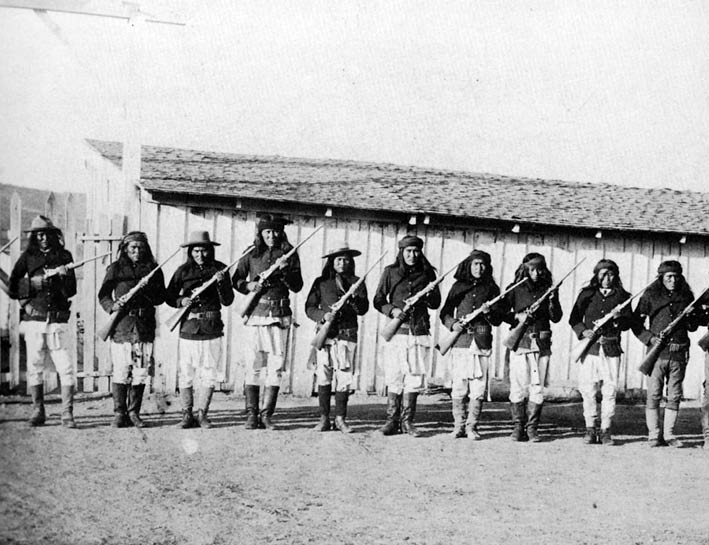
The emergence of Geronimo as leader of the Chiricahuas
Geronimo was the chief exponent of the intransigent Chiricahua group regarding the camp system.
With his group he continued the traditional way of life of the Apaches and opposed Washington’s plans, trying to get the majority of the Chiricahuas on his side.
In this effort, he was assisted by his friend Ho and Nitse, Cochise’s youngest son and hereditary chief of the Chiricahuas.
The government’s new emissary for the Apaches was a 24-year-old conscientious, courageous but vain man named John Clam. The Apaches had given him the nickname “turkey” for his gait, and he was particularly disliked in the military for his domineering ways.
In 1877, Clam went to Ojo Caliente, New Mexico to force the Chiricahuas of Victorio to move to San Carlos. Learning that Geronimo was in the area, he sent a messenger to him that he wished to meet. He then hid 80 armed soldiers in the logistics buildings and waited for him.
Geronimo arrived on horseback with his warriors to confront Clam.
The scene that followed was to be typical of American tactics against the Indians.
Once Geronimo arrived, he and his warriors were surrounded by Clam’s hidden men.
With no other choice, Geronimo surrendered and was taken in irons to San Carlos with the rest of the Chiricahuas, awaiting execution. Clam planned to hang the Apache chief, but was unable to secure the approval of this measure from the Tucson authorities, who feared the Apache outbreak in such a case.
Clam resigned and Geronimo was released.
Over the next four years, Geronimo and his fellow warriors, taking advantage of the camp’s lack of security, fled San Carlos. Hiding in the Sierra Madre mountains, which American officers said was one of the most difficult areas in North America, they carried out lightning strikes and terrorized Arizona and New Mexico.
Geronimo’s War
By the 1880s, the great leaders of the Chiricahuas were no more. The only one who continued to resist with incredible stubbornness was Geronimo and his warriors.
Despite their fierce resistance, however, it was becoming clear that they would not hold out in the end, due to the numerical superiority of the Americans.
When the Apache lost a warrior, they could not replace him, unlike the Americans. Despite their predicament, Geronimo was fighting to defend their freedom and they were determined to sacrifice themselves for it.
The Apache engaged in a guerilla war that was very difficult for the military to deal with, as they took advantage of their deep knowledge of the terrain and their resilience in conditions that the US Army could not match.
Although Geronimo had no more than 150 warriors, the sabotage and destruction he caused brought the southwestern regions of the United States into chaos.
Washington sent to Arizona the ablest American officer in the Indian wars, the only one who understood the Apaches, General George Crook. Crook, a veteran of the Civil War and of the Apache wars, who called him Nandan Lupan, or Gray Wolf, used Apache scouts to find the Chiricahua hiding places and, thanks to his shrewdness, saw that only if he did not leave Geronimo room to move , could force the Chiricahuas to surrender.
Crook’s campaign was one of the largest of the US Army against the Apaches.
With 197 Apache trackers from the other tribes and 700 soldiers, he headed for the Sierra Madre and launched a relentless hunt, not counting time and cost.
Despite criticism from the press about the length of the campaign, Crook continued undaunted to follow Geronimo wherever he led.
Some of the most spectacular battles took place during this campaign. In one of these, Geronimo succeeded with a small band of warriors in breaking the backs of the soldiers and driving their horses to flight. Disaster was averted, thanks to the skills of Crook’s Apache scouts, who rescued most and led them to safety.
Geronimo was in a difficult position. The army had invaded their hideout in the Sierra Madre, they wouldn’t leave him alone, his people didn’t feel safe anywhere, and his supplies were running out. After the pleas of his own warriors, he decided to surrender to Crook and live peacefully even in the camp.
The warrior-legend against all
More than any other action, what changed the course of the war was Crook’s penetration of the Sierra Madre. The exhausted Apache settled in camp and Geronimo, under the supervision of Lieutenant Britton Davis, settled at Turkey Creek.
Washington decided that the Chiricahuas should become farmers, disregarding the habits of the particular people.
Geronimo stayed a year in the camp. After constant tensions with the camp authorities and after a tip-off that Lt. Davis was going to arrest him with the intention of hanging him, he escaped from the camp with 150 men and women and children.
The 15 months of the last campaign against Geronimo took on an epic character and he became a legend. The newspapers of the southwestern regions were seized with hysteria. “Geronimo and his killers are free again,” the journalists wrote.
The Apaches killed 17 whites as soon as they headed into Mexico. Many of the victims had been mutilated. Geronimo killed the settlers, mainly because he needed food, horses and supplies. In many cases, the ferocity with which he killed was retribution for the violence suffered by his own people.
However, he suffered from intense nightmares as he regretted his innocent victims.
When the army approached, Geronimo divided his forces into small groups and scattered them making it very difficult for the soldiers to follow them. When the soldiers believed they had found him in Mexico, he was crossing the US border to head to the camp and take his wife undetected.
New raids of unprecedented ferocity followed against the Apache scouts who were assisting the army. But General Crook again began to press him, not letting him catch his breath, in a pursuit along the border of the two states.
After several inconclusive skirmishes, pressure from the Apaches themselves to surrender, as their people were starving without supplies, led to the decision to surrender again to Crook at Ebudos Canyon in Mexico. Geronimo tried to negotiate favorable terms, but Crook was adamant, telling him that the surrender was unconditional, or he would hunt him down and kill the last Apache, even if 50 years passed. Geronimo declared his surrender, but that night, with 36 faithful companions, he escaped again to the south. Thus began the final phase of the Chiricahua War.
Crook, exhausted and discouraged by the negative reviews from higher-ups in Washington, resigns and is replaced by General Miles, who dismisses the Apache scouts and sends them with all the Chiricahuas from the Florida camp. Using 5,000 soldiers and the heliograph system, he tries to capture Geronimo. The five-month campaign ends in abject failure as Geronimo evades the heliograph, confuses its operators with mirrors, and leads squads of soldiers into ambushes where he exterminates them. During the campaign, not a single Apache is captured or killed!
In desperation, Miles sent Lieutenant Gatewood (whom the Chiricahuas served) along with two Apache scouts, to find Geronimo and tell him that all the Apaches have been sent to Florida.
This revelation demoralizes the Apaches, who yearn to see their families again. Geronimo decides to surrender again, for the last time.
The End of Geronimo and the Chiricahua Apache
Geronimo surrendered to Miles on September 4, 1886 in Skeleton Canyon, on the condition that he be reunited with his family and be pardoned by the US state for the war. Furthermore, that they would allow the Chiricahuas to return to their beloved lands.
But none of this happened. For their resistance, the Chiricahuas were punished like no other Indian tribe.
They were all imprisoned, men, women and children, first in Florida and Alabama and then in Oklahoma. Their descendants still live there today.
Geronimo in 1905 asked President Roosevelt that he and the Apaches return to Arizona. But his request was refused, on the grounds that its inhabitants were very hostile to him and his tribe.
According to those who lived near him in the last years of his life, he regretted surrendering and would have preferred to have died fighting in the Sierra Madre.
In 1909, Geronimo, now 85, fell from his horse and contracted pneumonia in Lawton, Oklahoma.
He succumbed to pneumonia a few days later. Just before he passed out he called out the names of his warriors one last time.
Even today it is said that his shadow roams the imposing mountaintops of the Sierra Madre and the proud war cry of the Apache echoes.