



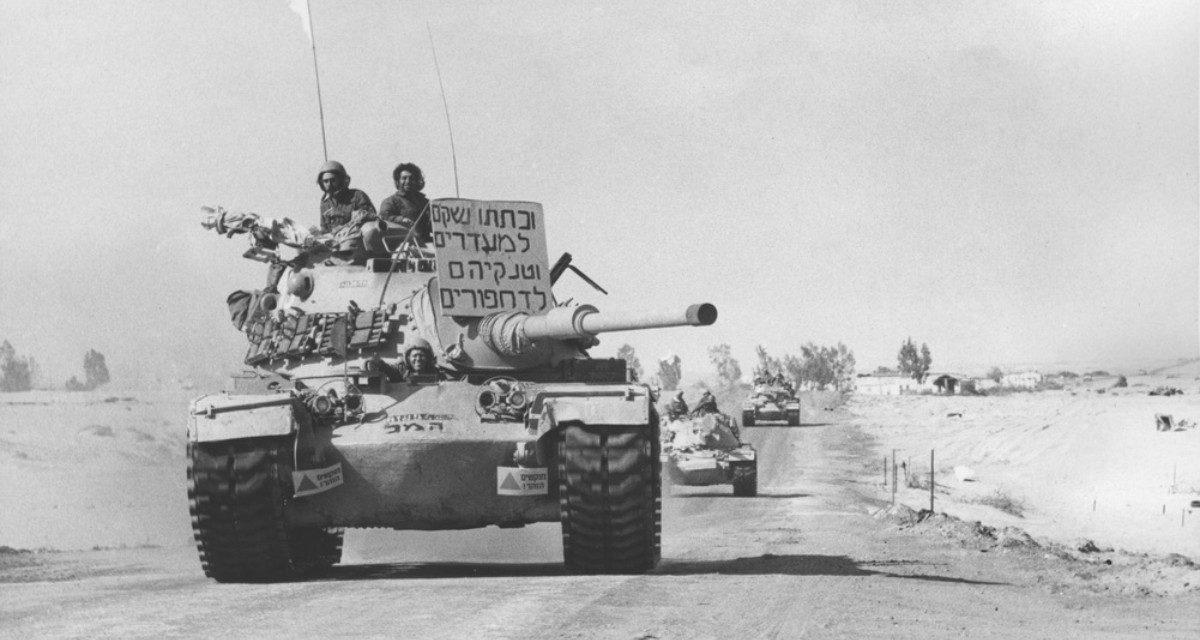
The Yom Kippur War is one of the most important military engagements in the post-WWII period that essentially defined the current status quo in the Middle East, the orchestrated massive attack on Israel by a broad Arab coalition with the burden of operations borne by the Egypt and Syria.
Despite the long planning and preparation and despite the great initial successes of the Arabs, they did not succeed in defeating the Israelis with the result that on the one hand the existence of Israel in the Middle East not just as a state but as a great regional power was definitively established and the Arab attack failed overwhelmingly with huge losses.
In the present analysis we will present the particularities and the lessons learned from the conduct of the specific war. These fortunately, in light of the new developments, which seem to promise the establishment of a permanent peace in the Middle East, so afflicted by constant wars.
The Yom Kippur War was the fifth war between Israelis and Arabs since the establishment of the state of Israel. They had preceded:
- the war of 49,
- the Sinai campaign in ΄56,
- the 6-day war in ΄67, and
- the war of attrition during the years 1969-1970
The most important of all the above conflicts, with catalytic consequences in the history of the Middle East, was the 6-Day War with which the Israelis completed their success in 1949. With a sweeping attack then, they effectively destroyed the Arab armed forces and more than doubled the Israeli-occupied territories, occupying the Golan Heights, the West Bank, the Gaza Strip and the vast Sinai Peninsula.
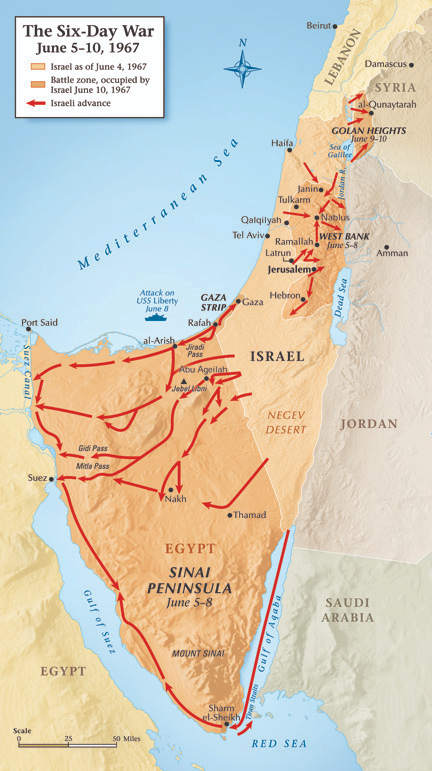
These conquests eliminated to a great extent the enormous territorial disadvantages faced by the Israeli state and offered it strategic security for the first time in its history. Before the 1967 war, the country’s lack of strategic depth was an unpleasant situation for the Israelis. The Syrians from the Golan Heights who dominated the Jordan Valley, in addition to harassing Israeli settlements with constant artillery fire, could easily enter Israeli territory in a hypothetical future attack. The situation was the same at the other borders.
The Israeli territories formed a narrow line between the Gaza Strip and the sea on one side and the West Bank on the other. According to Israeli concerns, any advance by Arab forces could cut the country in two. By launching the 6 Day Blitzkrieg, Israel provided a solution to these problems.
It gained, if only a small, physical cover from Syria with the occupation of the Golan, its border with Jordan was now the physical border of the Jordan River, and the occupation of the Sinai created a huge “cushion” that could absorb the Egyptian attack before it reaches the main Israeli territories. The Suez Canal itself was an additional physical barrier. Also, the time margins for a timely reaction to an air invasion from Egypt quadrupled, reaching from 4 to 16 minutes. The oil fields of Sinai were an additional “gift” for the Israelis.
But the lightning and unexpected victory of ’67 was not without disadvantages, mainly long-term ones. Starting from the least important, we could say that the “pillow” of Sinai also has an antithesis. While in the past the movements of Egyptian forces on the peninsula, easily detected by the Israelis, were a sure sign that “something was going on”, after the war they became more difficult to perceive and interpret behind the Suez Canal. And while the security distance of the Israeli territories had increased, the time to surprise the Israeli forces in an Egyptian attack had decreased.
Far more significant disadvantages, however, are others. The 6-Day War, in the eyes of international public opinion, transformed Israel, from a small country of 2,500,000 inhabitants fighting for its survival surrounded by a multitude of hostile neighbors, into an imperialist power, a huge camp of two and a half million militarists, and the pendulum of international sympathy swung to the side of the Arabs.
Yom Kippur, the Arab Revenge
The occupation of the Palestinian territories that resulted from this war (or, according to some, was completed in it), continues to be one of the most important issues in the Middle East today, and the problems it creates for Israel are well known. Finally, the military humiliation of the Arabs widened the gap between them and the Israelis, deepened the hatred, greatly reduced the chances of a peaceful resolution of the region’s problems, and the desire for revenge it caused in the Arabs, was one of the main causes of the war of Yom- Kippur.
Thus the Israelis largely created what they feared: a total war with the whole of the Arab nations, in which even the existence of the country was at stake, while in addition the overconfidence created by the great victory clouded the perception of the Israelis who now tended to dangerously underestimate the fighting ability of the Arabs. Another important factor that favored the Yom-Kippur war was the competition between the two superpowers at the time in the framework of the Cold War, with the “indirect”, individual local war conflicts.
The main interests of the USSR in the region, which since 1955 armed Egypt and Syria, lay in the possession of naval and air bases in the Mediterranean, economic and political interests in the Suez Canal and the Persian Gulf, access to the Indian Ocean and mainly control of oil, which as a strategic material for W. Europe and Japan was of utmost importance for the S. Union.
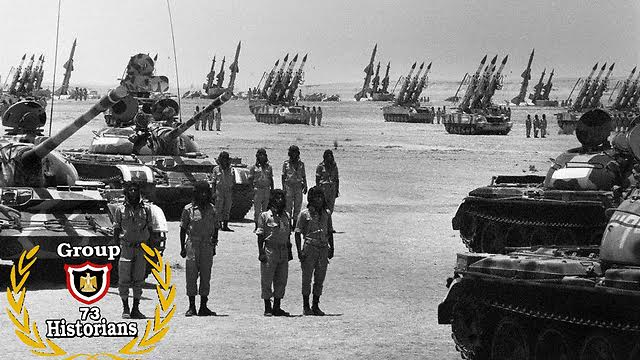
In late 1968, therefore, the USSR began rearming Egypt and Syria on a massive scale, thereby rebuilding the destroyed Arab armies. In November 1968 Egypt launched a major artillery attack on Suez. Israel’s response was a commando raid against electrical installations at Naz Hammadi on the Nile plain deep inside Egypt. This engagement was a precursor to the war of attrition that developed between March 1960 and August 1970.
During the years 1967-1973 there was, regarding the Arab-Israeli conflict, intense diplomatic mobility, both between the superpowers and between the Arab countries and especially Egypt and the superpowers. President Anwar Sadat, who succeeded Nasser after the latter’s death on September 28, 1970, made an overture to the US, clashed with the US and later largely restored relations with it, stabilized the his domestic position, facing a coup in the making, and planned the war of revenge against Israel, together with his counterpart, Syrian President Hafez Assad.
Arab preparations were extensive and aimed at upgrading their weapon systems, manpower, and their strategy and tactics in battle. Egypt, with a population of around 35 million at the time, maintained a standing force of 285,000 men. Great care had been taken to make this force composed of the best men in Egypt, a luxury made possible by the wealth of the country’s human resources.
By the summer of 1973 Egypt had received 2,100 new tanks thus regaining a large tank force. The bulk of the Arab tank force consisted of the T-54 and T-55 tanks, which although had thinner armor than the Israeli M-48 Patton, the M-60 and the British-made Centurion and a smaller caliber 100mm gun against 105, and consequently shorter range, they were nevertheless formidable opponents, their light weight of 35 tons giving them speed and agility, and their low profile making them difficult targets on the battlefield.
Egypt’s forces were divided into 3 armored divisions, 3 motorized, 5 infantry, 16 artillery brigades, 2 parachute brigades, 28 commando battalions and support units. The Egyptian Air Force consisted of approximately 650 MiG-17, MiG-21 and SU-7 fighters.
Syria, with 6.5 million inhabitants, could mobilize 120,000 men and its armed forces were distributed as follows: 3 armored divisions, 1 motorized, 3 infantry, 1 paratrooper and 5 commando battalions. The Syrian Air Force had 350 fighter jets. The armed forces of both countries were organized based on Soviet doctrine, which was also reflected in the personality of their soldiers.
The Arab soldier proved to be a tough fighter, stubborn, with great endurance in the harsh conditions of the Middle East and disciplined, but he lacked imagination and initiative, qualities not favored by Soviet military training doctrine. The armed forces of Israel consisted of 75,000 men, but with a very efficient recruitment system they could rise to 272,000 within 72 hours. The core of the Israeli forces was the brigade.
The Israeli army before the mobilization consisted of 4 armored brigades, 5 motorized, 5 infantry, 1 paratrooper and 3 artillery, while after the mobilization it became as follows: 6 armored brigades, 4 motorized, 4 airborne. The armored forces consisted of 2 tank divisions and 1 half-track infantry battalion and reconnaissance and artillery units. In the enlisted brigades, however, the infantry were transported by trucks and buses of the state transport company Egged.
About 850 tanks, mainly British “Centurions” and M-48s made up Israel’s tank force. Brigades could form “Ugdas”, a word rendered “as a force of operations”.
A large percentage of officers demobilized at the age of 40 and started a new career in their civilian life. Thus the renewal of the army was ensured and a suitable reserve of highly trained leaders was created.
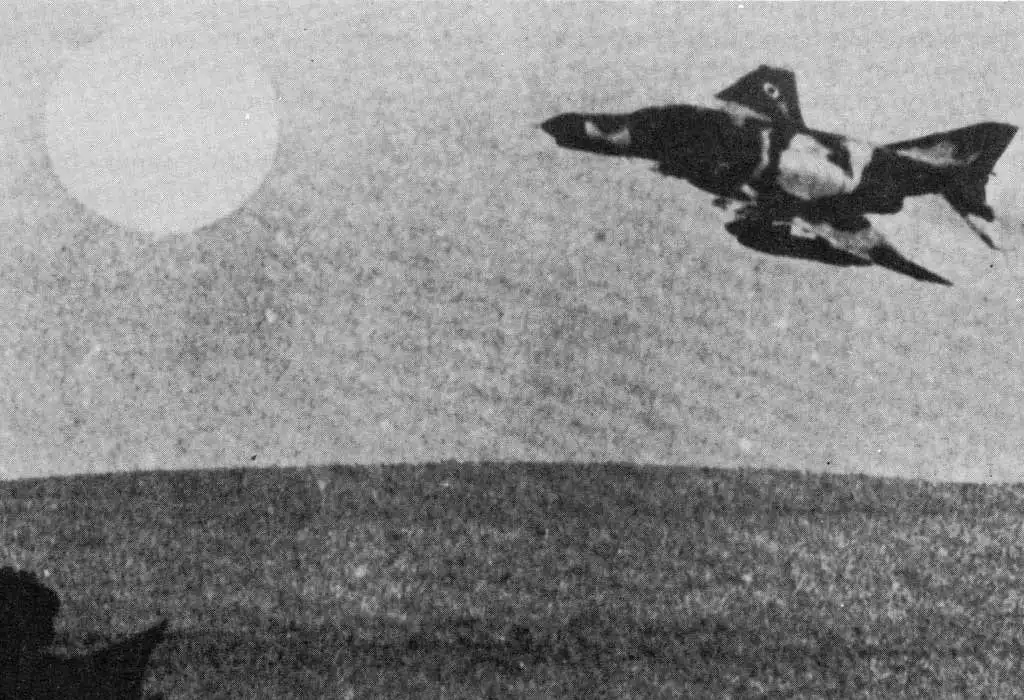
But the main means of waging war for the Jewish state was the air force, which also absorbed the lion’s share of defense funds. It consisted of approximately 500 fighter aircraft of which 113 were Phantom F-4, 160 A-4 “Skyhawk” and the rest French Mirage III and “Super Mister”. A total of 1200 pilots manned the aircraft and were considered the cream of the Israeli youth.
Highly skilled, they had dominated the conflicts with their Arab counterparts.
The Arabs to counter the air superiority of the Israelis created a huge anti-aircraft umbrella consisting of their older SAM-2 long-range missiles, SAM-3 “Goa” as well as the newcomers to the Middle Eastern battlefields SAM-6 “Gainful” ”, carried on vehicles, and the portable SAM-7 “Grail” which covered the low altitudes in cooperation with the self-propelled anti-aircraft guns “Silka” ZSU-23-4 and towed guns of 23 and 14.5 mm.
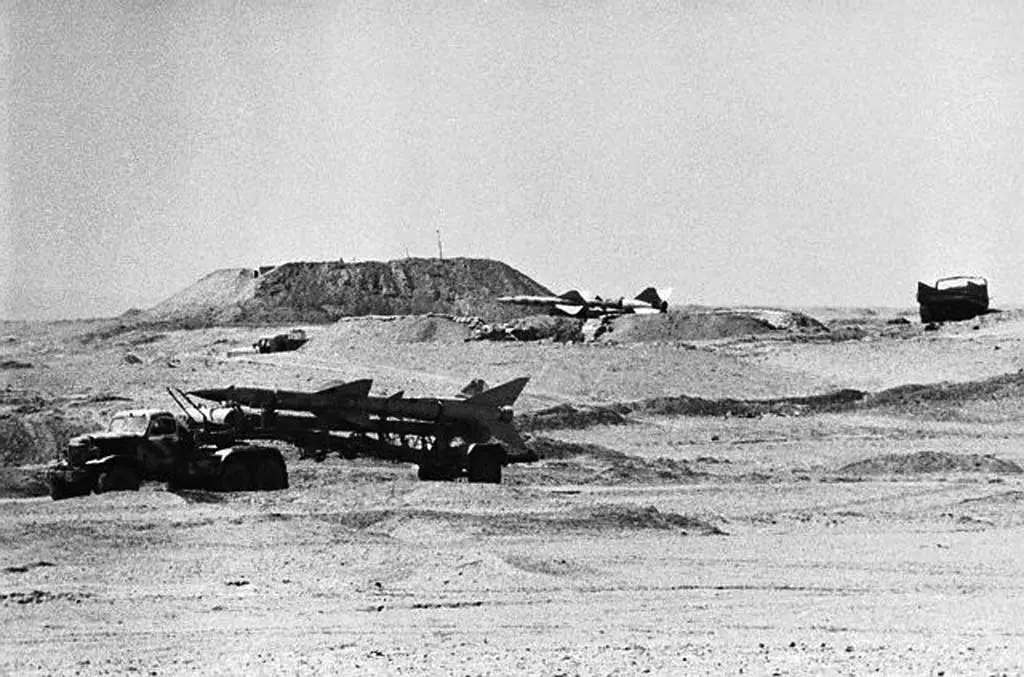
The important element in these systems was not so much their qualitative superiority as the fact that they were in the hands of the Arabs in huge numbers, thus creating an almost impenetrable anti-aircraft network. The Israelis, on the other hand, had limited anti-aircraft means because their air defense position aimed to destroy the enemy air strike by Israeli aircraft, if possible, before it even reached Israeli territory. There were 50 Hawk missiles for the defense of Tel-Aviv and 9 missiles (SAM-2) captured, as well as a number of 20, 30 and 40 mm anti-aircraft guns.
The navies of the adversaries also deserve mention, although their role in the conflict was less than secondary. The Israeli navy, despite being the poor relative of the country’s armed forces, nevertheless maintained a considerable naval force which, based on the three ports of Haifa, Ashdot and Eilat, included 12 French-built Saar-class missiles received in 1970 and 2 rocket launchers, “Reshef” class, of Israeli construction.
The main armament of both classes was 8 Gabriel missiles carried by each vessel supplemented by 40mm cannons. There were also 3 old submarines, the youngest of which, the “Leviathan”, was an old British “T” class and the two remaining “S” class of the B” P.P., 9 torpedo boats of which 5 were of French origin, 3 British and 1 Italian and finally 9 patrol boats armed with 2 20 mm guns.
The Syrian navy consisting of 9 missile boats, 16 patrol boats and a number of auxiliary vessels did not present a particularly appreciable force. On the contrary, Egypt had created an impressive fleet that included 6 destroyers, 25 Osa and Komar class guided missile destroyers armed with Styx missiles, 40 torpedo boats, 16 “V” & “R” class submarines and other auxiliary vessels.
The Egyptian navy, however, was inactive during the war and did not attempt to strike the multitude of targets on the Israeli coast, nor to harass Israel’s supply through its ports. Israel’s military doctrine could be said to have changed from the “lightning attack” that led to the victory of ’67 to the “lightning counterattack” that Israeli war leaders intended to implement in the event of an Arab invasion.
In other words, they were aiming for a few days’ rapid war of movements with a prominent form of armored vehicles on the ground and the air force as the main means of retaliation. This strategy was dictated to a large extent by the conditions that were: the threat on many fronts, the limited human and material resources that did not allow the luxury of a prolonged conflict, and finally the nature of Israeli society that made it much more difficult to accept human losses than the Arabic ones.
The Arabs, on the other hand, aware of their advantages in manpower and natural resources, wanted to neutralize Israel’s ability to wage quick wars. For the air force, as we have seen, they used a very strong a/a cover. To neutralize Israel’s tank force as a means of “blitzkrieg” they equipped their infantry units with RPG-7 anti-tank launchers and mainly with a number of portable A/T guided missiles “Sager” and the older “Snapper”.
The Egyptians also received a number of special vehicles built by the Soviets to bridge the innumerable rivers and canals of Western Europe, and for years practiced crossing waterlogs. The whole preparation of the Egyptian Army for the coming war is generally admirable. Great emphasis was placed on upgrading the intellectual level of the armed forces. Thus the leadership staff was renewed, from young officers, permanent members of the army with a high academic education, supplemented by enlisted graduates of various university schools who had been told that they would remain in the ranks of the army “until the final victory”.
There was an extensive analysis of the 6-day war and the extraction of lessons that was largely helped by the Israelis, who out of frivolity and without much thought, released a lot of information about their victory. Egyptian officers were encouraged to learn Hebrew, and military intelligence published a monthly magazine in the Hebrew language that had information about Israel, thus introducing military officers to the enemy’s world.
Great attention was also paid to stealth and surprise. Only presidents Sadat and Assad of the Arab leaders knew about the coming attack. The rest were going to find out about her after her event. The secret was also initially held by only a handful of senior officers and moved down the hierarchy as the critical day approached.
Continuous “bluffs” with troop movements and general preparations for an attack were made for years at short intervals and caused false alarms on the opposite side. Their goal was to disable Israel’s reflexes and they largely succeeded.
The Egyptian soldiers had been under strict instructions to continue their daily routine, giving a false image of relaxation and calm, until the last moment. Many of them were taking their customary bath in the Suez Canal when the first shots began to fall. Despite all the efforts to conceal the movements of the Arab forces, they had been largely perceived by the Israelis. Mainly the movements of the Syrians in the Golan. In fact, a Beirut newspaper, a few days before the start of the war, had written about the call-up of reserves to the Syrian Army and that Israel was gathering forces in the Golan.
Nevertheless, the reaction of the Israelis was limited and came too late. The conscription order was given almost at the same time as the Egyptians were capturing the first Israeli prisoner at Suez. The choice of October 6 as the day of the Arab attack was based on 3 advantages it provided. Chief among them was that October 6 is Yom Kippur, the day of atonement, the holiest Jewish religious event, and everything in Israel was paralyzed or malfunctioning, even the armed forces.
The second advantage was that for Israel it was election season and so the government would take even harder measures in the face of an Arab threat that could turn out to be false, as it had happened many times in the past. And finally, the attention of the Israeli government, as well as the people of Israel in general, was focused on the issue of Jewish immigrants from the Soviet Union and the problems that had arisen with the Austrian government and its intention to close the immigrant reception center in Schoenau .
The preparation that had preceded it by the intelligence services (specifically by the psychological warfare departments) of the Arab states, was more than perfect. As a result of this effort, the Israeli intelligence network that was famous for its early warning capability for its country’s armed forces, was fooled into not understanding the coming war that was on the horizon. Thus, at noon on October 6, 1973, then Prime Minister Golda Meyer and her staff were surprised to learn of the combined attack launched by the Arab countries against Israel.
The front with Egypt
Time 14:05. The firm voice of the Egyptian commander of the second army corps, General Abu Ghasala, gives the order: “Entrap!” (Fire). Immediately 2,000 cannons began to send their deadly charge against the Israeli defense line “Bar-Lev” with the aim of destroying the fortifications, artillery posts, reserve assembly areas, as well as observation and early warning points. It is characteristic that in the first 53″ of the attack, the Egyptian artillery fired 100,500 shells of all calibers at the Israeli positions!
After the end of the barrage launched by the artillery, the engineer took over the reins, who had to move thousands of tons of sand in record time, in order to create the appropriate bridges to transfer the bulk of the Egyptian Army to the east bank, safely and, of course , speed. The result was admirable, since the engineering men managed to move 640,000 tons of sand, opening 77 passages for the infantry and at the same time building 10 large floating bridges, mainly for the transport of tanks.
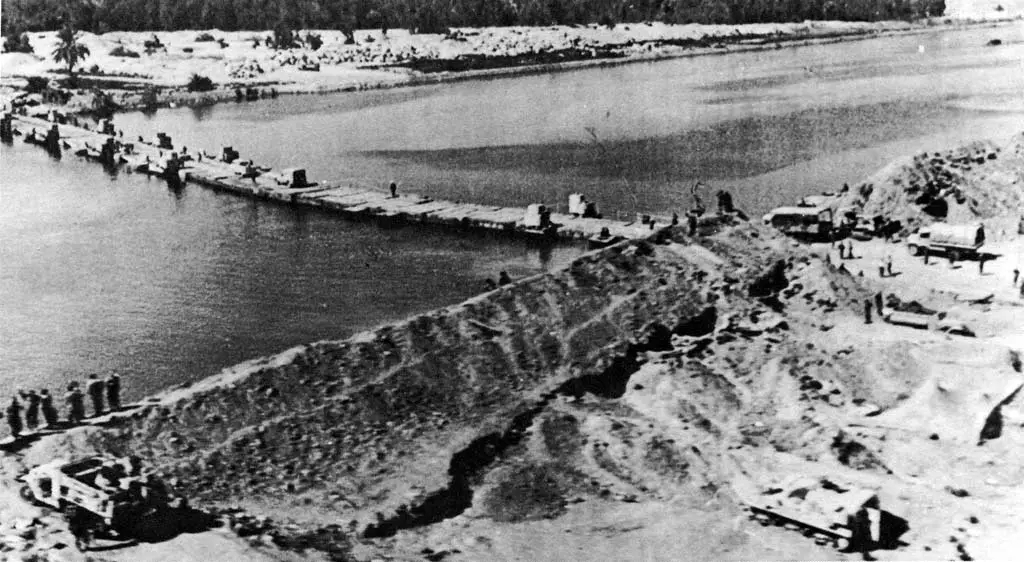
In total, within ten hours Egypt managed to transfer to the Sinai Peninsula five infantry divisions, 800 tanks and a number of anti-aircraft and anti-tank weapons on vehicles. This whole effort was called the “great crossing”, occupying a special place in military history, not only for the volume of troops that crossed by watercraft, but mainly for the speed with which all these bridgeheads and passages were constructed from the engineering corps of Egypt.
The first “wave” of infantry that came across was also the “surprise” of the Egyptians for the Israeli Army. Commandos equipped with “Sagger” man-portable anti-tank missiles, RPG-7 anti-tank missiles and the also man-portable SAM-7 anti-aircraft missiles were under orders not to strike the Israeli defense line (this was the mission of the second “wave”), but instead to penetrate 20 miles to the rear and destroy the tank force of Israel there, as well as its artillery, thus maintaining for 24 hours the areas it had occupied under the weight of possible attack either by enemy tanks or aircraft.
The second “wave” – which, as we mentioned above – was aimed at breaking up the Israeli defense, did not meet much resistance, since the artillery and aircraft with their successive attacks, managed to destroy most of the defensive works of the “Bar-Lev” line.
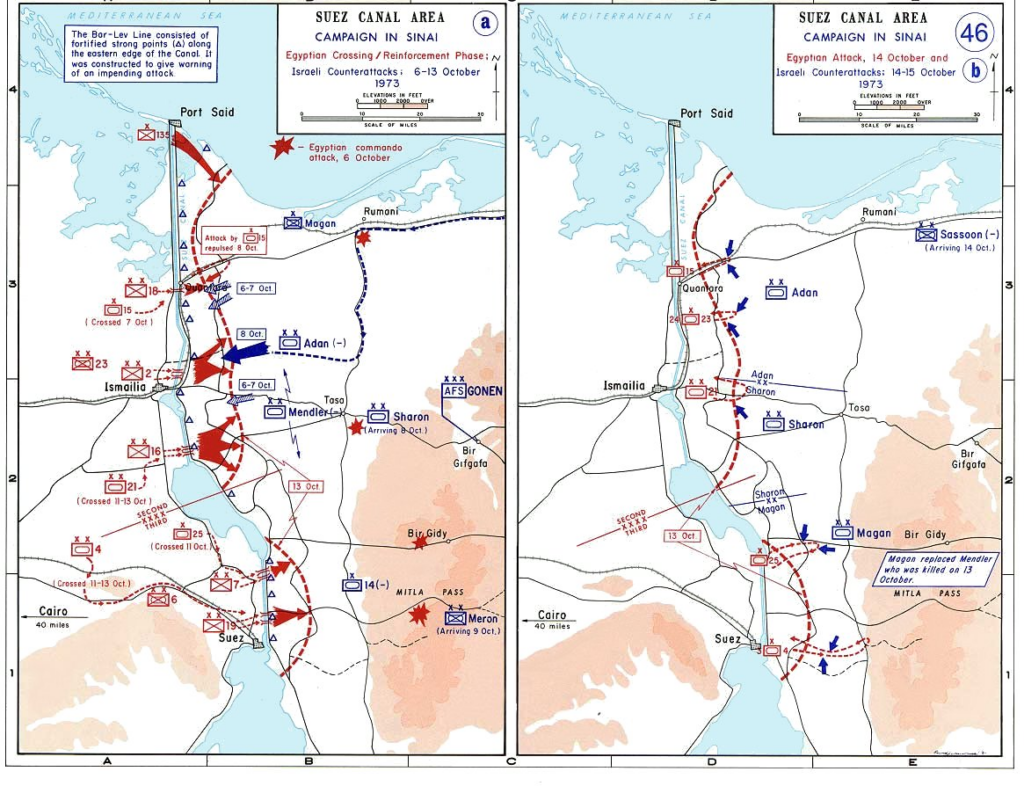
The first major battle between the opponents behind the Israeli defense line resulted in a heavy defeat for the Israeli troops, leaving on the battlefield 1,000 dead and 200 destroyed tanks. General Mendeler, seeing the great danger that mainly the tanks of the Israeli Army face from the action of the Egyptian commandos, decides to move against their positions, with the aim of destroying them.
In the modern theater of operations, however, the volume of troops does not necessarily ensure supremacy. So on the afternoon of October 7, after a fierce battle, the Israeli armed forces found themselves with 200 tanks less and their morale “severely wounded”. Positive developments for them led the Egyptian staff to the decision to advance 40,000 men and 800 tanks, eight miles deeper into the Sinai desert.
Under these conditions the Israelis on October 8 attempted to break through the Egyptian positions with a large-scale counterattack from three different sectors. From the north under the command of General Andan, from the Center under the command of General Sharon and from the south under the command of General Mendeler. And this attack was intercepted by the Egyptian troops with even greater losses for the Israeli army.
Thus, after 25 years, the Egyptian Army managed to create a large breach in the Israeli defense, which was not exploited. The Egyptian staff, with a long delay, decides to attack its forces against the Israelis from two directions, in order to create a suffocating cordon around the enemy’s troops and bring about their complete neutralization. To achieve this goal, the Egyptians had devised two plans. The first one was quite bold and risky.
It was inspired by a brilliant and dynamic paratrooper, Major General Saad Shazi. The plan provided for the over-concentration of the front in the Sinai with the amphibious landing of forces behind the Israeli lines, on the shores of the Mediterranean. The design and organization of the plan was very good, but this Egyptian venture was never executed. The gathering and transport of the necessary troops and materials was never completed, because less than 24 hours later, the front had collapsed and the Israeli Army had entered Egyptian territory.
The second draft was also delayed, but also roughly drawn up. Egyptian staffs deploy 1,000 tanks on a 90 mile front! Very quickly the tanks found themselves far from the infantry and especially from the anti-aircraft “umbrella” provided by the SAM missile arrays until then. Thus the Egyptian tanks fall into the trap of the Israelis. The countdown had begun…
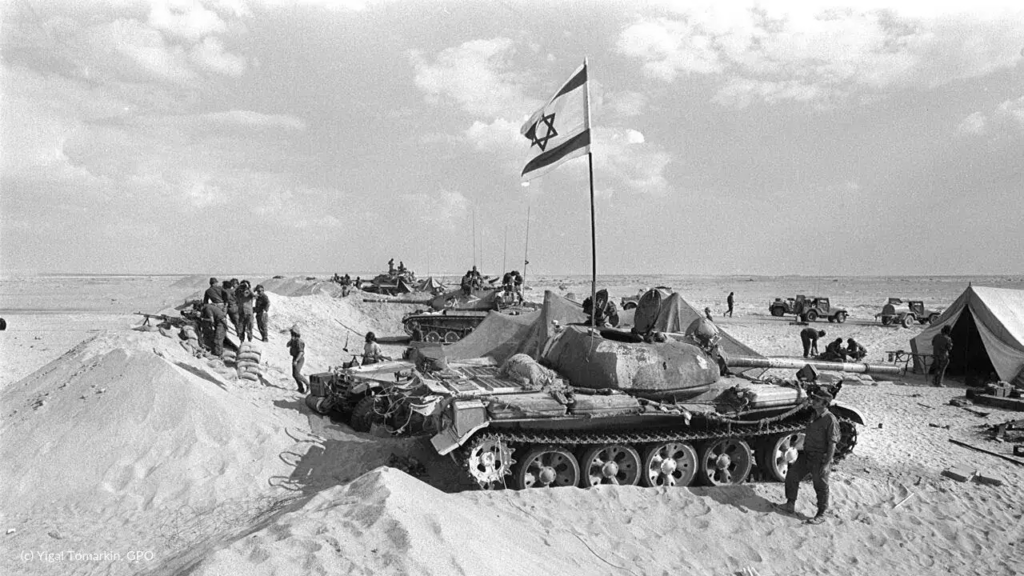
The calendar read October 14, when Egyptian tanks collided with Israeli tanks in a classic tank battle the likes of which history had not seen since 1945. The end of this conflict gave, for the first time since the beginning of the war, the right to the Israelis to celebrate a great victory. Four hundred and sixty Egyptian chariots were destroyed, compared to 40 of the Israelis.
It is known that, “winning a battle does not win the war”. The Israeli staff knew this very well and thus did not rest. On the contrary, he believed that the moment had arrived to manifest the supreme strategic move that would be able to reverse the outcome of the war up to that point. Both as a conception and as an implementation, the plan involved many risks, but the enterprise had to succeed at all costs. For this, a commander was needed who was intelligent, multi-talented, but above all combative and capable of risking everything in order to succeed in his mission. There was only one person who met these conditions. General Ariel Sharon.
On the night of October 15-16, using floating bridges, the Israelis pass a reconnaissance group consisting of 7 tanks and 36 paratroopers, from the east to the west bank of the canal. The following morning the crossing of the 247th Brigade, which had two objectives to accomplish, began.
The first was to create strong bridgeheads, capable of withstanding the weight of a massive enemy attack, and the second to neutralize any enemy pockets of resistance near the waterways of passage on both sides of the canal. Israeli paratroopers of the 247th managed to keep these passages safe, giving hand-to-hand combat against the numerically superior Egyptians, with the most deadly being in the Chinese Farm area.
Meanwhile the forces of Generals Sharon and Adan between October 16 and 17 managed to break through the Egyptian defense lines in the Sinai, destroying hundreds of Egyptian Army tanks leaving the final clearing of the west bank to the reinforcements sent to General Sharon and the air force. The final blow is delivered on the night of October 17, when Israeli troops and tanks are moved into the African territory of Egypt.
After entering, the Israeli forces split into two objectives. To the south, under the command of Generals Adan and Magen, with the aim of knocking out the 3rd Army of the Egyptian Army and to the north, under the command of General Sharon, with the aim of capturing the command, communications and supply bases of the Egyptian armed forces in Ismailia.
The Egyptians desperately tried to destroy the Israeli pontoon bridges on the canal, sending strong forces from the 3rd Army. However, a small detachment from General Magen’s division, with the help of the air force, managed to stop the attack, destroying 100 tanks along with the last hopes of the Egyptian generals.
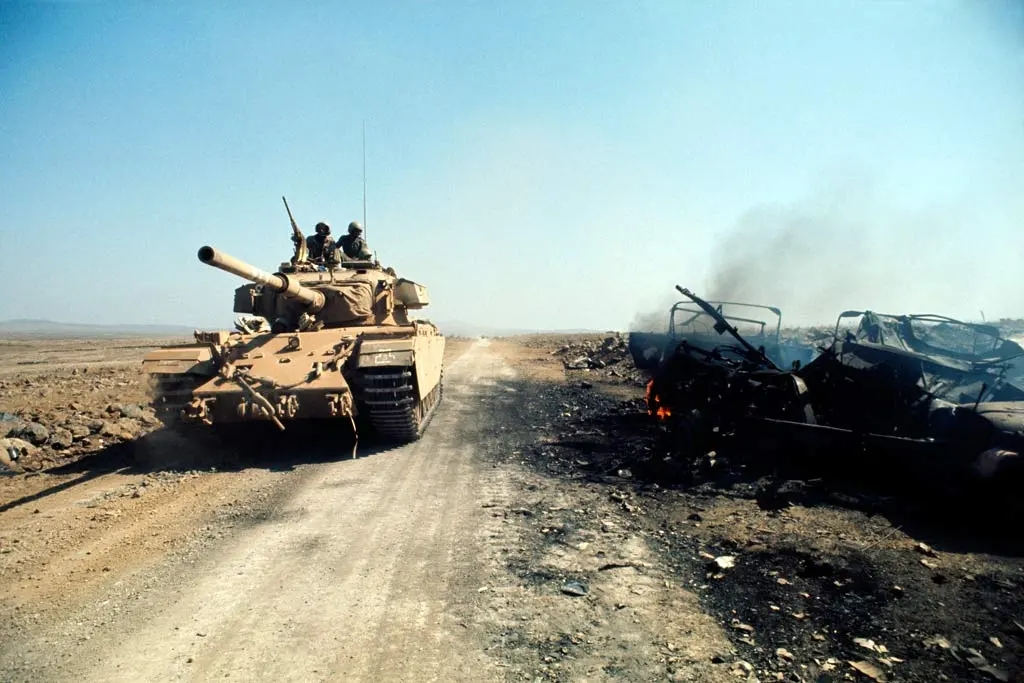
The course of the Israeli forces in the area was stormy and only the intervention of the OHE (after pressure from the two -then- superpowers) for a cease fire, saved the 3rd army from total destruction and Egypt from its complete humiliation. It would be worth mentioning that the Israeli Air Force (Chel Ha”Avir), which had contributed so much to the previous Arab-Israeli wars, was completely inactive on the Egyptian front. The reason for its absence was none other than the strong air defense that the Egyptians had put up, relying mainly on the Soviet surface-to-air SAM missiles that forced the Israeli F-4s to be far from the battlefields.
It was only when the ground forces managed to neutralize these missile arrays, in the final days of the war, that Chel Ha”Avir offered her valuable services, if only briefly.
The battle in the Golan
The Syrians launched their attack on the Golan Heights in admirable timing with the Egyptian attack on the Suez Canal, taking the Israeli advance forces by surprise. The Syrian forces that launched the attack consisted of 2 armored divisions with 600 tanks and another 2 motorized infantry divisions with 30,000 men and another 300 tanks. The Israelis on the Golan front had 90 tanks covered in fortified positions and about a thousand infantry. The ratio was overwhelmingly in favor of the Syrians.
The Syrian attack, instead of sniping at the enemy’s defense and then concentrating on its weakest point by spearing the armored vehicles, was manifested along the entire length of the front with the tanks advancing side by side, opening a path between the Israeli minefields and the anti-tank ditch under heavy artillery cover, leaving the extermination of isolated pockets of resistance to the infantry following in BTR-60 armored vehicles.
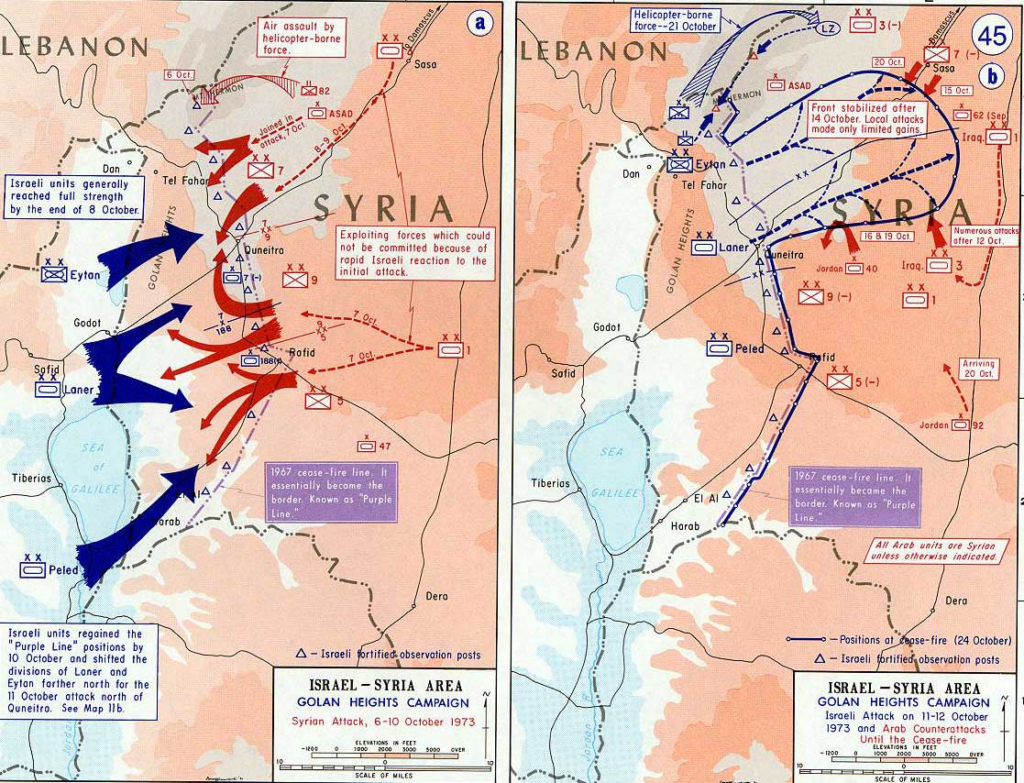
The Syrians aimed to capture the abandoned city of Quneitra and the Bnot Yaakov bridge south of it. If that were the case, they could attack Galilee and cut Israel in two. The situation was critical for the Israelis because in the Golan they did not have the luxury of the large areas of the Sinai front. From the cease-fire line of ’67 to the Galilee, there was only 30 kilometers of unimpeded terrain for tank movement, suitable for the Soviet offensive doctrine adopted by the Syrians.
The Israeli forces on the front line resisted fiercely. The few Israeli tanks cleverly used by their commanders and taking advantage of all natural ground cover hit, dodged, and re-attacked the Syrian tank groups inflicting heavy casualties and halting the momentum of the attack while Israeli reinforcements were already on the way.
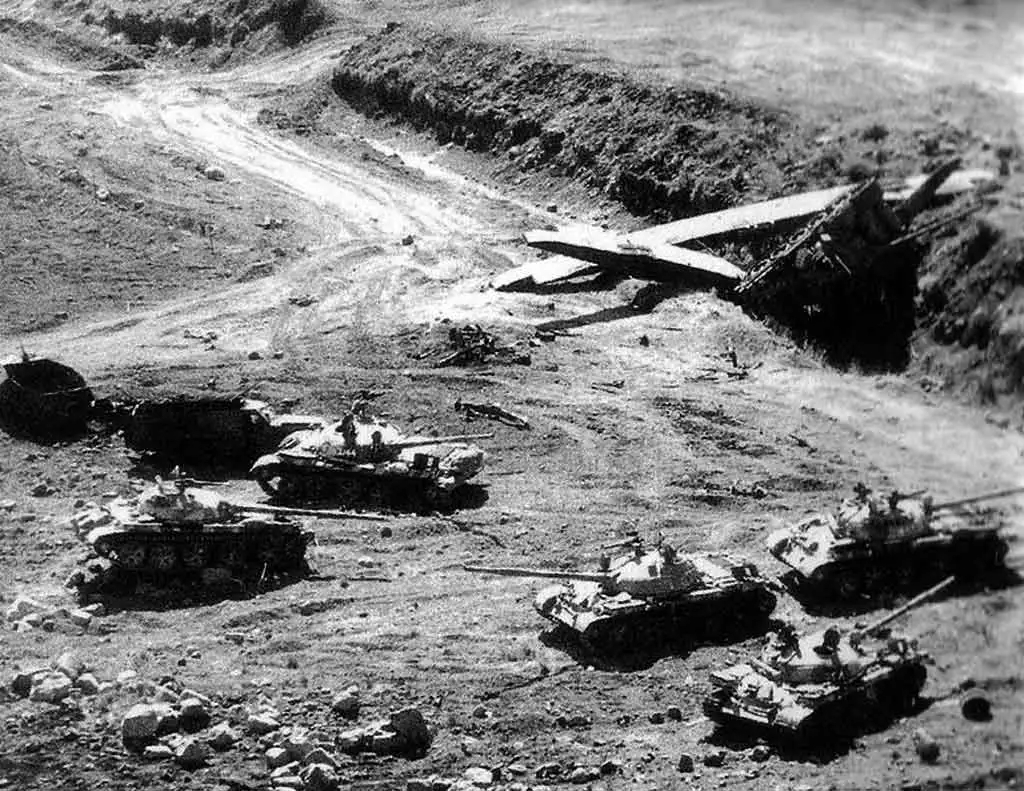
APDS armor-piercing rounds from the 105 mm guns of the M-48 and Centurion proved particularly effective. In addition, the Centurion’s ability to mount high-explosive HESH rounds, the effect of which was to call shrapnel from the tank’s walls and sweep through its interior, was another advantage of the IDF, which was enhanced by the fact that the T-54 and 55 carried their munitions in the turret which could be ignited even by an ejected round.
The absence of escape hatches dramatically reduced the chances of saving the crew in the event of a serious attack on the tank, and this fact caused insecurity among the men of the Arab crews, as a result of which they abandoned their tanks with relative ease, even if there was no serious reason.
Much of the lost Arab chariots had been abandoned by their men. There was also an excessive lack of caution on the part of the Syrians who often “advanced as if they were marching” which thus became an easy target for the Israelis who, on the contrary, tried to surprise, taking advantage of any kind of physical cover, to escape and strike again, carrying out something that, with exaggeration, would we could call it “tank guerilla warfare”.
At dawn on Sunday, October 7, 1973, one of the largest tank battles in history took place, 1,500 Syrian tanks, with the reinforcements that had arrived in the evening, tried to break the Israeli forces and move towards Quneitra, capturing the Bnot-Yaakov bridge and cutting off thus the only Israeli supply line to the central Golan.
The Israeli tanks, covered behind mounds of earth in positions prepared at night by the engineer’s bulldozers, caused very serious losses to the advancing armored vehicles, which nevertheless managed to pass the Israeli defense and reach about 8 km.
From the Bnot-Yaakov bridge where they were again intercepted by Israeli reinforcements. This was also the final point of the Syrian attack. From now on, what Moshe Dayan had said would begin to apply, that is, the same road that leads from Damascus to Tel Aviv also leads from Tel Aviv to Damascus. Another reason for the Syrian failure that we could mention is the inexperience of the Syrian tankmen, an inexperience made even more noticeable by the well-received T-62 tanks that appeared on the scene on the second day and were especially feared by the Israelis.
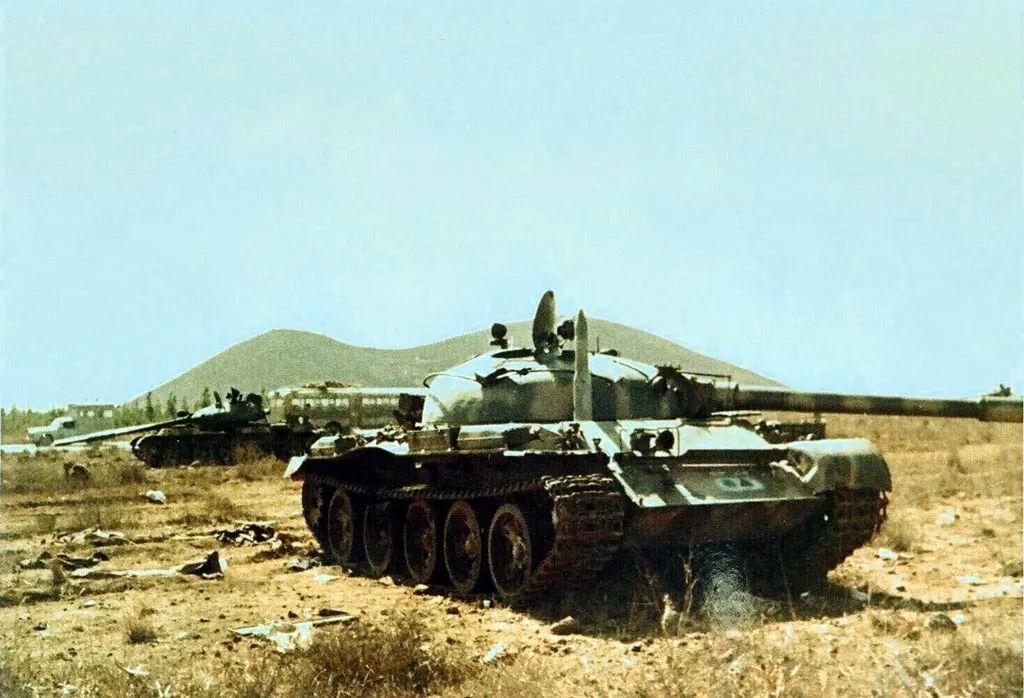
On one captured T-62, the odometer had registered only 40 km, typical of how hastily they entered the battle, while others had not had time to paint them and still had the gray color they received from the factory in S. Union. So they did not take advantage of their advantages, which were the most powerful 115 mm gun in the M. East until then, the laser rangefinder and the night fighting systems that the Israeli tanks lacked.
The Israeli Air Force throughout the fighting provided admirable air support, but suffered heavy losses from its undervalued anti-aircraft network of SAM missiles and anti-aircraft guns. By Saturday evening, 34 aircraft had been shot down, while total losses on the Golan front reached 80 out of a total of 115 downed aircraft.
The Israeli Air Force also bombed Damascus where 100 civilians were killed or wounded, according to the Syrians, and the Soviet cultural center was also hit. Other economic and political targets in the cities of Homs, Tartus and Latakia were also bombed. In the last two, which are also the main ports of Syria, fierce naval battles took place in which almost the entire Syrian fleet was destroyed, and Russian, Japanese and Greek cargo ships were sunk.
The Syrians bombed the Druze areas and launched 2 Frog missiles against the city of Miegdal Haemekta in the western Galilee and another one against Kibbutz Gevat. The Israeli counterattack began on Monday, June 8, and it was nothing like the stormy foray of ΄67. The Israeli forces were now advancing with strong artillery cover and after taking a position after a hard fight, moved the artillery and resumed the attack, while their air force had not succeeded in neutralizing the Syrian air defenses and providing similar services as 7 years ago.
On the same day that the Israeli counterattack began, the Iraqi forces also entered the battle, while 1,800 Moroccan soldiers were already fighting on the side of the Syrians. However, the lack of good understanding caused disaster for the Iraqis. The two squadrons of Iraqi MiGs that flew to the Golan front had not coordinated their IFFs and thus were considered enemy targets by the Syrian air defense system which opened fire and shot down 4 of them, while the Iraqi 3rd Armored Brigade due to lack of proper orders directed on the battlefield without having a clear understanding of what was going on, without coordinating her radios with the other Arab forces, and ignoring the code signals.
As a result, they suffered heavy losses when they came into contact with the Israelis. At the same time as Iraq and Morocco, troops from Tunisia, Kuwait and Sudan were fighting alongside the Egyptians on the Sinai front. The only “frontline” Arab state not involved in the conflict was Jordan. Apparently, King Hussein feared Israeli revenge if they prevailed against his geographically exposed state.
But after strong pressure he partially gave in and sent his 8th Armored Brigade to fight in the Golan. The Jordanians attempted a counterattack against the Israeli positions using tactics learned from the British. So the Jordanian “Centurions” concentrated their strength on a narrow front attempting to open a corridor for the following infantry. And indeed with the sacrifice of 14 tanks out of the 150 that took part in the attack, they broke through the Israeli lines.
But the Iraqi artillery, which should have started to fire half an hour before, offering support to Hussein’s tanks, belatedly opened fire on the positions already occupied by the Jordanians who thus found themselves under a rain of missiles. Then the Syrian Air Force began to shell the Iraqis who were coming for reinforcements and Colonel Rafea Hilawi who was in charge of the operation foiled it. By October 21, the Israelis continued their counterattack, occupying 500 square kilometers of territory that they did not hold before the start of the war, but did not continue towards Damascus as they had threatened.
Probably because they did not have the military capabilities to achieve it, probably because of international diplomatic pressures mainly from the Soviet Union, and possibly because of fear that Jordan would actually enter the war by opening a third front, or finally because of combinations of all of the above.
Conclusions
The primary conclusion of this war can be summed up in one word: “Surprise!”.
We saw that in the first days of the war that both the Egyptians and the Syrians managed to penetrate deep into Israeli territory relying on the element of surprise, which really caught the Israeli war machine unprepared.
The Arab forces lost the war not because of the lack of combativeness of their armed forces (which some wrongly attribute to them), but because of the ill-conceived operational plans drawn up by their countries’ staffs.
Other important conclusions from this war are:
- The use of new weapon systems, such as, for example, the mobile arrays of Egyptian surface-to-air missiles SAM that had effectively put one of the best air forces in the world out of action, and the small but powerfully equipped with anti-tank missiles, Egyptian commando groups that scattered the panic and destruction in the early days of the war among the Israelis in the Sinai Peninsula.
- The readiness of the reserves for immediate mobilization in case of war, which proved to be a lifesaver for Israel.
- The night war. The limited capabilities and lack of training of the Arab soldiers, mainly due to religious restrictions on night warfare, deprived them of victory many times, in contrast to the Israelis who were properly prepared and trained, thus winning many battles.
Enemy supply and losses
During the war a huge airlift of 80 transports of the USSR Air Force and 20 commercial aircraft of AEROFLOT daily supplied the Arab states with war material mainly SAM-6 missiles, anti-tank missiles and launchers, artillery and ammunition. During the second week of the conflict, cargo ships from Black Sea ports carrying T-54, T-55, T-62 tanks and MiG-21 fighters began arriving in Alexandria, Latakia and Tartous.
The U.S. on the other hand they sent to Israel quality upgraded equipment with C-5 Galaxy aircraft and ships, which included “TOW” anti-tank missiles, which proved to be extremely effective, and 32 “Skyhawk” and “Phantom” fighters. Rokai and Wallai smart bombs were also received, as well as Shrike anti-radar missiles to counter the air defense network, while aircraft ECM spindles, capable of blinding SAM 2 and 3 missiles, were rushed forward.
The losses of those involved in the Sinai war were as follows: The Arabs had about 15,000 dead, wounded and prisoners of which about 8,000 were on the Golan front and the Israelis 2,532 dead and about 300 prisoners. 449 Arab and 105 Israeli aircraft were shot down and 130 SAM launchers of all types were destroyed. The Israelis lost 420 tanks and the Arabs 1,274 (damaged or captured).
Israel’s nuclear threat
Every great conflict has its “dark” side. With all the information that has become known, we will try to illuminate this side of the war as much as we can. Israel had built several nuclear bombs and warheads, capable of hitting targets in neighboring Arab countries and beyond. The code name of these weapons was “the weapons of the Temple” and their use would only take place if Israel was in danger of being destroyed.
According to this information, in the first days of the war, Golda Meir’s government, seeing the collapse of the Israeli forces on the Golan and Sinai fronts, decided to activate the nuclear weapons that the country had at its disposal. Following this order, the Jericho 1 nuclear missile launchers in the Hirmat Zakariah Hills area, as well as the eight nuclear bomb-equipped F-4s located at the Tel Nof air base, are being put on operational alert. The famous “Black Swarm”.
For the first time in its history, Israel enters a state of nuclear alert. The “weapons of the Temple” were ready to strike the enemy. But the deeper reasons for this decision were different. With this action, the Jewish state managed to achieve two goals that would have been impossible to achieve under different circumstances.
That is, the government of Tel Aviv in the first phase, with the threat of using nuclear weapons, managed to convince the American government to replace, through an airlift, the weapons systems and ammunition that were necessary for Israel to continue the war against the Arabs, while in a second phase, knowing that the Soviets (as well as the Americans) have a spy satellite in the area would detect the increased readiness that prevailed in Israel’s nuclear facilities, as a result of which the Arab allies of the superpower were alerted to stop their operations against Israeli positions and to stabilize the front, before receiving a nuclear attack.
In this way the Israeli forces were able to resupply just before their conventional stockpiles ran out, with vital US-sourced weapons that helped them continue the war. On the other hand, the Arabs stopped their advance, leaving time for the Israeli reserves to come to the fronts, reversing the outcome of the war.
All these facts, possibilities, conclusions, leave us with unanswered questions, which unfortunately only history and time will one day answer us, as is the case with most “dark sides” of history.


