



In the field of military history, this is a fairly frequent phenomenon: battles and operations which passed into the “small print” of History, although they were turning points for the development of the conflicts of which they were parts.
A case in point is Operation Ironclad and the Battle of Madagascar in World War II: a conflict which is a literal footnote in military history, even if, in the long run, it influenced the course of operations in the Southern and Eastern theaters. Southeast Asia, as well as North Africa.
he reasons for this vary: firstly, the scale of operations (in terms of numerical strength of attackers and defenders, as well as casualties) was limited compared to other, truly “epic” battles of World War II.
Secondly, it is a conflict that many historians and journalists have preferred to ignore, for reasons of “historical embarrassment”, since the sides involved were not the “usual” ones of the Second World War: on the one hand were the Armed Forces of of Great Britain (assisted by units from South Africa and Australia) and on the other hand French troops of the Vichy regime, supported by some units of the Imperial Japanese Navy.

By early 1942, Allied operations on the Indian Ocean front were in dire straits: with the Japanese having completed their occupation of Southeast Asia, the Imperial Navy and the Nazi leadership were considering the possibility of using Madagascar by units of the Japanese fleet – something that would threaten the very presence of Allied (mainly British) forces in the region. Already Japanese submarines were operating virtually undisturbed in the Indian Ocean, while the “Indian Raid” had caused panic among the Allied leadership.
The ‘Indian Raid’: The Imperial Japanese Navy humiliates the British
It is the “magical” era of blitzkrieg for the Japanese: the Imperial fleet has dealt heavy blows to the Allied (American, British, Dutch and Australian) naval forces in battles around Java (February-March 1942) and is preparing to wipe out the British from the Indian Ocean. A powerful strike force, under the leadership of Admiral Nagumo, launches on March 26, 1942 from Indonesia.
The British intercept the signals of Nagumo’s force (which, it should be noted, contained six aircraft carriers – Akagi, Ryujo, Hiryu, Soryu, Sokaku and Zuikaku, the largest aircraft carriers in the Japanese fleet) . Rear Admiral Sir James Somerville, commander of the Eastern Fleet, moves his forces to Andou Atoll (Maldives) and prepares to engage the Japanese, who begin their activity by striking merchant shipping passing through the area.
However, the “slap” comes on April 5, when an air force of 125 aircraft (Val vertical attack bombers, Kate torpedo planes and escorting Zero destroyers) strikes the naval base in Colombo (Sri Lanka), sinking the cruiser “Hector” and the destroyer “Tenedos” and destroying 27 aircraft. The sinking of the cruisers “Cornwall” and “Dorsetshire” follows.
A few days later, Japanese planes bomb the port of Trincomalee, but the aircraft carrier ‘Hermes’ has escaped…for a while, as it is soon spotted again off Vaticaloa. The aircraft carrier and its escorts, “Vampire” and “Hollyhock” sink.
The Japanese have demonstrated their superiority in aeronautical operations while exposing the problematic operation of the RAF in the Indian theatre. However, they have not succeeded in wiping out the British presence, as Somerville, although unable to deal any appreciable blow to Nagumo’s force, was able to salvage his “main weapons”, the aircraft carriers “Indomitable” and “Formidable”.
The Japanese force is retreating, due to developments in the Pacific theater of operations: the Americans are escalating their operations, and the famous Doolittle Raid, the first bombing of Tokyo, has taken place.
Madagascar: A potentially dangerous “thorn”
However, the British are forced to take action: the Eastern Fleet is withdrawn from the Northeast Indian and moved to a new base, Kilindini, Kenya. But the base in question, while providing some security, is vulnerable to an attack from Madagascar, which is held by Vichy French troops.
Also, the Madagascar bases could also be used for raids against Allied shipping, jeopardizing the supply lines of the Eighth Army fighting in North Africa.
This risk is further exacerbated by recent developments in the technology of Japanese submarines, which now have a range of up to 16,000 km. If these submarines gain the ability to use the Madagascar bases, then the situation changes for the worse for the Allies in the Pacific, Middle East and South Atlantic theaters of operations.

The situation is potentially very dangerous, as Madagascar can develop into a very painful “thorn” in the side of the Allies. It is clear to the Allied leadership that the island must be brought under control – especially after the British attack on the French fleet docked at Mers El Kebir, Algeria (to ensure that French warships are not at the disposal of the Axis powers); which has led to a cooling of relations between Great Britain and France – the danger that the Vichy government will give Madagascar “on the plate” of the Japanese is estimated as very great. The mission will be undertaken by the Royal Navy of Great Britain.
Operation Ironclad: A daring amphibious operation
The troops defending Madagascar were a far cry from the usual adversaries (Germans and Japanese) of the British Armed Forces during World War II. The defense of the island was led by Governor Armand Léon Annette, who had 8,000 men at his disposal – the majority of them colonial troops. Fifteen hundred of them were deployed around Diego Suarez (Ancirane’s name until 1975).
However, these troops were rather poorly supported from the aeronautical side: eight coastal artillery squadrons, two armed merchantmen, two gunboats, five submarines, 17 Morane-Saulnier destroyers and 10 Potez 63s.
For their part, the British were preparing for the first large-scale amphibious operation since the attempted capture of the Dardanelles – and they were determined not to let the shame of that operation be repeated.
The operation was headed by one of the British Armed Forces’ most experienced officers in amphibious operations: General Robert Sturgess of the Royal Marines. Sturgess was one of the veterans of the Dardanelles, but more importantly, he was the man behind Operation Fork, which, although morally gray, was regarded as a brilliant success – a model amphibious operation. operation: it was about the invasion and actual occupation of Iceland, by a force of 746 marines.
This unit landed in otherwise neutral Iceland on May 10, 1940 and proceeded to rapidly neutralize communications networks, occupy strategic positions and capture German citizens.
The Icelandic government, despite its initial reactions, cooperated with Sturges’ marines, who, within 7 days, had brought the entire island under British control, only to be replaced on May 17 by 4,000 Army men, who arrived to undertake guard duties.
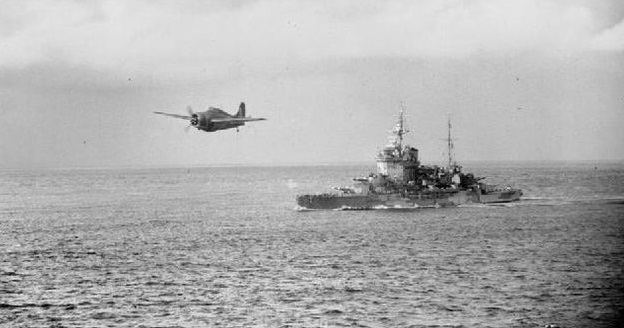
The Australian-British force tasked with carrying out Operation Ironclad consisted of the aircraft carriers Illustrious and Indomitable, the old battleship Ramillies, the cruisers Hermione and Devonshire, the destroyers Active ” , “Anthony, “Duncan, “Inconstant, “Javelin”, “Laforey”, “Lightning”, “Lookout”, “Nizam”, “Norman”, “Pakenham”, “Paladin”, “Panther” and a patchwork of frigates , corvettes and shuttles.
The landing took place on May 5, after a series of reconnaissance flights by the South African Air Force. It involved the 17th and 13th Infantry Brigades, the 29th Independent Infantry Brigade and the 5th Commando with a strong Marine force. The main landings were in Currie and Ambararata bays, west of Diego Suarez.
The spearhead of the landing was undoubtedly the 5th Commando. His 365 men, under the command of Lt. Gen. G. Sanguinetti, carried out the first large-scale Allied landing operation of the war, neutralizing an artillery barrage and clearing the way for the rest of the force.
Managing to pass through an area of sea considered impassable due to the presence of reefs, the British commandos reached the shore in landing craft, passing through a channel that had been cleared of mines following a daring mine-sweeping operation by a small group of corvettes.
The commandos take the defenders completely by surprise. Artillery is neutralized and a hasty counterattack is defeated with ease. Losses are negligible.

Jeff Reilly served in 5th Commando and his account is one of the most vivid and vivid accounts of the events that took place in those early days of the operation.
“We had French Counterintelligence officers with us, so we understood that our target would be some colony under the control of the Vichy French. The briefing that followed explained fully why it was necessary to prevent the Japanese from taking over Madagascar… everyone knew they had their sights set on Diego Suarez, the third largest natural harbor in the world.
If they had taken it, then there would have been no El Alamein, as it would not have been possible to support the 8th Army in North Africa, or the 14th in Burma… while South Africa would have been in grave danger.
“At dawn on May 5, 1942, we landed at Currie Bay on the northwest coast of Madagascar, 11 miles from Diego Suarez. There was no resistance – we caught the French literally asleep, thanks to the seamanship of the Royal Navy, which managed to penetrate zones considered impassable by a force of our size due to the presence of reefs and shoals.
“Fifty feet above us, on hills, was posted an artillery of Gin guns. We climbed the hills and surprised the Vichy gunners. We caught them sleeping, thank God! There were French officers, non-commissioned officers, as well as Senegalese or Malagasy (local) soldiers. We gathered them all in one place, where they were put under guard.
»The counterattack by the Vichy forces began at first light. Forty colonial soldiers with two non-commissioned officers charged at us, raising the floor. We also made our own charge, with lances of arms, and their non-commissioned officers were killed.
The rest immediately surrendered, throwing down their weapons. Our losses were negligible. Captain ‘Chips’ Heron himself went forward to accept the surrender of a party of artillery observers stationed on a nearby hill.
As (the soldiers of the group) approached to surrender, some from behind threw grenades, injuring the captain and others. We didn’t give them a second chance.”
For the next two days the commandos of the 5th Commando continue operations around Cap Diego, while the main force, with the three infantry brigades, which has been landed at Ambararata Bay, advances towards the port of Ancirane, capturing Fort Bellevue .
The three brigades encounter the first signs of French resistance near the village of Anamakia: camouflaged trenches and some machine guns. The first attempt to neutralize them is made by the armor of the British force, however it fails due to the rocky terrain, which makes maneuvering the tanks extremely difficult. The defense line is finally breached by an infantry attack.
The march continues until the advance divisions meet the main line of defense: this is a complex of trenches and machine guns built before WWI and supported by 75 mm guns.
These guns are a problem: although not designed for specialized anti-tank use, they are more than capable of defeating the armor of the Tetrarch and Valentine that form the tank potential of the invasion force – the loss of two Valentines and two Tetrarchs on first contact with line of defense of Vichy’s forces proves the word to be true.

The first attempt to break out the position is again through the use of tanks: the commander of the one Tetrarch that survived the first contact takes command of a unit of four Valentine and two Tetrarchs and attempts to breach the line.
The plan provided for an advance by road straight to the French positions, turning to the right, and overflanking the line under cover of hills. However, again things do not go well.
French artillery once again halts the attack, destroying a Valentine and a Tetrarch. The remaining tanks exchange fire with the defenders, only to withdraw after a while to their original positions. Once again, this fortified position is breached by infantry. The 29th Brigade, combined with an amphibious assault by Marines, overwhelms the defense.
Returning to the commandos of 5th Commando, who as part of these operations marched 29 km from their disembarkation point (at Currier Bay), along the isthmus that separates Cap d’Ambre from the larger land mass to the south, where and faced part of the Foreign Legion, one understands the importance they played in the successful completion of the Ironclad operation.
Reilly continues: “In the midst of incredible heat and strong winds we marched across the Isthmus to Cap Diego, heavily laden with ammunition and hand grenades. There was an engagement with a unit of Legionnaires. We opened fire on them until they surrendered. There were fifty wounded. We carried out clearing operations against colonial troops, while our brigades captured Anchirane, after hard fighting with many casualties. It was the action of 50 marines from HMS ‘Ramillies’ (which was in Currier Bay) that finally provided the solution.
They entered the harbor with the destroyer “Anthony” at exactly 8, in the dark and while receiving fire from whatever weapon was available. The destroyer narrowly missed the pier, with marines leaping from the deck to occupy the shore. The orders were to hit all targets except the barracks and ammunition depot, which were well guarded… but within half an hour they had taken both.
They had done everything – and had just one loss. Their action saved the city from severe civil strife. According to the official report, “those 50 marines caused a disturbance in the city entirely out of proportion to their numbers!”
Next stop: Mayunga
The next major target of the commandos was none other than the largest port on the west coast of Madagascar, Mayunga. Once again, the operation (which took place on September 10) would be “for stunts”: The plan called for the destroyers to enter the harbor with the Marines disembarking from them and attacking the docks while the ships sailed by speeds reaching 30 knots(!) Due to the risky nature of the operation, the commandos spent a short time in Mombasa, “pre-loading” the operation.
However, there were setbacks: “The plan was to hit the docks directly, but it all went to hell. Some of our landing craft broke down, and instead of striking just before dawn we attacked in broad daylight. The enemy opened fire on us with 4 machine guns. Fortunately the Royal Navy provided us with good cover so our losses were minimal.
We didn’t need any stairs as we climbed the docks like rats on a ship! We fought hard urban combat and faced snipers shooting at us from windows. Our first objective was to cut communications with Madagascar’s capital, Tenerife. The second was to capture the governor’s office, capture the governor and raise the Union Jack.”
The ‘Ironclad’ veteran recalls one hand-to-hand combat he had to fight as the commandos carried out their mission: “We hit both our objectives and that’s where I had my first bloody, hand-to-hand encounter – face-to-face, I or him. We had just entered the courtyard and I had taken up a fighting position at the bottom of a parapet. My friend Matt Bolton was across the street against a wall.
A few yards to my left were the remains of a car. I had just said something to Matt and was turning my head when I saw the barrel of a rifle stick out from behind the car, and then a fez.
The man stood up and turned to the right. I shot from the hip, killed him and suddenly felt awful. Even today I wonder if I could have captured him. Our captain, Jeff Rees Jones, arrived seconds later, took a quick look and said ‘dead as a nail. Good job, Riley.” The losses of the French were heavy.”
The 5th Commando returned to Antsirané and boarded the destroyers Arrow, Active and Blackmore, which escorted a strong naval force consisting of the battleship Warspite, the aircraft carrier Illustrious, three cruisers and 14 other destroyers. The target was Tamatave, the largest port on the east coast of Madagascar.
The British ships approached the harbour, except the Warspite and Illustrious, which remained within 10 miles. An envoy was sent under a white flag to demand unconditional surrender. According to the British plan, a negative response would have resulted in a subsequent 55-minute pounding of the island by the destroyers and 15-inch guns of the Warspite, as well as the planes of the Illustrious – followed by a marine raid.
The envoy did not have time to convey the British demands, as he came under fire. British warships opened fire: Within three minutes, over 2,000 missiles hit Tamatave. The defenders soon surrendered.
The road to Tenerife was open. However, if the general impression was that the battle for its capture would be difficult, this was not the case. Hostilities continued for some months, but on a small scale.
The 17th and 13th Infantry Brigades had been transferred to India before the Mayunga attack and were replaced by the Royal African Rifles (KAR), the South African 7th Motorized Brigade and the Rhodesian 27th Infantry Brigade.
French resistance, especially after the capture of Mayunga, was extremely limited. A greater problem for the British forces was the roadblocks than the actions of the colonial troops. Tenerife fell after little resistance and Abalavao followed.
The last engagement took place on October 18 in Andriamanalina. Governor Annette surrendered on November 8. Final Allied casualty count: 620 (dead from enemy action or disease and wounded). The French troops had 150 dead and 500 wounded.
The action of the Japanese Navy
A major “headache” for the Allied leadership during the planning of Operation “Ironclad” was possible intervention by the Japanese Navy, which could turn the tide.
However, these fears proved groundless: the Imperial Navy was limited to sending three submarines on stage (I-10, I-16 and I-20), and not as strike units, but as “mother ships” for the new, ambitious weapon of the Fleet: the midget submarines, which after the war were considered the most unsuccessful program of the Japanese Navy during the war. Two “dwarfs” were launched from I-20 and I-16.
One was lost at sea, but the second managed to penetrate the port of Diego Suarez and launch two torpedoes. One caused damage to the battleship “Ramilies”, while the second sunk an oil tanker.
However, this second submarine would not end well either: it was attacked with depth charges from corvettes and its two-man crew was forced to abandon it and try to hide on the island – unsuccessfully, as the two Japanese were killed a few days after the attack in a skirmish with marines.
Ironically, the operation in question was regarded by the Japanese high command as a great success (since the loss of two midget submarines and their crews versus the sinking of an oil tanker and the “scratching” if anything of a battleship was treated as “advantageous exchange”), which encouraged her to continue working on similar programs.
Epilogue
Madagascar was now in Allied hands, precluding its use by Japanese submarines as a base to threaten Allied convoys.
Supply lines to North Africa and the Far East were now secure.
The administration of the island was taken over by General Paul Legendilome, of the Free French. It was a great success for the Allies, as the first large-scale amphibious operation of World War II was crowned with complete success.
The experience gained from the operation proved valuable in the second major operation against the Vichy French: Operation Torch, the American-British invasion of French possessions in North Africa.

