An unprecedented lack of understanding of the workings of the market through supply and demand highlights proposals for price controls as anyone who knows a little economics says they are not reduced by orders and any such attempt ends in disaster.
Kamala Harris’ campaign has announced it will introduce a plan to ban “price gouging” by food suppliers. In other words, he plans to impose price controls. Get ready for rising prices and shortages of meat and other groceries, because that’s where anti-“price gouging” laws—which are price controls—are headed.
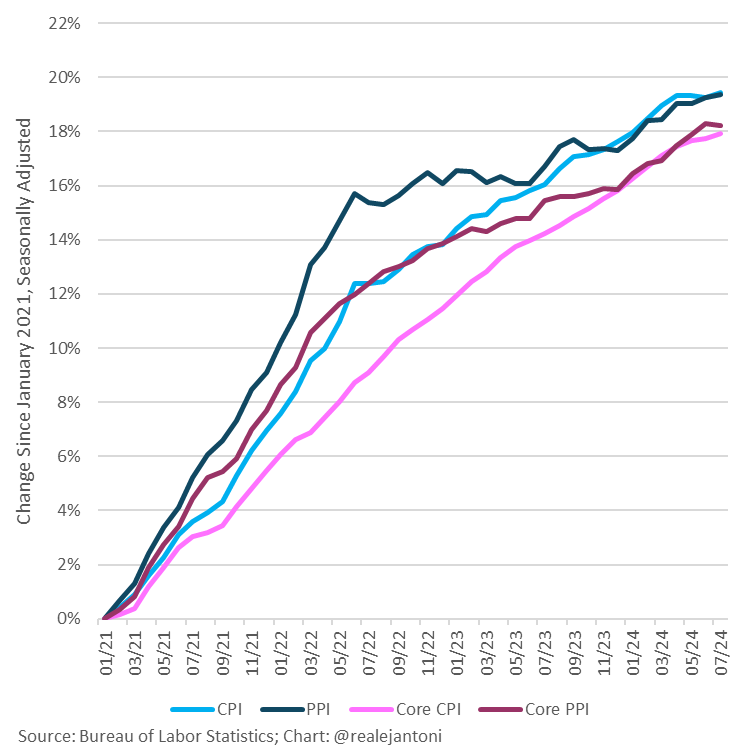
Vice President Kamala Harris will propose a federal ban on food and grocery price hikes.
According to her staff announcements, the anti-price hike proposal is part of Harris’ broader economic policy platform.
“There is a big difference between fair pricing in competitive markets and excessive pricing that is unrelated to the cost of doing business,” her staff said in a statement.
“Americans can see that difference on their grocery bills.”
Facing rising meat prices head-on, Harris will focus on mergers in that market as one of the main reasons meat prices are so high.
What has happened in the past – Lessons from Nixon’s Presidency
One does not need to know the arcane intricacies of economic theory to understand the effects of price controls – it has happened before in the United States.
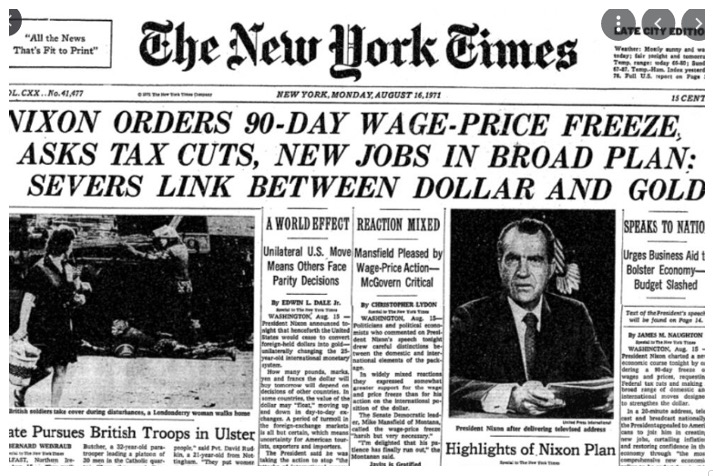
In the 1970s, thanks to years of heavy federal spending on wars and welfare programs, the US abandoned foreign exchange reserves in gold under the Bretton Woods system, and Nixon abandoned the “gold standard” for the dollar.
Knowing that this would cause prices to rise rapidly, the Nixon administration also implemented a number of wage and price controls as part of a 90-day “temporary” freeze on wages, prices, and rents.
These were the first peacetime price controls in US history. As one might guess, however, the price controls didn’t end after 90 days. The “freeze” alone lasted 90 days.
After that, prices were controlled by a “Price Commission” and a table would be drawn up that would phase out price controls — but not until after the 1972 election, of course.
By early 1973, many producers had been subject to price controls for 18 months. Subsequently, the US Senate report concluded that price controls had caused a collapse in energy production and distribution.
Fuel shortages were “much more widespread than expected.” Freezing prices meant that it was no longer profitable for many producers to supply goods to the markets.
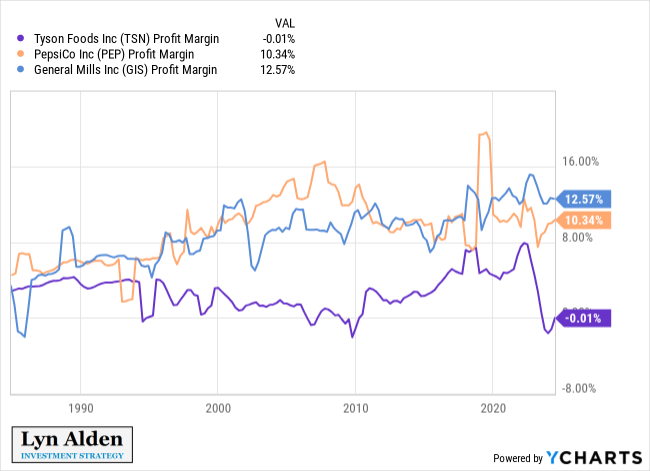
The supply of goods and services fell while prices rose. Price increases accelerated in 1972 when the CPI rose 3.8%, followed by CPI increases of 8.8% in 1973 and 12.2% in 1974. Food price controls led to expected disastrous results.
Destruction of agricultural production
Under Nixon’s price controls, farmers could not sell chickens and eggs at prices high enough to justify the cost of feeding them. In the early 1970s, farmers killed over a million chicks.
Similar problems occurred in the beef and pork industries, and farmers were sending sows to the slaughterhouse while dairy cows were being slaughtered. With prices already forced higher by the inflationary pressure of Nixon’s government spending and the abandonment of the dollar’s last peg to gold, the controls pushed prices even higher.
Price controls were a key factor in the economy of the 1970s, now blamed for stagflation and skyrocketing increases in the cost of living. Politically, however, Nixon’s price control system was a great success.
The political benefits
After the administration announced the price controls, the Dow rose nearly 33 points, its biggest one-day gain to that point. Naturally, the New York Times heaped praise on Nixon’s plan.
Furthermore, he and his descendants felt that he was “doing something” to raise prices. The public loved this “activist” president who intervened to prevent capitalists from profiting from rising prices.
When Nixon was finally forced to resign over the Watergate scandal, his high popularity had nothing to do with the disastrous inflation he caused. On the political side of things, experience shows that price controls have worked very well. They helped get Nixon re-elected.
Indeed, to this day, when critics of the bad old days of the 1970s talk about the stagflation and economic strangulation of that era, the critics usually point only to Jimmy Carter, who paid for the results of the price control experiment.
Nixon—who crippled the economy of the 1970s with monetary inflation and price controls—enjoys a positive reputation.
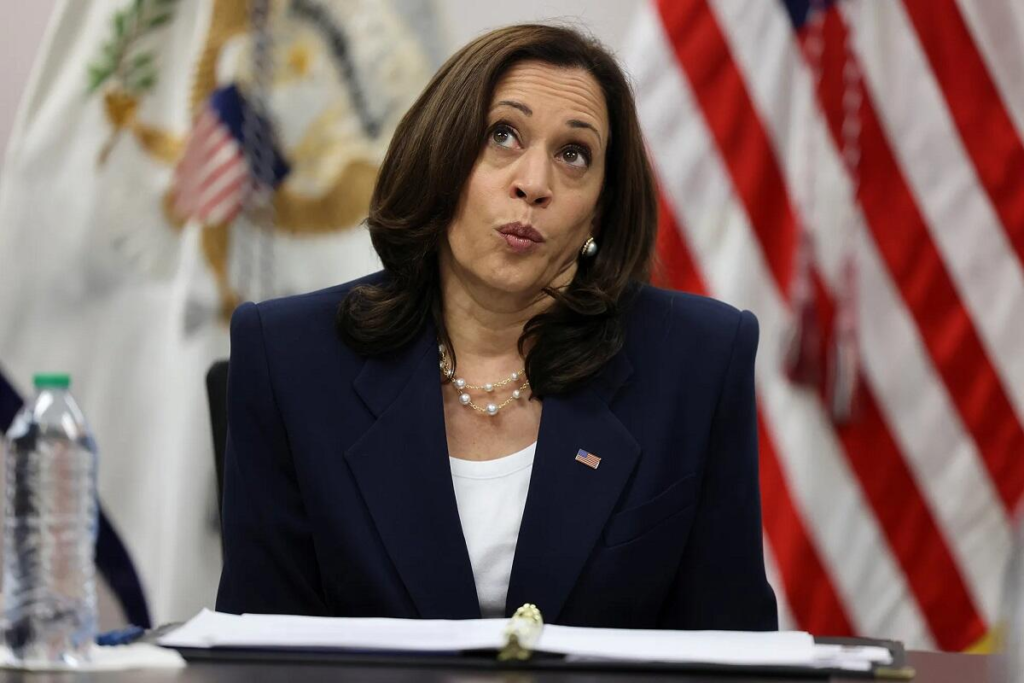
Political cynicism
So it should come as no surprise that the Harris campaign plans to enthusiastically announce its plans for price controls. The vice president’s people can claim she’s “doing something” for the economy.
All of this will be couched in terms of “inflation” and corporate windfalls and other economic myths used to claim that today’s rising prices—fueled by monetary inflation, massive deficit spending, and a regulatory state—are actually the result of “excesses of capitalism”.
In other words, the price control plan is nothing more than a cynical ploy to get Harris elected and make farmers, ranchers and other food producers the scapegoats.
It is beyond naive to believe that Harris is only pushing for price controls because she and her advisers have “good intentions” but are “financially illiterate” and simply do not understand the “unintended consequences” of this policy.
The collateral losses of a political decision
They know basic economics they just don’t care. Price controls are a political decision. The debilitating economic effects are just “collateral damage” that is an easy price to pay for the ruling elite who will have no problem paying the bills.
It’s possible that Nixon also knew what was going to happen, and didn’t care. What mattered was the election of 1972. The problem isn’t that Harris consultants don’t know things about price controls. Politicians push these policies because the public doesn’t understand how price controls work.
Economic “experts” in the mainstream media never mention the historical realities of price controls. Certainly, few Americans were ever taught in their government-sponsored schools about the Nixon shock or what happens when governments take the lead role in the economy.
Without this knowledge—and without even a modicum of understanding of the benefits of private property and free markets—it is easy for politicians to assert that their latest tax or regulation will benefit everyone when they ask for e.g. higher taxes in the form of duties.
Harris is now doing the same with price controls. Many will believe her and happily support the latest government policy that will further raise the cost of living.