



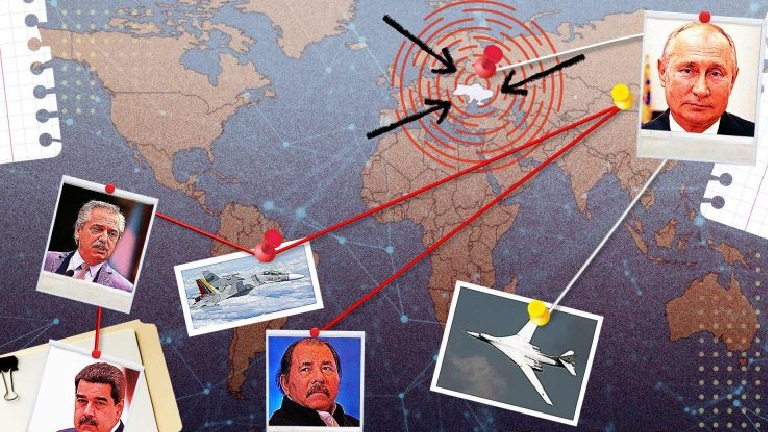
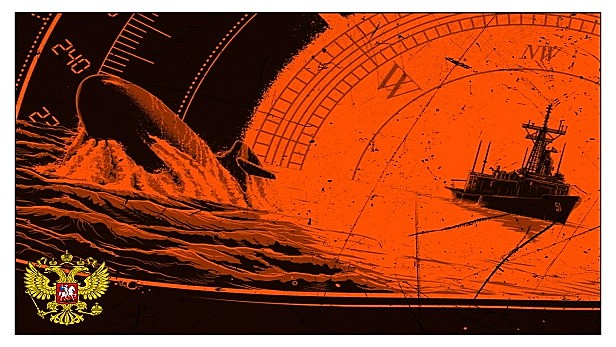
A Russian naval flotilla consisting of the nuclear-powered submarine Kazan, frigate Admiral Gorshkov and two support vessels arrived in Cuba on Wednesday, the first such visit since the outbreak of war in Ukraine and a signal that Moscow counts Havana among its longtime allies. The docking of the Russian flotilla comes amid escalating tensions with the US over the war in Ukraine. Last week, Biden authorized the Ukrainian military to strike targets in Russia with US weapons.
Putin responded by saying that Moscow could arm countries hostile to the West. It is an “eye for an eye” in Russian-American relations, the arrival in the Caribbean of a frigate and a submarine equipped with super-sonic Zircon missiles that can penetrate any existing missile defense is part of Moscow’s efforts to project power amid of the very dangerous tensions with the West over Ukraine.
For Russia, the key value of Latin America and the Caribbean is its geographical proximity to the US. In Moscow’s eyes, it is the “near abroad”, the “backyard” of Washington. Moscow believes that its own “near abroad,” the territory of the former Soviet Union, is an area where Russia’s interests must be taken into account by all other states. The Russian government also believes that the US is systematically ignoring Russian interests, and for this reason Russia must strengthen its presence in Latin America in response.
As early as 1997, then-Deputy Prime Minister Boris Nemtsov, during his visit to Latin America, said that if Russia maintains a presence in the region, it could help it engage the West in Russia’s neighboring territories. This vision was strengthened in the following years, in 2013 Moscow declared that its relations with Latin America were of “strategic” importance.
Thus, a quarter of a century after the end of the Soviet Union, Latin America has emerged as the only geographically, economically and politically vast region of Russia’s “far abroad” that provides Moscow with multiple opportunities to address various issues on its foreign policy agenda. policy at an acceptable cost at this time. Today, Russia maintains stable relations with all Latin American countries, and none of them supported the call of the US and Europe to isolate Moscow on the international stage in response to Russia’s military operation in Ukraine.
In addition, Russia has observer status in the Organization of American States, establishing contacts with many other regional blocs and organizations, and Russian citizens can travel visa-free almost everywhere in Latin America and the Caribbean (with the latter emerging as one of the popular tourist destinations for Russians).
Since the promulgation of the Monroe Doctrine, South and Central America have been assumed to be within the US political sphere of influence. So how did Russia manage to have good relations with these countries, many of which do not agree with the policies of the US and the West? To answer this question, we need to understand the roots of Russian-Latin American relations, which can be traced back 200 years to the Romanov dynasty.
In 1787, the Russian empress Catherine the Great hosted Francisco de Miranda, a Venezuelan military leader and revolutionary leader against Spanish rule in Latin America. Miranda received such generous hospitality from Russian nobles, especially Prince Grigory Alexandrovich Potemkin, that he extended his visit to Russia and turned what was supposed to be a short trip into a “grand tour.” Miranda sought help in Europe for his liberation movement against the Spanish colonialists, and since Russia, unlike some European states, had never had colonial possessions in Latin America, he found in the Russians suitable allies.
Miranda received a positive response from the Russians and Catherine, who ordered Russian embassies throughout Europe to assist Miranda in his revolutionary effort and granted him diplomatic immunity by providing him with a Russian passport. This marked the beginning of Russia’s long political involvement in Latin America.
Despite Russian support, Miranda did not succeed in his mission. However, the “Miranda experience” provided Russia with effective sophistry: “Russia has never participated in colonization, so Russia is a reliable partner.” Sergei Lavrov, Russia’s current foreign minister, used this saying recently to present Russia as a reliable partner deserving of a closer relationship with Latin America. “Russia has never participated in the colonization of the region,” Lavrov said in February 2022 during a tour of Latin America, days before the military operation in Ukraine.
What Catherine the Great planted, a century later the Russian Empire took the opportunity to reap with the Miranda experience, establishing in 1878 formal diplomatic relations with the Empire of Brazil, a process that culminated in a visit to Russia by Emperor Dom Pedro II and a meeting with Tsar Alexander II. However, while the foundations of Russo-Latin American relations had been built, Anglo-American naval and political dominance in the Atlantic Ocean and waves of political chaos in Russia prevented the Russian Empire from expanding its presence in the region. But despite the revolution of 1917, the successor of the Russian Empire, the Soviet Union, did not forget the mission of Latin America.
Soviet-Latin American relations began in the 1920s. The first diplomatic relations were established with Mexico (1924), Uruguay (1926) and Colombia (1935). For about two decades, Soviet-Latin American relations were not of a strategic nature. The joint-stock company Yuzhamtorg, which had a monopoly on Soviet trade, and Commentariat, which was the Soviet Union’s propaganda machine, were tasked with facilitating connections between the two regions. Some trade took place, but most of the exchanges were cultural and scientific.
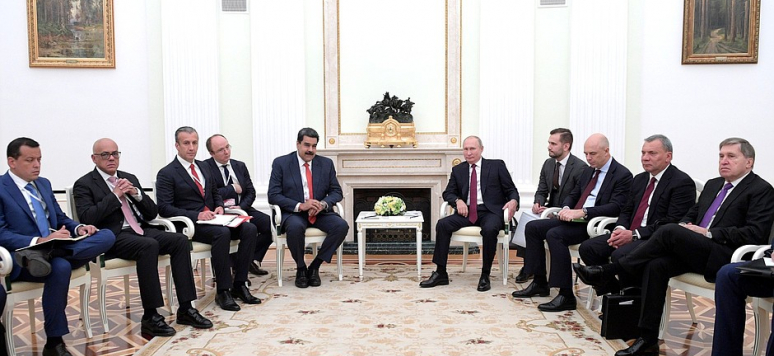
In 1941, Germany’s invasion of the Soviet Union changed the dynamics of Soviet-Latin American relations. Moscow’s propaganda machine accelerated the pace of cultural and political influence in Latin America, by July 1946 the Soviet Union had established significant diplomatic relations with all 14 Latin American states. The Soviet leadership wanted not to lose the momentum of cultural and political influence and immediately after establishing a diplomatic presence in Latin America, it organized an inter-parliamentary exchange with the 14 countries of Latin America.
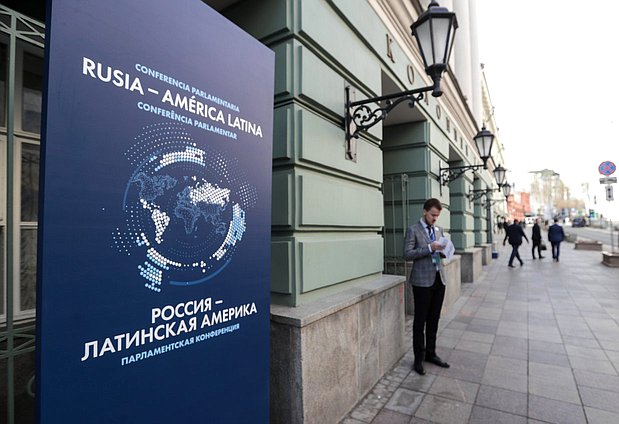
In 1956, the first parliamentary delegations from Brazil and Uruguay arrived in the USSR, and in 1958 USSR delegations made their first visits to Latin America. Since then, the two sides have exchanged dozens of delegations of their respective legislative bodies, demonstrating the great influence of this initiative.
World War II was not the only war that shaped the nature of Soviet-Latin American relations. The rapid emergence of another type of war with different dynamics began to influence Moscow’s strategy in Latin America. The growing escalation of the Cold War between the US and the Soviet Union shifted Moscow’s attention to the region more than ever before. At this time the Soviet Union found Latin America valuable for several reasons. Given the region’s huge economic gap between rich and poor and the region’s high rates of poverty and youth unemployment, there was an audience friendly to communist ideology.
Strategically, Latin American countries’ votes in the newly formed United Nations could potentially strengthen Soviet influence in the General Assembly. Geographically, Latin America’s proximity to the US represented a potential new front if Moscow spent resources to establish a military presence in the region. This would force the US to divert its attention from Europe and Southeast Asia and defend an area that was in its backyard. It also gave Moscow a potential base from which to threaten the US mainland. This threat would emerge in 1962 during the Cuban Missile Crisis.
The Soviet Union’s aim to spread communism and strengthen its influence in the region bore fruit between the 1950s and 1970s in what would become known as the Great Revolutions. Anti-imperialist movements across the region developed and socialist regimes took over Bolivia (1952) and Cuba (1959), shifting the regional balance of power in favor of the Soviet Union. Soviet-Latin American relations began to intensify and expand, especially in the areas of military relations and economics.
The Soviet Union saw Cuba as its main gateway to Latin America and its revolutionary forces as an important means of expanding its influence in the region. Moscow could also present the Cuban Revolution as a successful example of Marxist-Leninist ideology and therefore an alternative to the failing regimes in Latin America.
The 1980s were the height of the USSR’s influence in Latin America. Diplomatic relations were formalized with 17 countries in the region, and established but not formalized with two others, Guatemala and the Dominican Republic. The scope of the partnership expanded to include politics, economics, and public relations in addition to cultural and scientific exchanges, and many Latin American leaders visited Moscow.
The rise of Mikhail Gorbachev marked a downturn for relations with Latin America. Gorbachev assumed leadership of the Soviet Union in 1985 and began a dramatic campaign of political reform at home and abroad. His new foreign policy doctrine, dubbed “New Thought”, was based on the belief that the Soviet Union’s resources and infrastructure could no longer withstand the international adventures that Leonid Brezhnev oversaw during his tenure from 1964-82. .
According to New Thought, the Soviet Union had to distance itself from an ideological foreign policy based on Vladimir Lenin’s idea of placing international relations alongside class struggles. Instead, Gorbachev’s Moscow focused on cooperation with the West based on mutual security and interdependence. De-escalation with the West ended the costly Cold War and allowed Moscow to carry out “Perestroika”, a program of domestic economic reform.
To achieve these foreign policy goals, Gorbachev revised many of the USSR’s foreign engagements. He decided to end the war in Afghanistan, which he had inherited from his predecessors, Brezhnev, Andropov and Chernienko, but he also ended support for revolutionary forces in Third World countries, including Latin American countries, in an effort to reduce costly arms races with the US. This shift in foreign policy marked the decline of Soviet-Latin American relations. Gorbachev didn’t have much of a chance to implement his New Thought after the Soviet Union collapsed in 1991.
After the collapse of the Soviet Union, Russia fell far behind its traditional rival in the Great Power Rivalry. New Russian politicians realized that Moscow had neither the economy nor the military power to solely challenge the US’s position as a global superpower, but that a new approach was needed. The resulting strategy, “Pivot to Multipolarity,” was based on the belief that Russia’s only option to protect its international influence in the world was to support a multipolar world order.
To achieve this, Yevgeny Primakov, Prime Minister of Russia from 1998-99 and Foreign Minister from 1996-98, suggested that Russia should form a strategic triangle with the emerging non-Western world powers, China and India, and expand its presence in the developing world.
Latin America again became a priority of Russian foreign policy. The return of post-Soviet Russia to the region would provide Moscow with new profitable partners and strengthen Russia’s position in the emerging multipolar world. The abundant natural resources of Latin American countries have opened opportunities for Russian companies to participate in the exploration and production of minerals, including oil and natural gas. The region has also been a suitable market for Russian construction companies and Russian products, including, given the high level of political tension in Latin America, arms sales and military cooperation.
Russia’s return to Latin America was not without obstacles. In the last days of the Soviet Union, Moscow completely abandoned Cuba and left unfinished a large number of construction projects, including a nuclear power plant. Trade declined and Russia began to develop a reputation as an unreliable partner. The anti-imperialist ideological brotherhood that had formed in the 1920s and 1930s was further undermined by the transformation of Russia’s economy into capitalism under Boris Yeltsin. Many Latin American countries decided to develop ties with the West during this period.

To restore trust, Primakov made frequent visits in 1996-97 to Latin America to sign cooperation agreements with countries such as Mexico, Cuba, Venezuela, Argentina and Colombia. He also established a strategic partnership with Brazil, which led to the creation of the Russian-Brazilian High-Level Cooperation Committee. However, Russian-Latin American relations did not flourish, as Primakov’s efforts were overshadowed by Yeltsin’s actions. Latin American countries were wary of Russia’s radical capital market reform and disagreed with Yeltsin’s conciliatory stance on NATO’s bombing of Yugoslavia, which the region’s leading nations (known as the Rio Group or G-Rio ) strongly condemned. When Yeltsin stepped down in 1999, it was a turning point in Russian-Latin American relations.
Unlike Yeltsin, Vladimir Putin was eager to return to Latin America as soon as possible. Putin invited representatives of the Rio Team to Moscow for an informal meeting in March 2003, and the timing could not have been better. Latin America was in the midst of the ‘Red Tide’, a shift to the left that saw socialists win elections and the formation of the ‘Three Musketeers of the Left’, namely Venezuela’s Hugo Chavez, who came to power in 1998 , Lula da Silva of Brazil (2003), and Evo Morales of Bolivia (2005).
These countries perceived Russia as the heir of the former Soviet Union and saw the expansion of ties with Russia as an effective tool in their conflict with the US. They also appeared to agree with the Primakov Doctrine, signing numerous agreements during high-level meetings, indicating that building a new world order should be multipolar and not tailored to the interests of a single superpower. In light of this mutual worldview, political ties between Russia and Latin American countries expanded, and Cuba, Venezuela, and Nicaragua formed an informal bloc that would reliably vote in favor of Russian-proposed UN resolutions and he opposed decisions that could harm Moscow’s interests.
Venezuela’s purchase of $4 billion worth of Russian arms started the new wave of Russian-Latin American relations in 2005. Brazil, Colombia, Ecuador and Bolivia soon followed Venezuela’s lead. In 2008, after an extensive trip to Latin America to visit Peru, Brazil, Venezuela and Cuba, then President Dmitry Medvedev to demonstrate his determination to restore relations with Latin America, took some decisions that they alluded to the superpower’s past. In November 2008, it deployed to Venezuela a naval squadron led by the flagship Pyotr Velikiy (Peter the Great), a nuclear-armed cruiser, to participate in a joint naval exercise with the warships of Venezuela’s Northern Fleet. In addition, two Russian strategic bombers landed at the Venezuelan military naval base.
Although Russia has failed to become a dominant trading partner in Latin America, mainly because it has fewer financial resources to invest compared to the US, China, the EU and India, it has presented itself as a reliable security partner. In 2019, Venezuelan President Nicolas Maduro responded with repressive measures to a series of nationwide protests aimed at removing him from power, Orange Revolution-style protests instigated by the US deep state.
US President Trump has frozen all Venezuelan assets in the US, imposed a full economic embargo against the country and recognized protest leader Juan Guaido as Venezuela’s interim president. Maduro found himself in a difficult financial situation and turned to Russia for help. Responding to Maduro’s request, Moscow sent military experts and 400 Wagner group fighters to Venezuela. Russian companies have also expanded their presence in Venezuela in sectors such as transportation and hydrocarbon mining development to help the Maduro regime with industrial and technological assistance. To compensate Russia, Venezuela gave 49.99% of Citgo, a US-based oil company, to Rosneft, and helped Russia acquire a significant stake in five major Venezuelan oil fields in 2018. Rosneft’s assets in Venezuela have grown so much that in 2020 Russia established a separate company, Ros Zarubezhneft, to oversee the production and transportation of oil and natural gas from the Latin American country.
Russia’s involvement in Venezuela has greatly helped restore its image as a reliable partner that will stand by its allies in difficult times. Moscow’s support for Syria’s Bashar al-Assad was evidence of this on the other side of the world.
Conclusion: Putin always considered the collapse of the Soviet Union as “the greatest geopolitical disaster of the century.” To counter the US and NATO “deterrence” approach against Moscow, aimed at limiting Russia’s fiscal, economic, trade, political, diplomatic and military maneuvers, Putin likely intends to reclaim what belonged to the Soviet Union. Therefore, cooperation with Latin America in various fields, including defense, is necessary for Russia to expand its capacity for global maneuvers.
In this context, as US military support for Ukraine increases, so do the chances that Russia will sell more critical weapons to Latin American countries. Russia could well use a potential sale of advanced anti-aircraft systems or even assault weapons to Venezuela or Cuba as leverage in negotiations with the West.
Similarly, if NATO continues to increase its presence on Russia’s borders, Moscow could increase its military cooperation and naval presence in Latin America. If NATO insists on admitting a fragmented Ukraine to the Alliance, there is a chance that Russia will persuade Caracas to grant Moscow permission to build a military port in Venezuela, similar to the port of Tartus in Syria. This scenario would be reminiscent of the 1962 Cuban Missile Crisis, and just as the Soviet Union agreed to withdraw its missiles from Cuba in exchange for the US withdrawing its nuclear weapons from Turkey, Russia could request the rejection of Ukraine’s application to join NATO in exchange for ending its active military presence in Latin America.
Russia’s expansion into Latin America, which was politically and militarily dominated by the US, is to some extent diverting US attention away from the Middle East, where Russia through BRICS is developing close ties with countries in the region, and Eastern Europe , where the defeat of Kiev has disastrous consequences for the political-military establishment of NATO. Russia’s chances of succeeding in its ambitious agenda is a question only time will tell. However, so far the fulfillment of the objectives of this agenda has a positive sign.

