



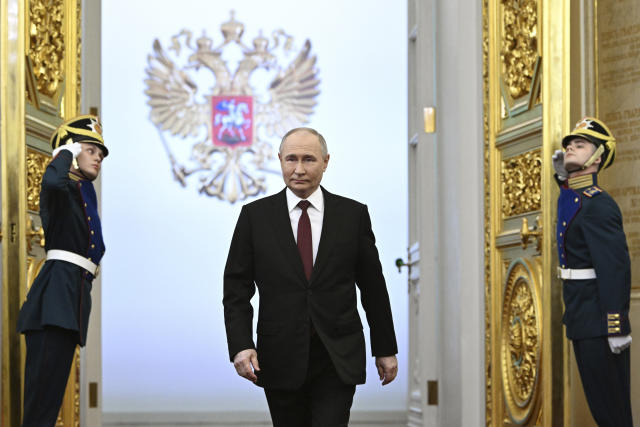
With the West having admitted that even the large aid package approved by the US is not going to make a victorious Ukrainian counter-offensive possible in the short term, preferring instead a tactic of resistance’, it was next for Russia to take the initiative of the movements on its fronts Ukraine, opening an additional front, at a time when Vladimir Putin made particularly important changes regarding the persons in positions of responsibility.
The opening of the new front
On the battlefields themselves the most important development of late is the opening of an additional front towards Kharkiv in northeastern Ukraine.
Everything shows that the expediency of this new front is less the capture of Kharkiv, which is a large city and therefore only a particularly strong point for the defending forces, than the very fact of opening an additional front which means that the Ukrainian armed forces will have to send forces to resist the Russian advance, which in turn means that their endurance limits are being tested. At the same time, this will also be a response to the Ukrainian strikes in the wider region of Belgorod.
After all, this was also the admission of the Ukrainian general Kirill Budanov, head of the Ukrainian military intelligence service, who argued that the purpose of the Russian attacks is to detach forces from other fronts and to show the existing limits of the Ukrainian reserves which are already having difficulty replacing the losses. Among the problems faced by the Ukrainian forces is that there was mismanagement of the funds given for fortifications in these areas, with the result that many were never built.
At the same time and on the main eastern front the Russian side appears to be escalating the strikes mainly by exploiting the way it has improved the Soviet technology FAB bombs so that they can be dropped by SU-35 fighters from distances safer for Ukrainian air defenses.
It is clear that both the Ukrainian side and its allies fear that in this particular part of the front a defeat will eventually be recorded and thus a strengthening of the Russian position. This also explains the extraordinary visit of Anthony Blinken to Kiev, in an attempt to boost the morale of the Ukrainian side, but also to confirm the confidence of the USA in Volodymyr Zelensky whose term formally ends on May 20 and after that point the remaining in office will be based on the imposition of martial law which does not allow elections to be held, so the already elected president remains in place. In fact, reports already indicate that Russia will take advantage of this extension of Zelensky’s term to question his formal and substantial legalization.
At the same time, although it was presented as a decisive cut, the aid package of 60 billion approved as aid to Ukraine, will hardly be able to radically change the balance of power, since only about 14.5 billion of it will go to strengthening the Ukrainian state and the purchase of weapons when they are available, while a very large part of them concerns the replenishment of the American arsenal.
The big changes that Putin made
Having been re-elected with particularly high percentages, Vladimir Putin made major changes in his government, which show that he is thinking in a longer time frame.
Let’s not forget that Putin has set his sights not only on winning the war in Ukraine but also on being able to reform the Russian economy and grow it even more.
But this comes against the backdrop of massive defense spending of 6.7% of GDP, raising fears of a repeat of the 1980s when massive defense spending brought the entire Soviet economy to its knees.
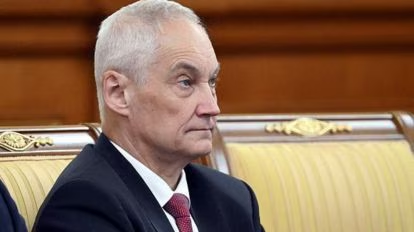
This may also explain why Andrei Belusov, experienced in finance, was chosen for the position of Minister of Defense instead of Sergei Shoigu, who, among other things, is accused of having several cases of corruption under his supervision.
Everything indicates that the part of purely military tactics will be left to the chief of staff, General Gerasimov, with Belusov overseeing the overall management of the ministry.
Interestingly, although things on the battlefield tend towards an acceleration of developments in Russia’s favor, these changes point to a longer-term design. It is no coincidence, after all, that the statement of the Kremlin press representative Dmitry Peskov that “on the battlefield today, the winner is the one who is open to innovation. That is why at this stage the president made the decision to put a politician in charge of the Ministry of Defense”.
All this shows is that Putin estimates that, regardless of the immediate developments on the Ukrainian front, the confrontation with the West and the US will last for quite some time. Russia’s ability to win the war on the basis of a protracted arms race must be combined with the ability to achieve a model of economic development that will upgrade the Russian economy as a whole.
The importance of visiting China
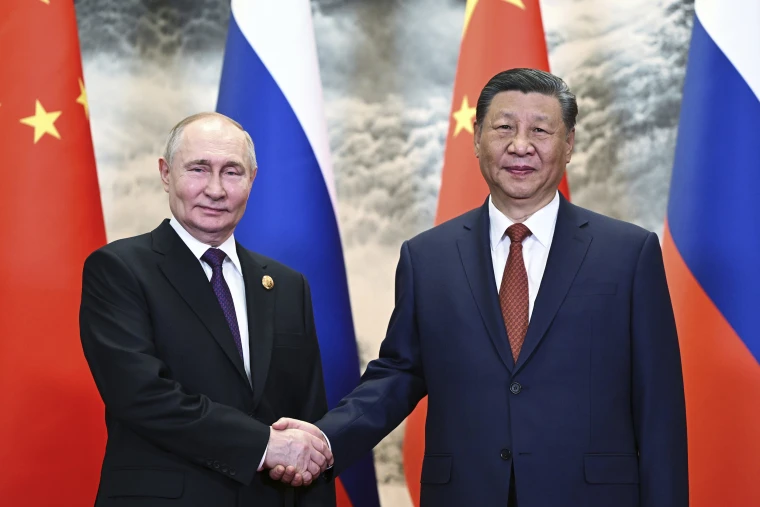
All this also explains the special importance that the Russian side attaches to economic relations with China, which allow to largely offset the effects of Western sanctions on Russia, although the Chinese side is particularly careful to avoid being caught as well targeted for penalties in the second degree.
And this explains the multiple importance of Putin’s visit to Beijing to meet Chinese leader Xi Jinping. Because it is clear that the purpose of the visit is not only to give this image of a unity of the two countries towards the West, despite all efforts to create a rift so that Russia finds itself isolated, but also to upgrade the economic cooperation of the two countries (please also read the analysis titled “Russia and China are planning a super army“).
After all, bilateral trade has grown significantly to reach $240 billion last year, a 26% increase, with Russia overtaking Saudi Arabia as China’s main supplier of oil, while China is becoming the main supplier of high-tech products. for Russia. However, direct investment between them remains relatively low and there is still a lot of way for economic cooperation that is not limited to trade but to a more comprehensive economic coordination that would eventually form a different relationship on a global scale.
