Nine years after the outbreak of the Arab Spring (2011) that initially overturned Muammar Gaddafi and the outbreak of the civil war in Libya, the situation in the long-suffering country of North Africa has reached such a point that the internationally recognized government of Tripoli led by Fayez al-Saraz, who controls a small area around the capital, Tripoli, is desperately seeking help not to be conquered by the opponent of Field Marshal Khalifa Haftar who controls most of Libya.
by Thanos S. Chonthrogiannis
©The law of intellectual property is prohibited in any way unlawful use/appropriation of this article, with heavy civil and criminal penalties for the infringer.

Photo by L’ American in (talk), Source: Own work,
licensed Public Domain
That is why Germany, Russia, Turkey, Britain, France, Italy, Egypt and the United States have been mobilized to find a solution to the nine-year Libyan civil war through a standing and permanent ceasefire of fire.
This international conference between the above participating countries and opponents of camps participating in the Libyan Civil War was held in Berlin (Germany-EU) on Sunday 19 January 2020.
Why take place now this international conference
The temporary ceasefire reached on Sunday 12 January 2020 is mainly due to the fact that Russia (supporter of LNA-Field Marshal Khalifa Haftar) and Turkey (supporter of GNA-Prime Minister Fayez al-Saraz) took a joint decision not to risk the extensive cooperation between them that began with the purchase of the anti-aircraft and antiballistic Russian weapon system S-400 by Turkey, because they were found to support rival camps in Libya.
But the ceasefire and proposed proposal truce by Russia and Turkey was not accepted by Field Marshal Khalifa Haftar. The problem for Turkey is that it invested in this truce, so as not to risk its relations with Russia but to be able to exploit the underwater wealth arbitrarily defined by Fayez al-Saraz with Turkey questioning internationally Sovereign rights of Greece.
The risk of dissolution
At a time when this conference was taking place, the EU appears to have different positions among its members without being able to maintain a common line in its foreign policy. Germany, with its attitude, contributes to strengthening the influence of Turkey and Russia, which, through their continuous actions, violate whenever international law and international treaties so desire.
In this case, both Russia and Turkey because of their leading role in the Libyan civil war and the violation of the arms embargo imposed by the UN, should be held as observers at the International Conference and not as regulators.
Even though the EU through the European Council condemned both the agreement between Tripoli and Ankara and that Russia and Turkey have contributed to this civil war, Germany is encouraging Russian and Turkey’s “peacekeeping actions”.
Basically what is shown in the rest of the world by the Berlin International Conference is that troublemakers are entitled to a seat at the table, while the EU does not know what each member is doing, ignoring that its main role is the EU to protect the interests of its Union and its members.
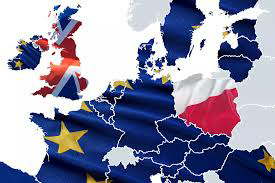
The EU seems to have no strategic plan, coherence and determination, despite the blows it receives (Brexit, US-EU trade war, Russian and Turkish threats respectively, etc.).
The reasons that make regulators at the Libya International Conference Russia and Turkey
Russia today is a regulator of key issues and vital areas for the interests of the EU. This is mainly due to:
1. The erratic foreign policy of the Presidency Donald Trump to the EU and the rest of the Western world.
2. Donald Trump’s “admiration” for how the President of Vladimir Putin runs Russia.
3. The constant violation of international law according to the interests of the strong who trample it and since it has no consequences.
4. The EU’s ‘non-existent’ common foreign policy.
5. The common navigation of Russia and Turkey on the pressure they exert on the EU.
Why is Germany holding this erratic stance on the Libyan issue?
Germany has “open fronts” everywhere. Turkey is trying to keep Europe captive, in the same way that Russia is holding Europe hostage in energy. In particular, Turkey will be able to do this if it manages to control the transport of natural gas and oil from the Eastern Mediterranean and from the Turkish mainland respectively to the EU, while using the migration problem as a pressure-decompression lever to achieve its positions.
At the same time, Turkish-born German voters operate as, at any time, corrupted by any election result taking place in Germany and depending on whether Turkey’s interests are served.
On the other hand, Germany’s interests in Turkey are enormous and vital.
The US with their foreign policy push Germany into Russia’s arms, which sooner or later the EU will seek to develop its security plan with Russia.
The geopolitical chessboard for the control of the maritime transport of oil from the Middle East to Europe has now been transferred from Syria and to who will manage to control and exploit the underwater wealth of the Εastern Mediterranean and the Libya in order to control the EU even more effectively.