




Storm Shadow is a French-British long-range cruise missile developed since 1994 by Matra and British Aerospace (now produced by MBDA). Storm Shadow is the British name of the weapon, while in France (and Greece) it is called SCALP-EG (Système de Croisière Autonome à Longue Portée – Emploi Général), which stands for Autonomous Long-Range Cruise Missile – General Purpose.
Matra and British Aerospace were selected as prime contractors for the CASOM program in July 1996 for the Storm Shadow missile, winning out against proposals from McDonnell Douglas, Texas Instruments/Short Brothers, Hughes/Smiths Industries, Daimler-Benz Aerospace/Bofors , GEC-Marconi and Rafael.
The design was based on Matra’s Apache missile which was designed to strike airport runways (with bombs) from a long distance. A contract for the development and production of the weapon was signed in February 1997, at the same time that Matra and BAe had completed the merger of their activities to create the then new company, Matra BAe Dynamics (later MBDA). France ordered 500 SCALP missiles shortly thereafter, in January 1998.
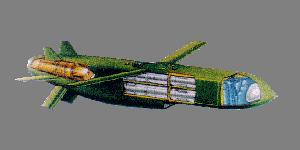
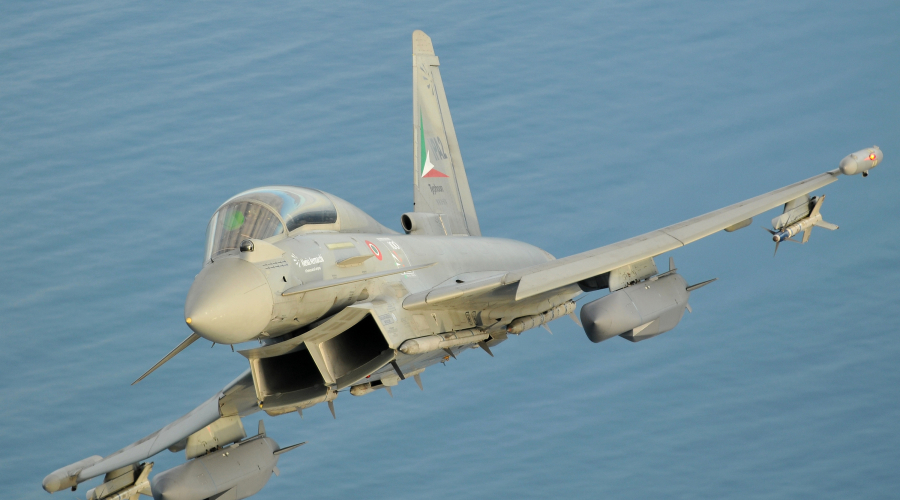
The first successful fully guided launch took place at the CEL Biscarosse range in France at the end of December 2000, with the missile being fired from a Mirage 2000N. The first flight of Storm Shadow missiles loaded on a Eurofighter Typhoon took place on 27 November 2013 at the Decimomannu base in Italy. SCALP EG and Storm Shadow are again identical, except for the way they are integrated/interconnected to the aircraft (and there are quite a few similarities anyway).
SCALP Naval or MdCN
To meet a requirement by the French Ministry of Defense for a more advanced cruise missile that could be launched from ships and submarines, and hit strategic and military targets at long distances with even greater precision, France’s MBDA began development of the Missile de Croisière Naval (Naval Cruise Missile) or MdCN in 2006 to supplement Air Force SCALP-EGs. The MdCN has been in service on the French FREMM frigates since 2017 and equips the Barracuda nuclear submarines since 2022.
In 2017, a joint contract was signed to upgrade the Storm Shadow/SCALP-EG stocks of France and Britain. After this, the missile is expected to remain in the frontline until its planned retirement from service in 2032.
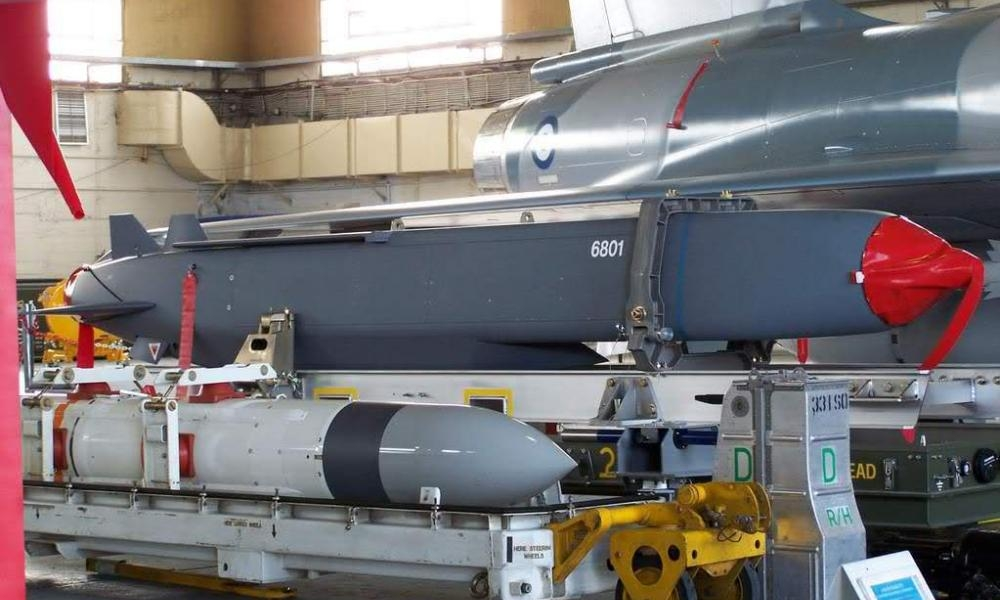
Main characteristics
The weapon weighs approximately 1,300 kg, and carries a conventional warhead weighing 450 kg. It has a maximum diameter of 48 centimeters and a wingspan of three meters. It moves at a speed of Mach 0.8 thanks to a Microturbo TRI 60-30 turbojet engine and officially has a range of about 560 kilometers (300-350 nautical miles). But the real one is bigger.
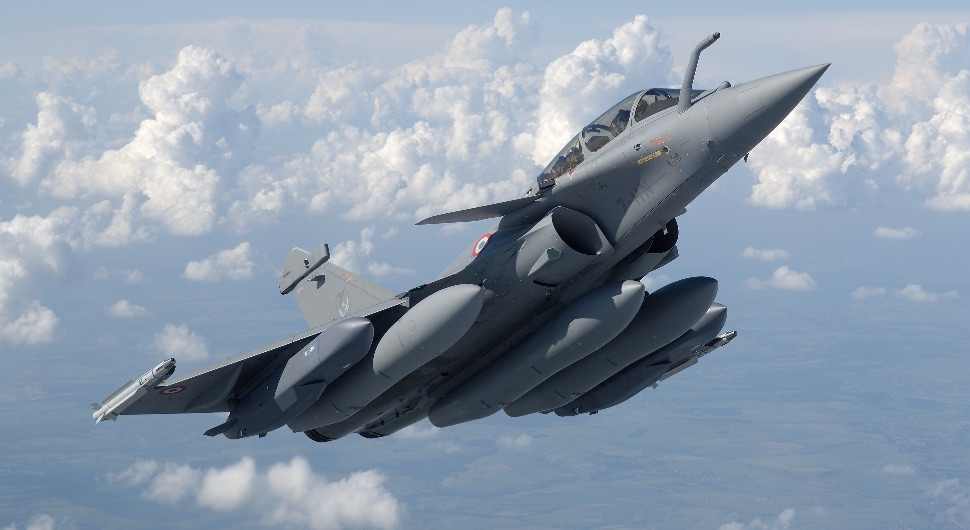
It can be launched from a variety of aircraft – the Saab Gripen, the Dassault Mirage 2000, the Dassault Rafale, the Tornado but now also from modified Ukrainian Sukhoi Su-24s. The Storm Shadow was integrated into the Eurofighter Typhoon in 2015, but ultimately will not be certified on the RAF’s F-35B Lightning II (or any other type of F-35).
The BROACH warhead is dual, a small penetrator, and the main explosive which can be activated with a time delay. Targets typically assigned to Storm Shadow/ SCALP-EG are command, control and communications centers, airfields, ports and power generation and distribution stations, fuel and ammunition depots, surface ships and submarines in harbors, bridges and other high value strategic targets.
The missile is fully automated, programmed with target data before launch. Once launched, it cannot be controlled further (to change course). It follows a course autonomously, always flying at low altitude, guided by GPS, INS and also by terrain mapping. Near the target, the missile climbs to a higher altitude to gain visual contact, and compares the image of the target it has stored with the data it receives with the infrared camera. If it cannot locate him and there is a high risk of interference, it can move to another, alternative, point of impact. Improvements reported in 2005 included the ability to transmit target information shortly before impact using a one-way data link.
However, the missile has been freed from the ITAR regime for a few years (that is, it is not subject to an export license from the US) at the initiative of France.
Military action
RAF Tornados first used Storm Shadow missiles during the invasion of Iraq in 2003. Although they had not officially entered service, an intensive testing program eventually allowed them to be used by the RAF’s 617 Squadron. During the 2011 military intervention in Libya, Storm Shadow/SCALP-EG missiles were fired against Libyan units loyal to Gaddafi by French Air Force Rafales and Italian and British Air Force Tornados. Among the targets were the Al Jufra airbase, and a military bunker in Sirte. In December 2011, Italian media reported that Italian Tornado IDS had launched between 20 and 30 Storm Shadows. This was the first time Italian aircraft had used the missile in operations, with a reported 97% success rate.
French aircraft fired 12 SCALP missiles against ISIS targets in Syria during Operation Chammal in 2015-16. As recently as 2016 the RAF used four Storm Shadows against an ISIS military bunker in Iraq. They all achieved their goal and its complete destruction.
In October 2016, the British government confirmed that UK-granted missiles had been used by Saudi Arabia in the conflict in Yemen. In April 2018, the British government announced that it had used Storm Shadows launched by Panavia Tornado GR4s to strike a chemical weapons facility in Syria. Satellite images showed that the facility was completely destroyed. The Russian Defense Ministry, during a press conference in Moscow, displayed parts of a Storm Shadow missile it claimed had been shot down by Russian anti-aircraft used by the Assad regime.
Storm Shadows, launched by either Emirati Mirage 2000-5s or French or Egyptian Rafales, may have been used in a July 2020 airstrike against the Al-Watiya base in Libya. Turkish troops were stationed there supporting the Government of National Unity. There were several casualties, as well as the destruction of MIM-23 Hawk anti-aircraft defense systems and a KORAL electronic warfare system.
On 11 March 2021, two British Typhoon FGR4s operating from Akrotiri in Cyprus struck a cave complex south of the city of Erbil in northern Iraq, where a significant number of ISIS fighters were reported to be present.
The weapon in Ukraine
- On 11 May 2023, Britain announced that it was supplying Ukraine with Storm Shadows. Ukraine has said it will not use such weapons on Russian soil. The concession was a major boost for the Ukrainians, as they are now able to hit targets at much greater distances than before. Thus important Russian targets have been destroyed, including headquarters, control centers and logistics support centers in occupied Crimea. Some time later, France announced that it would grant Ukraine a SCALP-EG number.
- Russia claimed that Ukraine used Storm Shadow missiles to strike industrial facilities in Luhansk on May 13, 2023, just two days after announcing their delivery. According to a report by the Russian website Izvestia, the cruises are launched by modified Su-24 aircraft flying under the cover of MiG-29 and Su-27 fighters equipped with AGM-88 HARM (to suppress Russian air defenses). The Ukrainian command is also believed to be using drones, UAVs and ADM-160 MALD decoy missiles to saturate Russian anti-aircraft in such attacks.
- On July 29, 2023, a Storm Shadow missile hit the Chongar railway bridge in northern Crimea. On 13 September 2023, Storm Shadows were used against the port of Sevastopol, causing catastrophic damage to the Kilo-class submarine Rostov na Donu and damage to the Ropucha-class landing ship Minsk.
- On September 22, 2023, at least three Storm Shadows struck the Black Sea Fleet Headquarters in Sevastopol. According to the Ukrainian military, the attack was aimed at a meeting of the leadership of the Russian Navy. 34 officers were killed, including the commander of the Black Sea Fleet. The Ukrainians also claimed that the attack injured at least 100 other Russian Navy personnel.
- On December 26, 2023, two Storm Shadows were launched against the port of Theodosia in Crimea, destroying the Russian Ropucha-class ship Novocherkassk.
The future
France, Britain and Italy are jointly developing the Future Cruise/Anti-Ship Weapon to replace the SCALP/Storm Shadow and each country’s anti-ship missiles. On June 20, 2023, Italy signed a letter of intent to join the program, and the program is expected to produce a land-attack missile by 2028 and an anti-ship missile by 2034.
Storm Shadow/SCALP EG users
- United Kingdom: The order for the Air Force is between 700 and 1,000 missiles, with a large number already in operational use.
- France: 500 SCALP missiles were ordered for the Air Force in 1998. 50 MdCN were also ordered in 2006 and another 150 in 2009 for the Navy.
- Greece: 90 or 96 were ordered for the Hellenic Air Force in 2000 and 2003. More delivered in 2022 as part of the Dassault Rafale F3R purchase agreement. All of the weapons are being modernized by the manufacturing company.
- Italy: 200 were ordered for the Aeronautica Militare in 1999. Several have already been used on missions.
- India: An unknown number were ordered for the Air Force in 2016 as part of the Dassault Rafale deal.
- Egypt: Over 100 delivered to the Air Force as part of the Dassault Rafale deal and with a range of less than 300 km.
- Qatar: 140 SCALP-EGs ordered for Air Force in 2015.
- Saudi Arabia: Unknown number of Storm Shadows ordered for Air Force. They have been used in battle.
- Ukraine: Received French and British missiles in 2023 and has already used them.
- UAE: Unknown number ordered in 1997. Also known as the Black Shaheen, this is a version developed by France for export to the UAE for use with Mirage 2000s, after modifications were made to reduce range. The latter is reported to be 290 km (160 nautical miles) to comply with Missile Technology Control Regime (MTCR) rules.


