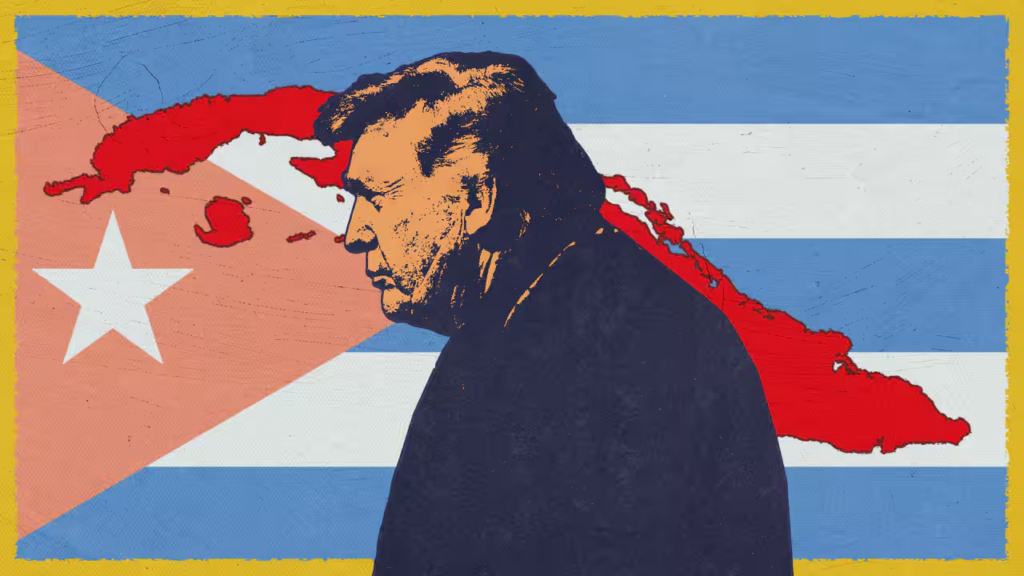
The revival of Venezuela’s border dispute with the Republic of Guyana may provide an opportunity for the AUKUS pact – Australia, United Kingdom, United States – to reverse or challenge the gains of the People’s Republic of China (PRC), Russia and Iran in South America and the Caribbean. The territorial dispute over Guyana’s Essequibo region dates back to 1840, was seemingly resolved by the Paris Diet decision in 1899, but reignited with the discovery of vast energy reserves off its coast in the early 21st century. This was exacerbated by Venezuela and its allies in 2022-23 for a variety of reasons and in ways that broke years of bilateral and multilateral agreements and negotiations between the two states.
The US is on alert
The US Southern Command has the new conflict on its radar, and the UK and Commonwealth governments are on alert. The Southern Command, as of early December 2023, had begun conducting joint air operations with the Guyana Defense Forces, sending a message to Venezuela. And US Secretary of State Antony Blinken told Guyanese President Mohamed Irfaan Ali that the US would support “Guyana’s sovereignty and strong security and economic cooperation”. At the same time, Venezuelan President Nicolas Maduro criticized Guyana for involving the United States, knowing this was an inevitable consequence of Venezuela’s military build-up on Guyana’s border.
Also, several major US energy companies have a stake in the mix, given their stake in one of the world’s largest new oil fields.(Please read also the analysis titled (“The “Immoral” Venezuela – From Bankruptcy… to the Threat of Conquering a Weak Country“)).
The role of China
And yet it is Beijing and Tehran that have worked with the Venezuelan government to escalate the crisis to the point of conflict in order to remove US forces from the Indo-Pacific. China has consistently worked in recent years to keep US and UK forces trapped in the Euro-Atlantic, and has benefited from the Russia-Ukraine war, the Hamas-Israel war and China’s pretensions to be based in the Atlantic, with efforts to push Argentina into threatening war again over the Falkland Islands. The prospect of a US and UK military commitment to support Guyana is real, and while it does promise to keep their forces out of the Pacific — to China’s benefit — it also offers an opportunity for the UK to demonstrate its commitment to a Commonwealth Ally and for the US, in particular, to purge China’s influence from the Caribbean basin, where it has become pervasive.
It could also be a test of the AUKUS alliance, as Australia would have to show that it is as committed to the Alliance’s interests outside the Indo-Pacific as it is to it, and that it recognized that the alliance’s conflict with China was indeed, global.
How close is the world to war?
The sudden re-emergence of the prospect of imminent military conflict, then, between Venezuela and neighboring Guyana is more a reflection of the broader strategies of the People’s Republic of China (PRC) and Iran than a reflection of the Paris Diet Decision of 1899. There is a genuine component of Venezuelan nationalism and competition for territory now that Guyana’s natural gas reserves in the disputed region are known to be among the most important in the world.
The fact that Venezuela faces a presidential election in 2024 is also important, requiring Maduro to campaign on nationalist lines and the promise that new energy deposits will revive the economy. But Venezuelans know that the nation’s extensive energy reserves — largely heavy oil rather than light crude from Guyana’s new fields — have been mismanaged by the Maduro government and have delivered little to Venezuelan voters. Venezuela, even according to the estimates of its Central Bank, has inflation of more than 280% per year in 2023, although this figure underestimates the real deterioration of the national economy.
The efforts
In the midst of all this, Mohamed Irfaan Ali and Nicolàs Maduro on December 10, 2023, agreed to meet in Saint Vincent and the Grenadines on December 14, 2023, to discuss the issue of the disputed territory in the Essequibo region — after considerable pressure from Brazil, the Caribbean Community (CARICOM), and the Community of Latin American and Caribbean States (CELAC).
The matter is already before the International Court of Justice (ICJ) and Irfaan Ali has said that he will abide by the ICJ’s decision and will not bow to threats from Venezuela. The issues of the actual case, however, are secondary to the global geopolitical reality that both China and Iran seek to deflect US and Western military pressure against them.
China seeks to keep the US, in particular, bound in the Euro-Atlantic space and unable to deploy forces in the Indo-Pacific, and has thus supported the ongoing conflicts between Russia and Ukraine, Israel and Hamas, and sought to push Argentina to revive a military threat to the continued occupation of the Falkland Islands in the South Atlantic by Britain;