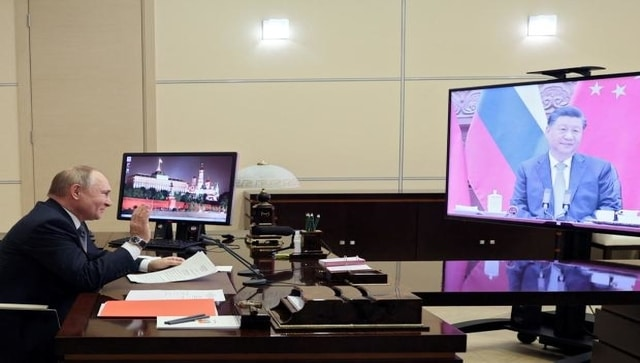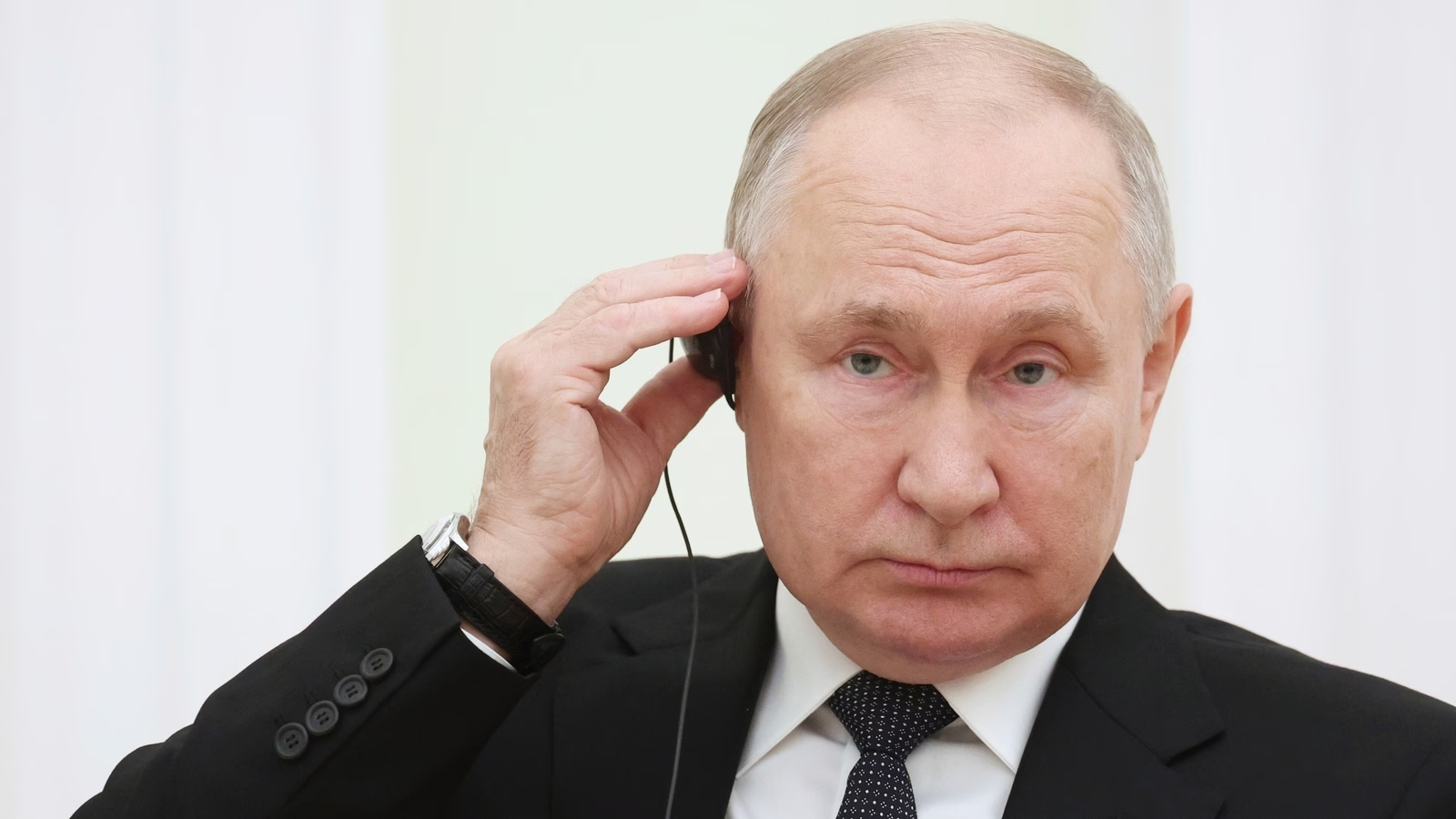
The last 24 hours have been intense, although not fruitful, in the activity of Russian diplomacy in relation to the huge crisis that has erupted in the Middle East, after the attack of the Hamas organization on Israeli territory on October 7. Russian President Vladimir Putin had successive telephone conversations with the presidents of Egypt, Marshal Sisi, Syria’s Bashar al-Assad, Iran’s Ibrahim Raisi and then with the immediate protagonists of the crisis, the president of the Palestinian Authority, Mahmoud Abbas and the prime minister of Israel, Benjamin Netanyahu. The choice of interlocutors is indicative. It indicates Russia’s ability to talk with both the Jewish state and its adversaries, but also Putin’s interest in keeping an open line with those states that might take the option of escalation.
Moreover, at a time when the US and Israel seek to revive the Sunni-Shiite “axis” division, to ensure the cooperation or tolerance of the former and the isolation of the latter, the Kremlin recalls its good relations with both sides. . After all, from the new year Iran and Egypt are also going to join the BRICS group. Both to his interlocutors and in his other positions, the Russian leader emphasizes (just like Beijing) the need for an immediate ceasefire in order to avoid a humanitarian tragedy and the possible diffusion of the crisis, while he does not miss the opportunity to underline that what we are experiencing is the visible failure of the American “monopoly” in the Middle East and the non-implementation of the UN resolutions for the establishment of a Palestinian state, so that the root of the problems disappear. For Putin, there is no need to be heard: it is already enough for him, from the point of view of international “public relations”, to appear as a devotee of peace and international legitimacy, and not as the “pariah” who invaded Ukraine.
Hence, almost at the same time, Russia submitted to the UN Security Council a draft resolution, which was rejected with five positive votes (including that of China), four negative (by the US, Britain, France and Japan who denounced the non- including explicit condemnation of Hamas) and six abstentions (including the Brazilian presidency). It is noted that Hamas has not been classified as a terrorist organization in Russia and its leadership was accepted by Sergei Lavrov last September. The cracks within the BRICS are evident in this respect, as on the one hand Russia and China move in concert, South Africa condemns Israel, citing its own experience of apartheid, Brazil keeps a rather low tone, but nevertheless shines a light its Congress in the colors of the Israeli flag, in solidarity with the victims of Hamas, while India openly supports Israel, guided of course by the anti-Muslim features of the Modi government’s Hindu nationalism.
In Russian society, the reflexes of the Soviet era, namely the automatic alignment with the Palestinian side, are still present, but not as strong as before, at least in the big cities. More balanced is the attitude of the liberal middle classes who set the tone in Moscow and Petersburg, where the presence of the Russian-Jewish element in media and cultural life is strong.
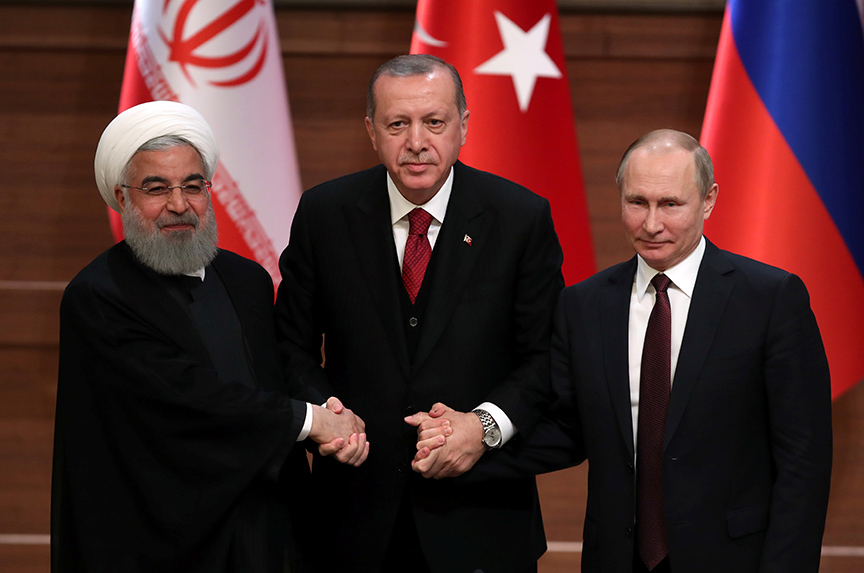
In addition, Russia has been badly tested in the recent past by jihadist terrorism (which, however, Putin has increasingly denounced over the years as having Western support) and this is affecting the climate.
It is interesting to recall that Vladimir Putin is distinguished for his rather pro-Israeli and certainly pro-Jewish sentiments personally. The oligarch Roteberg brothers are his childhood friends, while his gesture of meeting his elementary school teacher who was stationed there and gifting her an apartment during his previous visit to Israel was characteristic.
At the political level, Russia’s attitude of tolerating successive Israeli raids on the territory of its ally, Syria (mainly against Iranian targets), without reaction from the Russian forces deployed there since 2015, is also typical. As for the meetings. and Putin-Netanyahu talks, were consecutive.
Many factors explain this relevance. Since the 1990s, approximately one million ex-Soviet citizens have settled and naturalized in Israel, who, despite their superiority in nationalism, remain relatively unassimilated, maintaining e.g. Russian-speaking media and their own political parties – most notably that of Avigdor Lieberman, former deputy prime minister, now in opposition.
This continuous Russian-Israeli channel is of particular importance to the system of Russian oligarchs, over which Putin arbitrates, as Israel is a hub for their capital.
In addition, the right wing of the Israeli political scene and society is less aligned with the sensibilities and whims of the liberal West, while the weakening of the American presence in the Middle East inevitably leads the Jewish state to cultivate alternative partnerships.
But all this seems to be unable to withstand the test of the crises in Ukraine and the Middle East. Already in 2018, with the “accidental” shooting down by the Israeli side of a Russian transporter in Syrian airspace, the General Staff of Russia is said to be recommending to the political leadership that Israel be treated as an unfriendly power. The fact that the Jewish state finally took a stand in the Russo-Ukrainian war, sending arms and military advisers, seems to have been what tipped the scales for Putin.
It goes without saying that the fact that in the midst of the Ukrainian crisis Washington must now face a second (and for it much more critical) one in the Middle East can only cause satisfaction in Moscow.
The anti-colonial rhetoric with which, since last fall, Putin has been investing his conflict with the West prefigures the continuation. To the extent that the US and E.U. identify more and more with Israel, Russia is being pushed to ever greater openings towards the Arab-Muslim world, but also to an interpretation of the Israeli-Palestinian conflict as a product of the logic of “exception” and unilateralism against a world that is towards multipolarity.