




Seeing the Norwegian fjords on the map, one would think that someone deliberately drew a line in western Norway and began to paint small dots, until the sea on the west coast of the country was filled with countless deep channels. Created through the movements of glaciers over a period of 2.5 million years, the Norwegian fjords are internationally the trademark of Norway and one of the most interesting natural ecosystems that fascinates with its different microclimates and imposing landscapes.
Also known as the ‘Little Venice of the North’, Norway’s fjords number over 1000 and vary in their degree of visitation, difficulty of navigation and exploitation. With two of them, Aurlandsfjord and Nærøyfjord, designated as UNESCO natural heritage sites, the fjords are an integral part of Norwegian culture and history that never ceases to invite foreigners and locals alike on a journey full of exploration, incredible natural scenery and endless adventure.
If you want to explore the fjords, all you have to do is take a boat and go.

As risky as it sounds, the most popular trend in exploring the Norwegian fjords is none other than a safari. And when we write fjord safaris, we mean adventurous trips that include combination visits to several heights with breathtaking views, hiking trails between rocks, driving around tight turns and relaxing endless-organized and not-boating in calm dark waters.
As fjord expert Øyvind Heen emphasizes, the best way to understand what a Norwegian fjord is is to experience the authentic magic of the area by seeing every bit of this wild landscape by climbing the rocks or living in the quiet fishing villages with the colorful houses in the middle of the fjords.
From the serene Hjørundfjord to the cinematic Trollfjord, Norway’s fjords, the fjord safari is endless and promises unique memories, images and experiences. Starting in Lysefjord, Norway’s southernmost fjord, the fjord safari can include a quick boat ride to the small community of Flørli, where visitors can stay overnight in wooden cabins among the sheer cliffs or, for those who want to try their physical endurance, to climb the 4000 steps on the highest wooden staircase in the world, so that they can enjoy the image of a peaceful fjord from above.
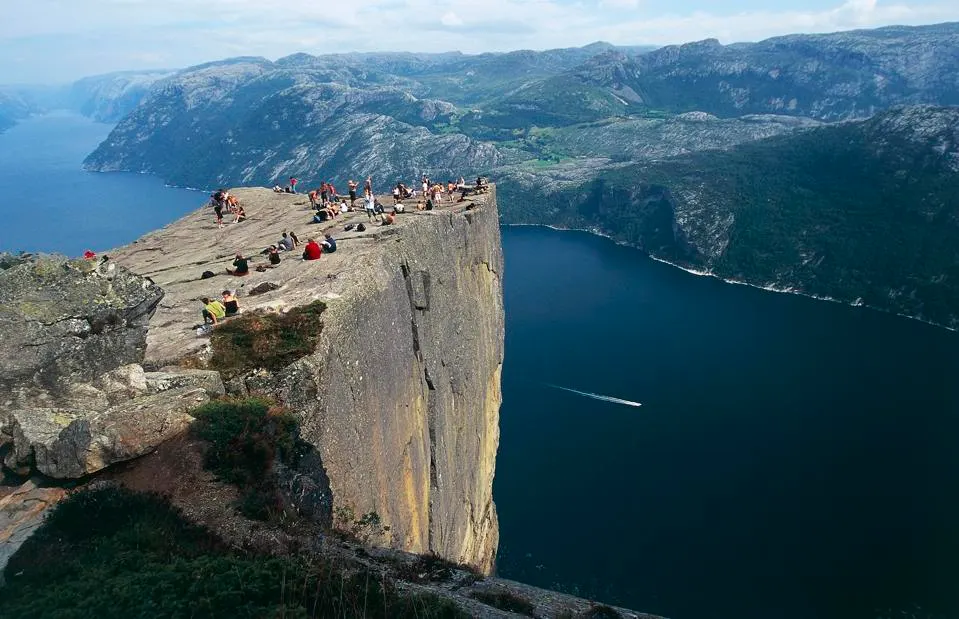
If that doesn’t sound enticing enough, there is also the “king of the fjords” which is none other than Sognefjord, the large fjord somewhere in the center of the country’s coast near Bergen. At over 200km long, the ‘Royal Fjord’ is the longest and deepest in the country, and runs a route of idyllic fishing villages hidden in the middle of nowhere, scattered glaciers here and there and small independent farms. It is worth noting that the route also ends in Norway’s book town, Fjærland, where the inhabitants of the tiny village have turned almost every free bit of space into small bookstores, making the village the No. 1 book town in Norway.

