


It’s been six years since air raid sirens sounded in downtown Seoul. It happened in late August not because of an attack, but after the South Korean government’s decision to put national civil defense exercises on hold amid rising geopolitical tensions and nuclear threats from North Korea.
In some border areas additional scenarios were even applied, including chemical and biological warfare. The timing was no accident.
In the region, the joint high schools of South Korea and the US were completed just a week ago, which Pyongyang described as “aggressive”, warning that it could even lead to “thermonuclear war”.
Threats like these appear to be high on Kim Jong Un’s agenda.
From 2022 he announced the development of tactical nuclear weapons to defend his regime from “existential”, as he describes them, threats.
He does not hide his irritation with US moves in the Pacific and the strengthening of its military-strategic alliances with South Korea and Japan.
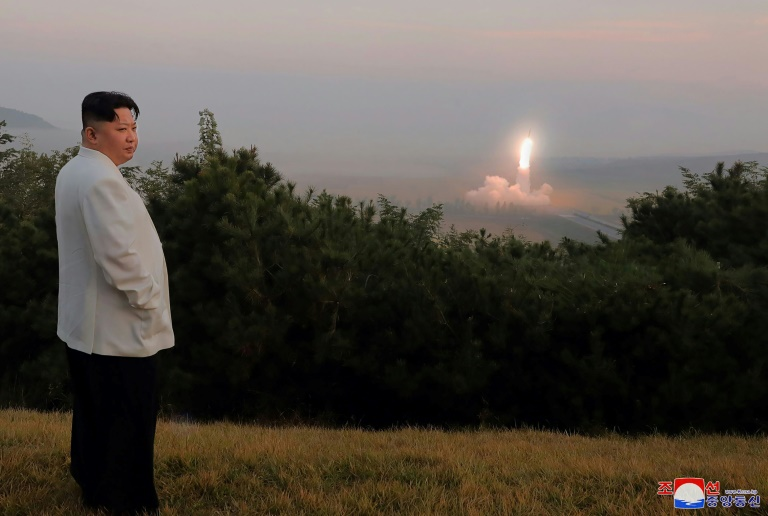
He now inspects weapons factories, naval units and missile tests almost every day. Not by chance, the latter are now happening at a record pace.
Money flows abundantly into weapons programs, in a country that measures deep “wounds” due to international sanctions and three and a half years of complete isolation, with the closure of its borders due to COVID-19. The message the 39-year-old authoritarian leader is sending to his people is clear, at least to him.
Only by strengthening its military power can North Korea survive against its many external enemies. Ideally, with the help of her few allies…
Dangerous convergences
To this end, Pyongyang has resumed commercial air connections with Beijing and the Russian port of Vladivostok, in the east, on the Pacific coast, and is proceeding to further strengthen relations with Russia and China.
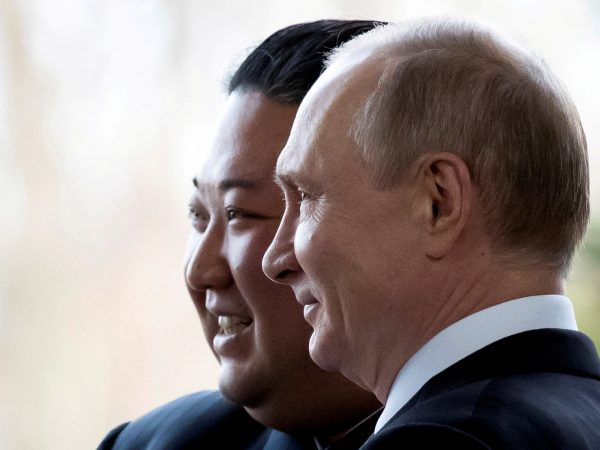
According to Washington, and the Kremlin refuses to confirm or deny, a meeting between Kim Jong Un and Russian President Putin is planned in Vladivostok in September.
If it happens, it will be the first between the two men since April 2019 and – according to the US – it is expected to have a rich “menu”, against the background of the isolation of both from the West.
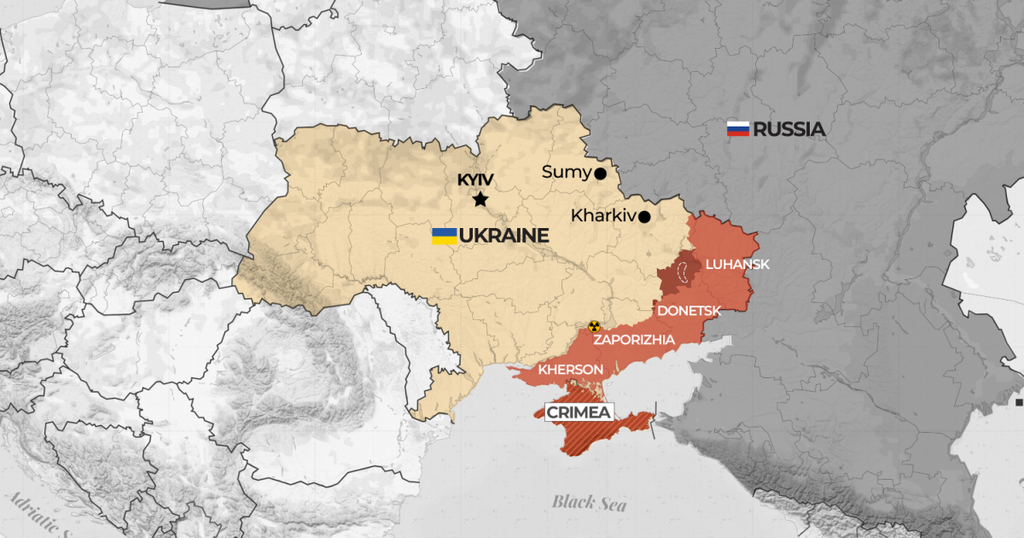
Moscow, on the other hand, is reportedly looking for supplies of weapons and ammunition for the war in Ukraine.
And Pyongyang seeks to gain access to cutting-edge technologies for weapons systems, including powerful long-range missiles, hypersonic ballistic weapons, nuclear submarines and spy satellites.
It also wants to secure food aid and fuel, as North Korea has suffered a deliberate – in addition to sanctions – economic blow since 3.5 years of national lockdown.
In the meantime, the holding of joint naval trainings between Russia and North Korea in the Indo-Pacific is on the “table”, as announced by the Russian Minister of Defense, Sergei Shoigu.
According to South Korea’s Yonhap news agency, Seoul’s intelligence agencies believe that the completed proposal, which Shoigu conveyed to Kim during his recent visit to Pyongyang in late July, actually refers to tripartite high schools involving China. .
Regarding the latter, the Russian ambassador to North Korea, Alexander Matzegora, declared ignorance while speaking to the Tass news agency.
He pointedly added, however, that doing so would be appropriate in light of the moves of the US and its allies in the region.
China itself has not made the slightest comment – so far, after all, these are rumours.
“Playing with Fire”
Either way, for Pyongyang the exercises would mark the first large-scale exercises involving a foreign power since the end of the Korean War in 1953. For now, he is “betting” on the creation of a war climate.
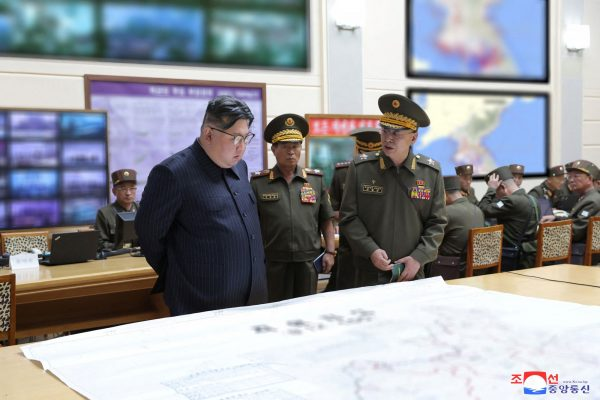
According to North Korea’s state media, Kim oversaw a simulated “scorched earth” missile strike exercise against South Korea a few days ago.
In the scenario, a ground invasion through the demilitarized zone and capture of the enemy followed. At least on paper…
For now at least, analysts interpret moves like these as more communicative, a show of force, than a statement of real intentions on Pyongyang’s part.
They see the possibility of North Korea’s joint military exercises with Russia and China in a similar light. In essence, they reckon, it would signal not so much preparation for war as a step closer to forming an anti-Western alliance in the Indo-Pacific.
Nevertheless, the US and its allies should be prepared for a two-front war in Northeast Asia and nuclear attacks within the next decade.
“Two-front war”?
The risk of a simultaneous US conflict with China and North Korea “is very high.” This two-front war does not even require coordination between Beijing and Pyongyang in the event of an escalation in Taiwan or a North Korean attack on Seoul.
In this light, it is proposed as a preventive step to increase the US military presence in Japan and South Korea and strengthen ties with Taiwan (“USA GLOBAL STRATEGY TO REMAIN THE PLANET SUPERPOWER”, By Athanassios Chonthrogiannis” www.amazon.com ).
The aim, he underlines, is for “key allies and partners” to be “operationally better prepared for a conflict with China and/or North Korea”, without ruling out “a limited nuclear attack by either or both”. .
It also called more active naval and air support from other allies such as the UK, Canada and Australia crucial, which would strengthen “international engagement and contribution to deterrence”.
After all, currently, there is deep mistrust between the People’s Republic of China and North Korea.
It appears that perhaps neither feels compelled to fight alongside the other. But this would not prevent the outbreak of simultaneous conflicts”.
And in case of failure of nuclear deterrence the consequences could extend globally and be felt for many generations.
