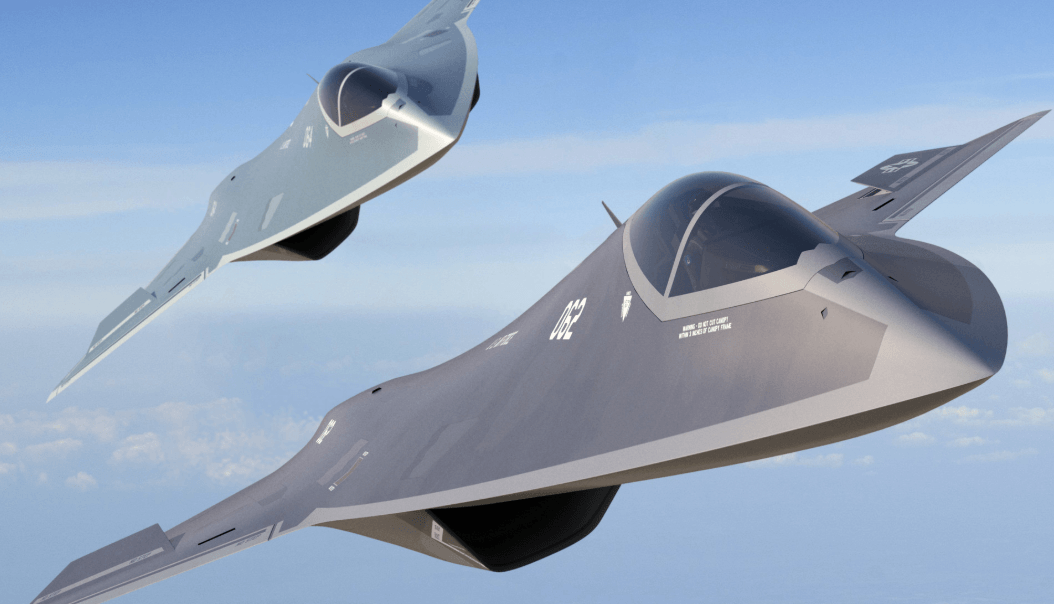
The goals of the US Air Force (USAF) for the “6th generation” fighter, or rather the “system” that will replace the F-22 in the mid-2030s, were revealed yesterday by the Deputy Secretary of Air Force Frank Kendall in his speech yesterday, on the eve of the launch drafting of the Defense budget of (fiscal year) 2024. A year in which the funding of the two components of the program is expected, i.e. the NGAD (Next-Generation Air Dominance) fighter platform and the accompanying CCA (Collaborative Combat Aircraft) aircraft that will act as sophisticated “wingman”.
Kendall was particularly revealing about the USAF’s goals when he said the intention is to acquire 200 NGADs and 1,000 CCAs, with two per fighter. Later clarifying that the 1,000 “stands” are for 200 6th-generation Next-Generation Air Dominance platforms and 300 5th-generation F-35s.
The framework program known as NGAD remains in almost all aspects of secrecy, even though it started in 2015 under the auspices of DARPA as the Aerospace Innovation Initiative, before later going (anti)”black”, changing from time to time and names.
In 2016-2018, Boeing, Lockheed Martin and Northrop Grumman were mentioned as potential prime contractors and competed by presenting various futuristic proposals for a sixth-generation fighter, with what they claimed were advanced low-observability (VLO) features, including the absence of “vertical” tail surfaces .
But then it became difficult to follow the progress of the program, although it seems that there was a turning point: when in 2019 the long-term planning and funding projections began, with an increase in funds from $1.5-2 billion to at least $3 billion annually from FY 2023 onwards. While there are estimates that from fiscal year 2025 funding will jump to $7-9 billion, not necessarily in overt funds. Observers in the field argue that the escalation of costs may mean the (already) awarding of contracts for the E&MD (Engineering & Manufacturing Development) phases.
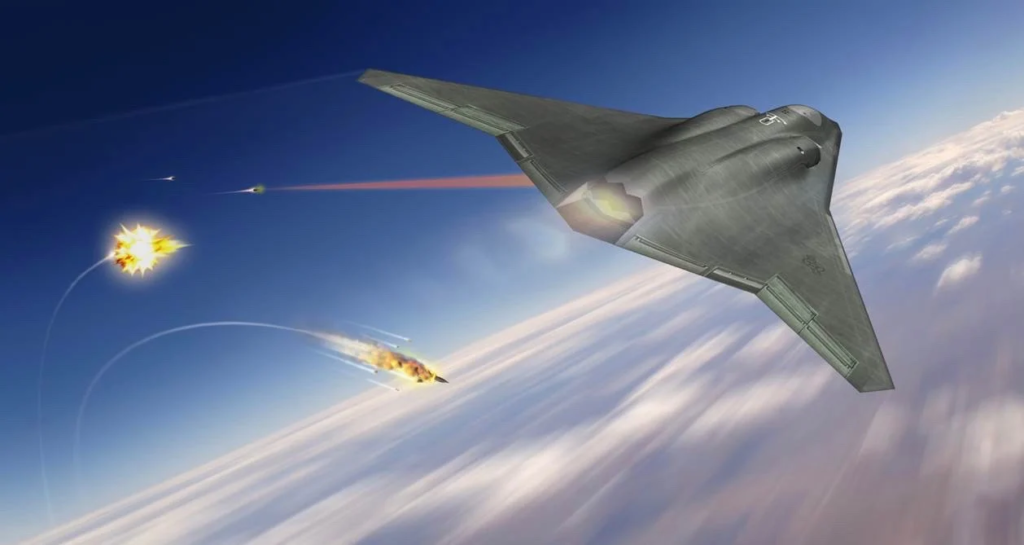
The NGAD framework, however, remains practically unknown, while it should be emphasized that it does not concern a specific aircraft, but a family of systems that will guarantee the US maintaining air supremacy in the 2030s. The USAF estimates that in 2030, but perhaps earlier, the F-22s, despite any planned upgrade, cannot guarantee their survivability, thus the ability to conduct combat in an environment with a strong enemy presence or IAD (Integrated Air Defense).
In 2019-2020, then-USAF chief General David Goldfin referred to NGAD as a development platform for “five critical technologies”, which he did not specifically name, but had repeatedly refused to confirm – but not deny – that a of these would be a manned fighter. He implied on the other hand that the NGAD “family of systems” would have various components, the cooperation of which – some of them in the environment of Space – would achieve the intended purpose, that is, both air superiority-dominance and ensuring that any potential target – however protected – would still be vulnerable to USAF capabilities.
The ambiguity surrounding the NGAD, which had been artfully constructed during that period, was lifted by the current leadership of the Pentagon and the USAF itself, when the current Chief of Staff, General Charles Brown, in written testimony to the House Armed Services Committee Representatives clarified that “the NGAD family will consist of a manned platform at its core and a series of cooperating, unmanned platforms that will carry sensors, weapons, communications and control infrastructure, self-defense systems, etc.”
The manned NGAD pillar is expected to be the most expensive tactical aircraft ever developed in the history of the Air Force and, as Undersecretary Frank Kendall said, it is expected to cost “hundreds of millions of dollars per unit.” He commented that with the cost of each manned fighter at such heights there is a need to create – within the NGAD family – “a mix with more economical unmanned aerial vehicles, which will also be expendable”.
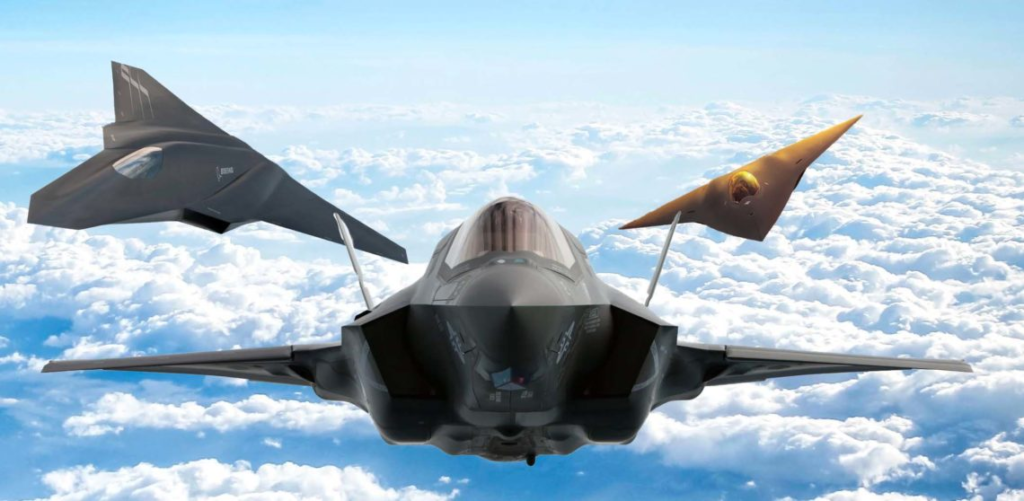
The USAF is reportedly already studying manned and unmanned aerial vehicle units under the CCA (Collaborative Combat Aircraft) doctrine, which is essentially a renaming of what was previously referred to as “Loyal Wingman.” But even these aircraft, which will incorporate advanced autonomous technology, will not be cheap, except when compared to the core of the sixth-generation fighter in the NGAD. Estimates confirmed by Undersecretary Frank Kendall put the cost of each such aircraft at $300 million and each CCA about half that, at $150 million.