Most politicians and analysts in the US and the EU conclude that China and Russia have common anti-democratic characteristics that require their cooperation against the liberal democracies. But China is completely different from Russia.
The differences between China and Russia
China’s economic and political system succeeds where Russia fails. For example, the size of the Chinese economy is about ten times that of Russia, and there are a number of industries in which the Chinese are thriving in the global market, with Russia being a major exporter of fuel, raw materials and grain.
In addition, China’s political system is much more complex than that of Russia. It is based on the structures of a traditional communist regime with rather limited bureaucratic inaction and the possibility of political control at least at the highest party level.
Instead, the Russian system has evolved into a purely personal affair of Putin, who does whatever he wants surrounded by a small group of trustees and a larger group of courtiers. There is no political mechanism to control Putin – like Xi Jinping – and that makes him unpredictable and dangerous. The constant reference to Putin and his associates in Russia’s nuclear arsenal is a matter of great concern precisely because it is politically uncontrollable.
A common point of China and Russia is the dominance of a leader beyond the initial restrictions during his tenure in leadership. Putin has become Russia’s lifelong leader, and Xi Jinping is poised to break the two-year rule and secure a third, claiming a place in the history of modern China comparable to that of Mao Zedong and Teng Xiaoping.
Turning Xi Jinping into a kind of self-proclaimed leader increases the chances of adopting a more nationalistic and revisionist policy in the future. On the other hand, Xi Jinping is a decade away from Putin’s 20 years in power and is controlled by a political system more complex and effective than that of Russia.

China’s non-cooperation in the issue of Russian invasion of Ukraine
US and EU They can not wait for China to cooperate on the issue of the Russian invasion of Ukraine, as long as they declare at every opportunity that Beijing is their main strategic opponent.
The Chinese leadership has no reason to make it easier for the United States to meet Putin’s challenge, knowing that it will then seek greater cooperation from the United States, the European Union, the United Kingdom, Japan, Australia, South Korea, and Taiwan to limit its influence of China in the Indian and Pacific Oceans.
These are the reasons why China is not going to facilitate the US and the EU. to face the Putin challenge. On the other hand, the Chinese leadership has several important reasons not to side with Putin.
The largest US and EU markets respectively
China’s largest export markets are the US and the EU. Therefore, it has every reason to avoid actions in favor of Russia which will provoke the reaction of the Americans and the Europeans, making it more difficult for its products to access its two largest markets.
China, unlike Russia, is confident of its prospects. This means that it is not investing in the turmoil and piracy of the Putin system, but in a gradual and planned strengthening of its international position, which is based on its economic power.
It is characteristic that it opens new trade routes of silk with investments of hundreds of billions of dollars. It exploits the potential of the Western-controlled economic system, but at the same time builds an alternative economic system. Putin, from a point of weakness, tries to blackmail situations with destabilization and collapse, while China, from a position of power, demands the further strengthening of its international position.
They are two completely different, possibly conflicting strategies, with the Russians investing in chaos and the Chinese investing in a planned and relatively calm path to the future.
Challenging the independence of states such as Ukraine and their territorial integrity is contrary to China’s strategy. Beijing may not denounce Moscow’s initiatives, but it is certainly not satisfied with them.
On the issue of Taiwan, Beijing is more aggressive in considering itself an integral part of China, something that is not accepted by the majority of Taiwanese, who have never had a communist regime. Russia’s military adventure in Ukraine, however, is likely to make the Chinese leadership more cautious on the Taiwan issue as well.
The scenario of the violent integration of Taiwan by military means is weakening based on the difficulties of the Russian troops in Ukraine. The Chinese armed forces have borrowed a lot of items from the Russian armed forces and are supplying modern weapons systems from Russia.
China’s last military confrontation was with Vietnam, so its armed forces have not been tested in recent confrontations, such as Russia in Georgia in 2008, Crimea and Eastern Ukraine in 2014, Syria in 2015 and again now in Ukraine.
In addition, Taiwan is an extremely strong adversary with modern US equipment, US security guarantees and dynamic Japanese support. The Russian adventure in Ukraine is likely to strengthen the self-control of the Chinese leadership.
China’s battle with COVID-19
An additional reason why China does not want international unrest and conflict is its attempt to control COVID-19.
Although the pandemic started in China, the Chinese were able to control it in an extremely strict and exemplary way. USA, EU and the UK have lost around 2,000,000 from COVID-19, while China has reduced its losses to around 10,000, despite having a much larger population than the US, the EU. and the United Kingdom together.
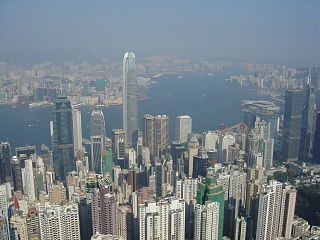
The Chinese leadership is pursuing a zero-tolerance policy on COVID-19, which it has achieved over the past two years, but is strongly challenged by the Omicron mutation and its dramatic spread. Already, Hong Kong has suffered heavy casualties and is setting a record for daily deaths due to low vaccination rates in the elderly. The Hong Kong leadership has eased restrictions, despite the pandemic on the rise, in a bid to protect the efficient operation of the world’s third-largest stock market.
The Chinese leadership is pursuing a policy of zero tolerance for COVID-19, but it is not certain that it will effectively control its spread. A similar problem – and on a much larger scale – is faced by countries in the Far East such as Japan, South Korea and Singapore, where there is an outbreak of the pandemic and an increase in the number of deaths.
Their performance in tackling the pandemic remains exemplary compared to that of the US and the EU. but show tendencies of gradual deterioration. In Greece we have lost around 2,500 per million inhabitants during the pandemic. The corresponding figures are 211 deaths per million inhabitants for Singapore, 126 for Japan, 51 for South Korea and just 7.7 for China.
Despite the qualitative difference recorded by the hard indicators of the pandemic, the problem has not been definitively addressed and seems to be growing.
Added to the pandemic are some problems of the Chinese economy, whose growth rate is gradually declining but remains at extremely high levels of 5% -6% per year.
There has been a real estate bubble that is testing colossal construction companies, while the Chinese leadership’s attempt to impose specific rules on the operation and limits on the development of companies that play a leading role in the digital economy has a negative effect on growth and the investment climate.
With Chinese leader Xi Jinping attending a crucial party congress at the end of the year that will free him from the decade-long constraint of remaining in office, the image of stability and order continues to gain special political significance.
In this context, and with issues of COVID-19 and the economy open, the Chinese leadership is not excited about Putin’s adventures and the turmoil and pressure they are creating, nor does it consider that it can empty him at this critical time.