
Until recently, US-India relations seemed like a model of strategic cooperation in the 21st century. Washington invested in New Delhi as a counterweight to China’s growing influence in Asia, while India sought technological and commercial reinforcement through rapprochement with the West.
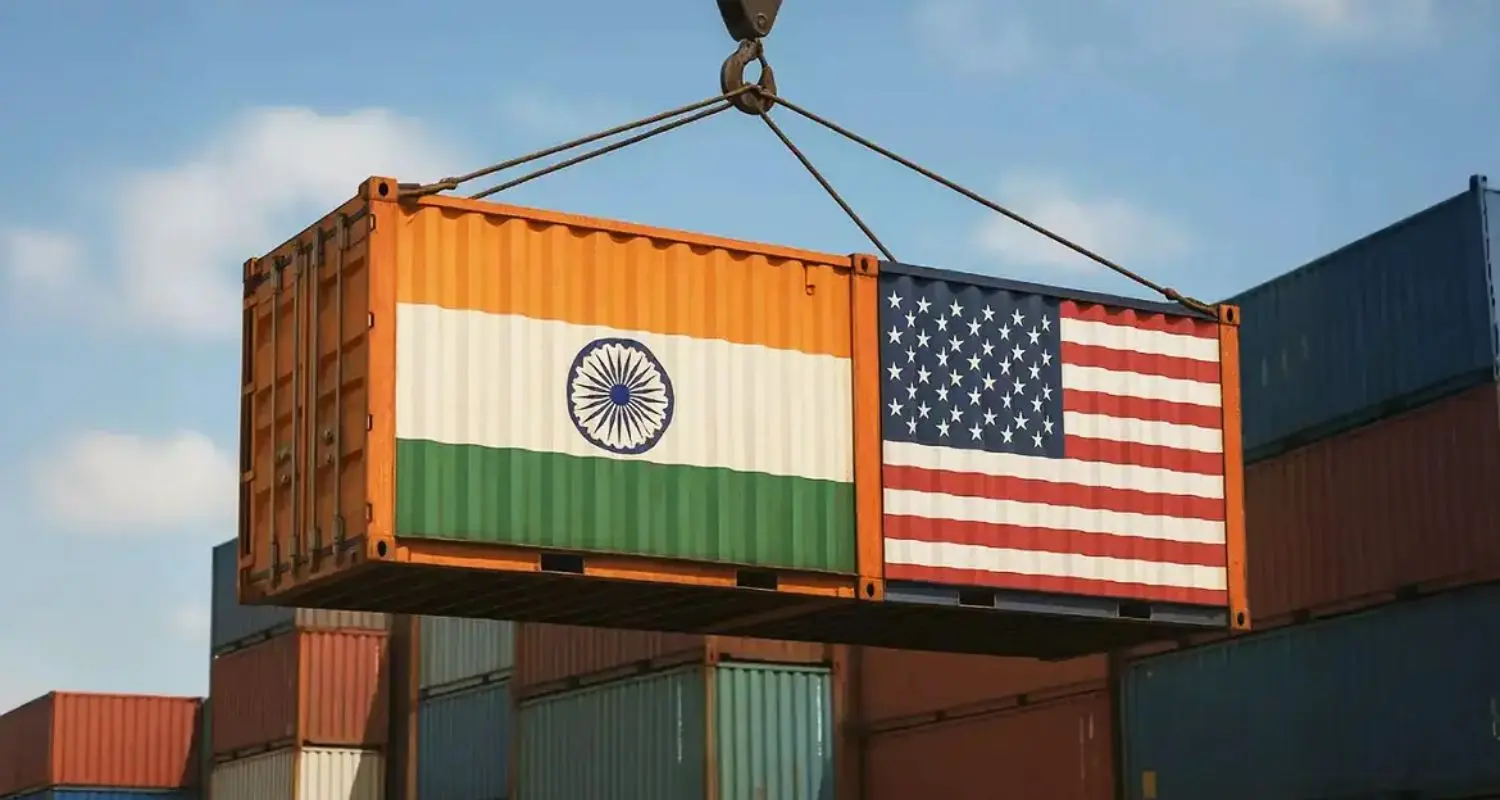
However, the imposition of a series of economic sanctions and trade restrictions by the US government, centered on the imposition of 25% customs duties on Indian products, seems to be changing the situation. Trade policy is now becoming a tool of diplomatic pressure, and India is facing an acute geopolitical dilemma.
The sanctions – Causes and objectives
The US justifies the measures with three main reasons:
- India’s high customs duties on American products.
- The existence of trade barriers and protectionism on the part of New Delhi.
- India’s continued cooperation with Russia, especially in the energy sector.
The Russian oil market in particular, which accounts for about 45% of India’s energy imports, has been a “red line” for Washington.
The launch of a new round of sanctions that will come into effect on August 27th is further deepening the rift.
The Russian oil market in particular, which accounts for about 45% of India’s energy imports, has been a red line for Washington.
The launch of a new round of sanctions that will take effect on August 27th is further deepening the rift.
India’s dilemma – Energy or exports?
Narendra Modi’s government is now in an extremely difficult position. On the one hand, complying with US demands and cutting off Russian energy flows could send domestic fuel prices soaring, threatening macroeconomic stability and the government’s political popularity — especially in the run-up to national elections.
On the other hand, continuing cooperation with Russia could lead to a loss of access to the US market. India’s exports to the US now stand at $86 billion — an amount that accounts for almost 10% of India’s total exports and accounts for about 20% of the country’s GDP.
Multicentric foreign policy
The US appears to underestimate India’s strategic depth and its ability to move outside the Western sphere of influence.
The deepening impasse is giving impetus to advocates of a multicentric foreign policy in India, who have long advocated a balanced stance between the West and the East.
India’s response is based on the following axes:
- Ties with the BRICS member states, dominated by Russia and China.
- India’s participation in the Eurasian Economic Union.
- Commitments through the Shanghai Cooperation Organization (SCO), in which India is an active member.
The minefield of negotiations
A typical sticking point is the US demand for access to the Indian market for American agricultural products, especially genetically modified (GMO) products. The Indian side fears that this will hurt local farmers and endanger the country’s food sovereignty.
Despite repeated negotiations and hopes for a future free trade agreement, the imposition of sanctions has undermined the process, making a comprehensive trade agreement politically toxic and diplomatically unlikely.
The 2025 reversal
In February 2025, Modi and former US President Joe Biden set a goal of doubling bilateral trade to $500 billion by 2030. Today, that vision seems to be crumbling under the weight of geopolitical and economic contradictions.
Sanctions no longer function as a means of pressure, but as a catalyst for strategic disengagement.
Rather than bringing about a retreat, they reinforce the perception in India that US unilateralism leaves no room for equal cooperation.
The imposition of tariffs and trade restrictions by the US may be presented as a show of strength, but it risks having the opposite effect: accelerating India’s geopolitical autonomy and triggering profound changes in the global trade architecture.
New Delhi does not seem willing to sacrifice its energy security or its domestic agricultural economy to comply with Western demands.
If this conflict of interest continues, the United States may eventually be forced to reconsider its strategy — before it finds itself faced with the scenario it wanted to avoid: India as an active participant in an alternative, non-Western-centric world order.

