
As a percentage of French citizens engaged in the French agricultural industry may be small (2.53% of the total French workforce, data 2019), but the weight of the French food industry shows that France is a country with a significant and quality agricultural production.
The mobilizations of French farmers are famous for their impact on French society. A significant number of French politicians have as their political base various provincial constituencies.
The globalization of agricultural production
French farmers, in general, present a timeless “intolerance” with the globalization of agricultural production and its free trade.
This is mainly due to the fact that other countries, for example, the USA, in order to maximize their production at the lowest possible prices, in order to be more competitive, chose the process of concentration and formation of large agricultural areas with specific productive crops. On the other hand, French agricultural production is based on small and medium-sized land.
With their large-scale farms and machinery, many countries were able to export agricultural products at lower prices, and this always put multiple pressures on French farmers.
The EU’s common agricultural policy has always been designed with the criterion that French farmers will always be satisfied. At the same time, global trade liberalization agreements between the EU and other countries should always take into account the wishes of French farmers. To a lesser extent, the same was true in other EU countries, where the rural world had political and economic weight, thus influencing the overall EU agricultural policy.

EU and trade agreements with other countries
On the other hand, the EU knows that, in order to be able to expand its export activity and economic presence worldwide, the only way for it is to formulate and ratify trade agreements with other countries and given the high degree of difficulty they present multi-day negotiations and agreements.
However, such bilateral agreements are based on a logic of mutual concessions. That is why the EU recognizes and accepts to some extent the penetration of third country imports, so that it can then promote its own exports.
In this context, the negotiation of trade agreements between the EU and New Zealand and Chile respectively. Both New Zealand and Chile have the highest degree of export potential for both agricultural and livestock products, respectively, which can claim market share from their respective French products. But both countries are very important to the EU.
The agreement with Chile will enable the EU to supply lithium, which is essential for electric car batteries, thus reducing its import dependence on China.
When the EU consumed 11.6 million tonnes of poultry by 2020, of which 600,000 were imports, it could benefit from the agreement with Chile, which is also a major poultry exporter, with 18,000 tonnes of poultry exported. in the EU.
New Zealand is a country with significant exports of agricultural and livestock products such as meat and dairy products and which sells under protected European names.
France is adversely affecting the trade agreement between the EU and Chile and New Zealand respectively.
France has managed to persuade the other member states to delay, for its own interests, the signing and especially the relevant agreements until the end of the French Presidential Elections.
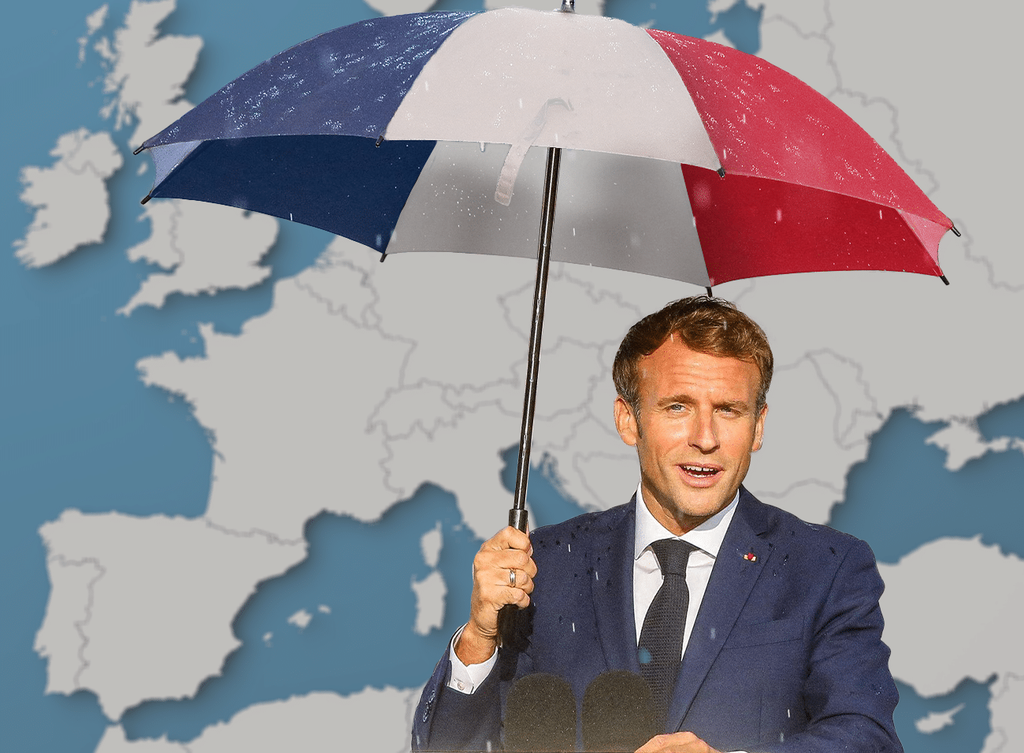
France can officially state that this is due to a better discussion of quotas on the various products, as well as a clearer wording of environmental conditions and the need for sustainability, but their real concern is that the signing of these favorable agreements before the elections, will lead to militant mobilizations of French farmers, which would affect the election result against President Emmanuel Macron.


