



In recent years, humanity has witnessed extreme climatic and environmental phenomena such as huge fires, terrible heat waves, long droughts, severe floods and heavy snowfalls and frosts, the appearance of which create fragmentation and fragmentation.
The Covid-19 pandemic has forced countries around the world to adopt unprecedented situations of restricting the movement of people and goods.
But climate change is making its presence felt more and more through the devastating fires that have ravaged southern Europe and the western United States, Siberia, the long-running drought in South America and the floods in Central and Northern Europe.

Photo by the website www.esgclarity.com
But all these phenomena are a foretaste of what awaits humanity in the future from the deteriorating discounts of climate change. All sectors of the economy and trade will be affected.
For this reason, all companies, regardless of which sector of the economy they operate in, should have ready-made short-term planning policies regarding their production and any exports.
Incresing Product Prices
So, under the law of supply and demand, the prices of products whose production companies are experiencing production disruption because of climate change will see their prices soar.
Consumers have already seen price increases on many products, creating inflationary pressures.
Brazil is experiencing the worst droughts of the century. The result is that the prices of coffee in July in the futures markets skyrocketed to levels twice as high as in 2020. These prices of futures contracts have not yet passed to consumption. The same goes for rice, which requires large amounts of water to produce.

Prevention
Business actions should be of a type that can meet the challenges of the future. For this reason, every business, in whatever sector of the economy is active, should anticipate and make plans for the long term in relation to the new conditions that will be brought by the increasing climate change.
In this case, the horizon of their strategic planning should be increased from five to twenty years.
Extreme weather and environmental phenomena, which occur with increasing frequency and duration, as well as the political upheavals created by the unstable decisions of governments in various countries, will be the “fuel” for the movement of large population groups from the suffering countries. more, creating at the same time in many supply chains of companies, mainly in companies producing natural products.
Business Coping Strategies
Buffering and bridging strategies are included to mitigate the threats faced by corporate supply chains.
- Bridging
This strategy means that the company must find ways to bridge the gap with its suppliers in a way that ensures strong and close communication between them in difficult times.

Photo by the website www.agnelorajesh.com
- Buffering
In this case, the company must ensure the storage of specific products and / or raw materials necessary for its production process to ensure the smooth production or marketing of its products, in difficult times.
- Greater dispersion of their supplier portfolio
It is also a necessary strategy for companies to have a greater degree of diversification in the portfolio of their suppliers who ideally should be from different sources and continents, with alternative suppliers so that they have solutions in case they cannot be served by the main suppliers.
- Reduction of the corporate environmental footprint
Along with the policies proposed above, companies need to find ways to drastically reduce their own carbon footprint and at the same time improve the viability of their operations.
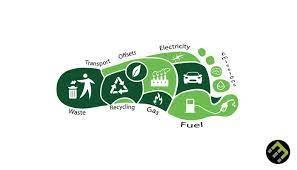
How to achieve the small carbon footprint of a company
To reduce its environmental footprint, a company should start its strategy by relocating its administrative offices (e.g., service company) and depending on the nature of the company, to high energy efficiency buildings.
If this is achieved, the new buildings to be used will have to be served with energy by geothermal pumps and huge photovoltaics on the roofs of the buildings.
In extreme weather and environmental phenomena (e.g., severe frost, very strong heat) the operations of the company will continue uninterrupted without interruption.
If this is applied by the suppliers of each company, it means that both the company itself and its suppliers will have a much lower risk in case of serious risk or interruption of the central energy systems in the future. At the same time, both the company and its suppliers will have created a small environmental carbon footprint throughout their supply chain.

