With the collapse of the USSR (1989) many millions of Russian-speaking people were found outside Russia’s borders. More specifically, 8 million in Ukraine, 3.6 million in Kazakhstan, 1.2 million in Belarus, 650000 in Uzbekistan, 600000 in Kyrgyzstan, 351000 in Latvia, 370000 in Moldova, 310000 in Estonia, 180000 in Lithuania.
Given these populations in all these countries, Russia is of great interest to these populations, while at the same time, based on these populations, Russia is trying by its methods to keep these countries in its own sphere of influence.
On the other hand, the upper countries in which the Russian-speaking populations live at are trying to “disappear” the Russian status of these populations with the aim of strengthening their national cohesion.
by Thanos S. Chonthrogiannis
©The law of intellectual property is prohibited in any way unlawful use/appropriation of this article, with heavy civil and criminal penalties for the infringer.

Photo by the website www.bbc.com
In this context, in countries such as Estonia and Latvia, the Russian language is now rejected as a second official language, while restricting the rights of Russian speakers.
In Belarus, Russia President s president strongly supports that country’s President Lukashenko, who resorted to the act of state hijacking to arrest an anti-regime internet journalist.
The points of friction between the EU and Russia are the willingness of all these countries to work with the EU to achieve a better prosperity of their peoples, while Russia in every way tries to keep them in its spheres of influence.
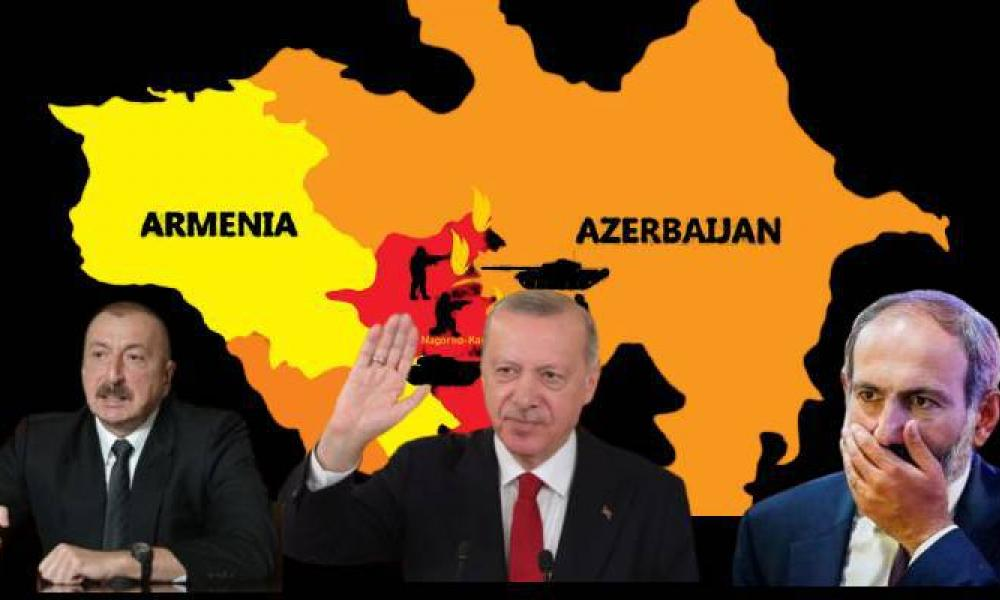
Georgia was defeated militarily by Russia (2008) losing two of its autonomous regions. In Moldova, the Transnistria region was self-contained. In Ukraine, the eastern regions were autonomous, and Crimea was incorporated into Russia. In Armenia and Azerbaijan, Russia has a military presence respectively and is projected as a guarantor of peace.
Russian speakers in these countries act as a Trojan horse with the aim, if not to contain Russia’s spheres of influence, then as a means of dismembering the country.
The Russian method of intervention and influence includes the development of hybrid warfare, interference in internal political developments, disinformation campaigns, wars, cyber-attacks before wars, assassinations against opponents of the regime or those who do not cooperate with the regime, as well as assassinations of former secret agents of Russian intelligence on European soil, destabilizing actions, strengthening separatist tendencies in the governments of the above countries seeking cooperation with the EU to drastically improve the standard of living of their peoples.
This Russian method of country control is a modernized aspect of the KGB and GRU (military intelligence service of Russian Armed Forces) methods and cannot be tolerated by the EU. That is why the EU is turning again to the US of Joe Biden. Simply because the EU lacks a common foreign and defence policy and cannot cope with these Russian methods.
However, in the short term the EU is called upon to take important decisions:
- Will it support its strategic autonomy over the US, or will it depend even more militarily on the US?
- Will they undertake additional obligations to NATO or not?
- Will Germany continue to differentiate itself from the US by dragging the rest of the EU (Nord stream 2) or not?