



The wars in Ukraine and the Middle East highlight one of the most significant shifts in modern land warfare: the massive presence of unmanned aerial vehicles (UAVs), used for both reconnaissance and striking targets.
The battlefield is becoming increasingly transparent, as small, relatively inexpensive drones are able to locate, track, and engage targets—including, notably, armored vehicles—with unprecedented frequency.
Footage of tanks being destroyed by FPV drones has reignited the debate regarding the obsolescence of the main battle tank. However, the actual evidence does not point to its disappearance.
It does, however, demonstrate that a tank’s survivability can no longer be ensured by passive armor alone; rather, it requires a combination of technological protection, tactical adaptation, and support from other arms.
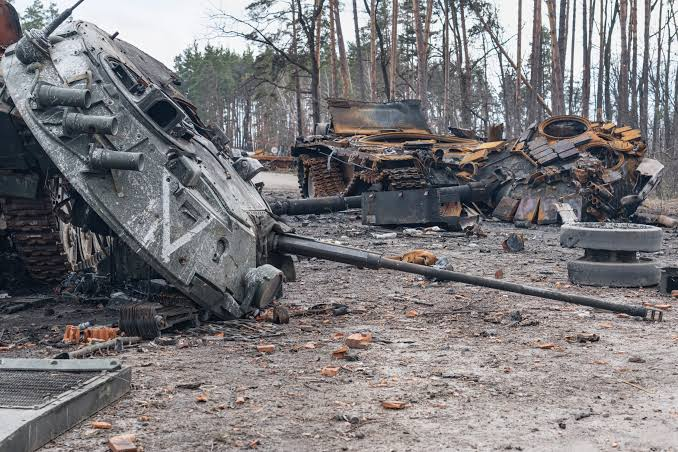
The critical question is no longer just whether a tank can withstand an anti-tank projectile, but whether it can operate in an environment characterized by constant surveillance and repeated aerial attacks.
The new threat and the limitations of armor
Traditional tank design prioritized protection for the frontal arc, where the primary anti-tank threat was expected to emerge. FPV drones upend this logic, as they can approach from various directions to strike the turret roof, the upper hull, the sides and rear, the engine, and the propulsion systems.
Furthermore, neutralizing a tank does not always require penetrating the crew compartment. An attack can immobilize the vehicle, destroy its optical systems, or ignite a fire—rendering it operationally useless.
It is therefore necessary to distinguish between three parameters:
- Resistance to penetration: The ability of the armor to prevent penetration.
- Vehicle survivability: The maintenance of mobility and operational functionality.
- Crew survivability: The protection of personnel, even after the tank has been immobilized or destroyed.
These parameters are not identical. A tank may be immobilized without the crew compartment being penetrated; conversely, an initial hit—which may not cause immediate destruction but inflicts sufficient damage to impair mobility—can lead to the total loss of both the vehicle and its crew through subsequent attacks.
Ukraine and Israel: What the actual incidents reveal
In January 2025, an incident involving a Ukrainian Leopard 1A5 tank came to light; the vehicle was subjected to approximately a dozen drone attacks but remained operational following the initial strikes. However, subsequent attacks focused on the engine and transmission area, ultimately resulting in the tank being immobilized and catching fire.
Equally illustrative is the case of a Ukrainian M1A1 Abrams in the Kursk region in December 2024. According to its commander, the tank was struck by four to six FPV drones within the span of about two minutes. It was immobilized, but all crew members survived.
A key factor in protecting the crew is the design philosophy of the Abrams—a standard shared by Western tanks—whereby ammunition is stored in a separate compartment equipped with blowout panels, which direct the force of any potential explosion away from the crew.
This represents a significant advantage over many Soviet-designed tanks, in which the ammunition is located within the fighting compartment.
A study by the British think tank RUSI, titled “Emergent Approaches to Combined Arms Manoeuvre in Ukraine” (October 2025), also notes that appropriately modified tanks can withstand 10–15 FPV drone strikes, sustaining damage that remains repairable.
The Israeli experience offers a different, yet equally significant, set of examples.
During the Hamas attack on October 7, 2023, the use of commercial UAVs to strike Israeli Merkava tanks was documented. In one notable video, a quadcopter carried and dropped a PG-7VR anti-tank warhead, damaging a Merkava.
Throughout operations in Gaza, beginning in November 2023, Israeli tanks faced repeated attacks within a highly confined urban environment.
Despite their exposure to anti-tank projectiles and attacks by small UAVs, their losses remained relatively limited given the intensity of the operations.
The International Institute for Strategic Studies (IISS) attributes part of this resilience to the tanks’ armor, the Trophy active protection systems, and adjustments in operational tactics.
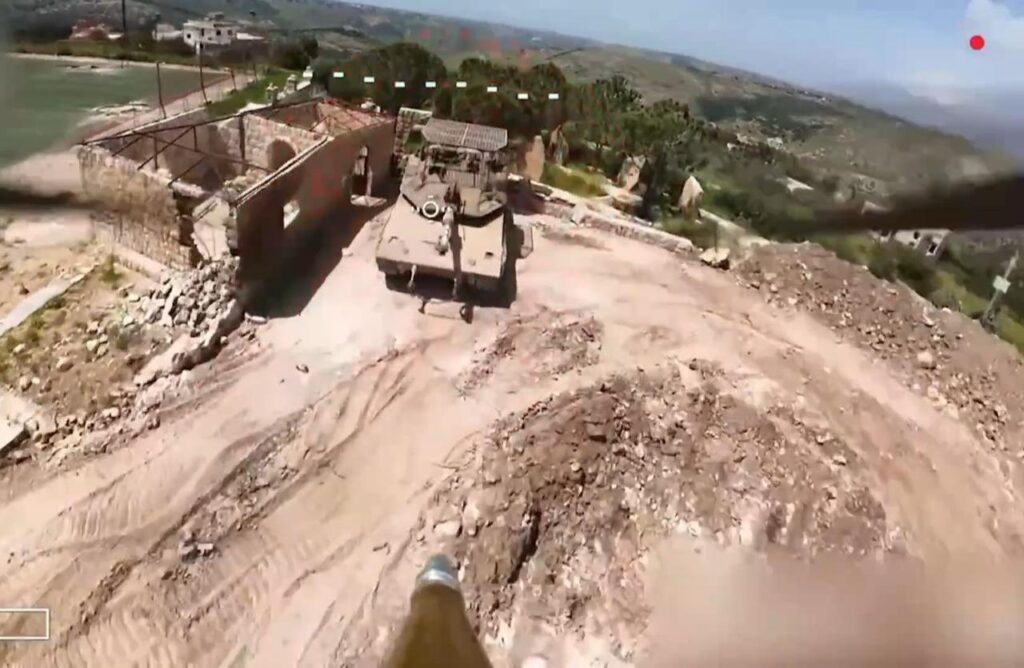
Recent incidents in Lebanon, however, confirm that the threat is evolving. In April 2026, Hezbollah released a video showing an FPV [drone] strike on an Israeli Merkava Mk4 tank in the Mays al-Jabal area. The footage shows the vehicle being struck on its roof and catching fire, but it cuts off before the final status of the vehicle can be determined.
During the same period, an FPV drone attack against Israeli soldiers repairing a tank in the Taybeh area resulted in the death of one soldier and the injury of six others.
This incident is particularly revealing: the threat extends beyond the tank itself while it is in motion or engaged in combat; it also encompasses the personnel attempting to repair or recover it.
The Israeli experience also highlights a serious technological challenge: FPV drones guided via fiber optics are immune to conventional electronic warfare jamming.
The answer: Multi-layered protection
Experience from two theaters of war has led to the development of combined protective measures.
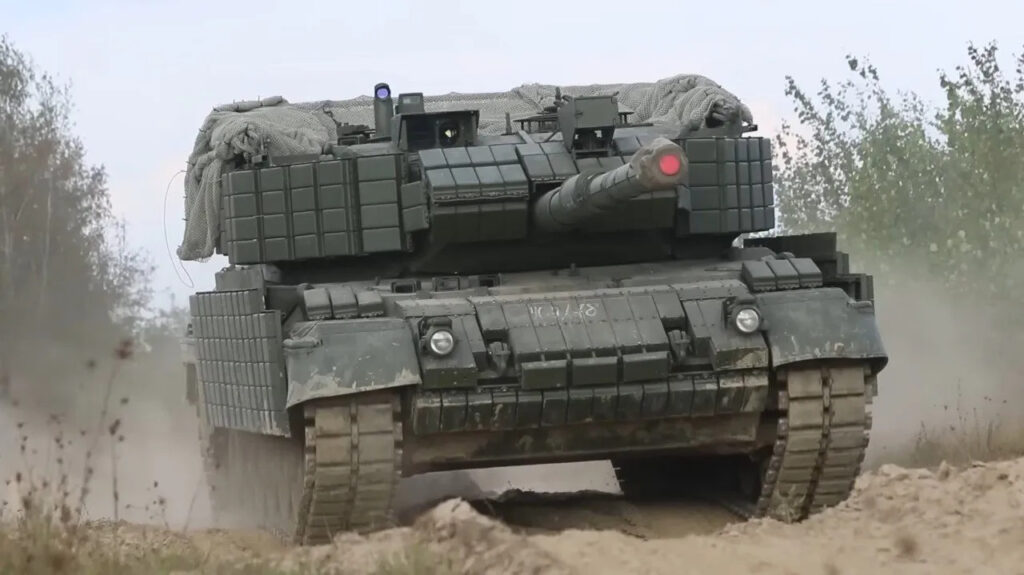
1. First, overhead structures and metal grilles (“cope cages”) aim to create an additional physical barrier between a drone and a tank. While they do not offer guaranteed protection, they can limit the effectiveness of certain attacks.
2. Second, Explosive Reactive Armor (ERA) enhances protection against shaped-charge warheads, though its effectiveness depends on the specific type of threat and the extent of the vehicle’s coverage.
3. Third, electronic warfare systems can jam the communications and control links of many drones. However, the proliferation of fiber-optic FPV drones significantly limits this capability.
4. Finally, early-warning and active counter-UAV systems are gaining increasing importance, as is the integration of specialized anti-drone capabilities at all levels of armored formations. No single solution is sufficient on its own; protection must be multi-layered.
A Shift in Doctrine: From the Standalone Tank to the Combined-Arms Formation
The most significant change is not technological, but operational. Constant aerial surveillance makes concealment, achieving surprise, and concentrating large armored forces increasingly difficult. This new reality necessitates four key adjustments:
- Dispersion and limiting exposure. Massing tanks in exposed areas increases the risk of detection and engagement. Their movement and positioning must be adapted to an environment characterized by constant surveillance.
- Integration with UAVs and electronic warfare. Tanks require friendly reconnaissance and early-warning assets, as well as organic capabilities to counter enemy drones. Their protection cannot be the sole responsibility of air defense units.
- Reintegration into combined arms operations. A tank cannot operate in isolation. Coordination with infantry, engineers, artillery, air defense assets, and UAV units is critical for both its survival and the successful execution of its mission.
- Recovery and repair. The ability to recover an immobilized tank is now just as important as its initial protection. Recovery vehicles, maintenance teams, and spare parts must be factored into operational planning, as they, too, are vulnerable to constant aerial surveillance.
Conclusions
Ukraine and Israel demonstrate that the main battle tank has not become obsolete; rather, it has lost the independent survivability once guaranteed by the traditional approach to armor protection.
Initial deployments of tanks in isolated thrusts—lacking artillery support, infantry accompaniment, and air cover—ended in failure, with Western tanks being immobilized.
Furthermore, advanced tanks remain vulnerable to sporadic aerial attacks, especially when such threats are compounded by limited visibility and sustained pressure.
Consequently, the tank of the future will require more than just stronger armor. It will need an integrated suite comprising protection systems, sensors, electronic warfare capabilities, counter-UAV measures, and technical support. The tank is not dead; however, it is now inconceivable for it to operate on its own.


