
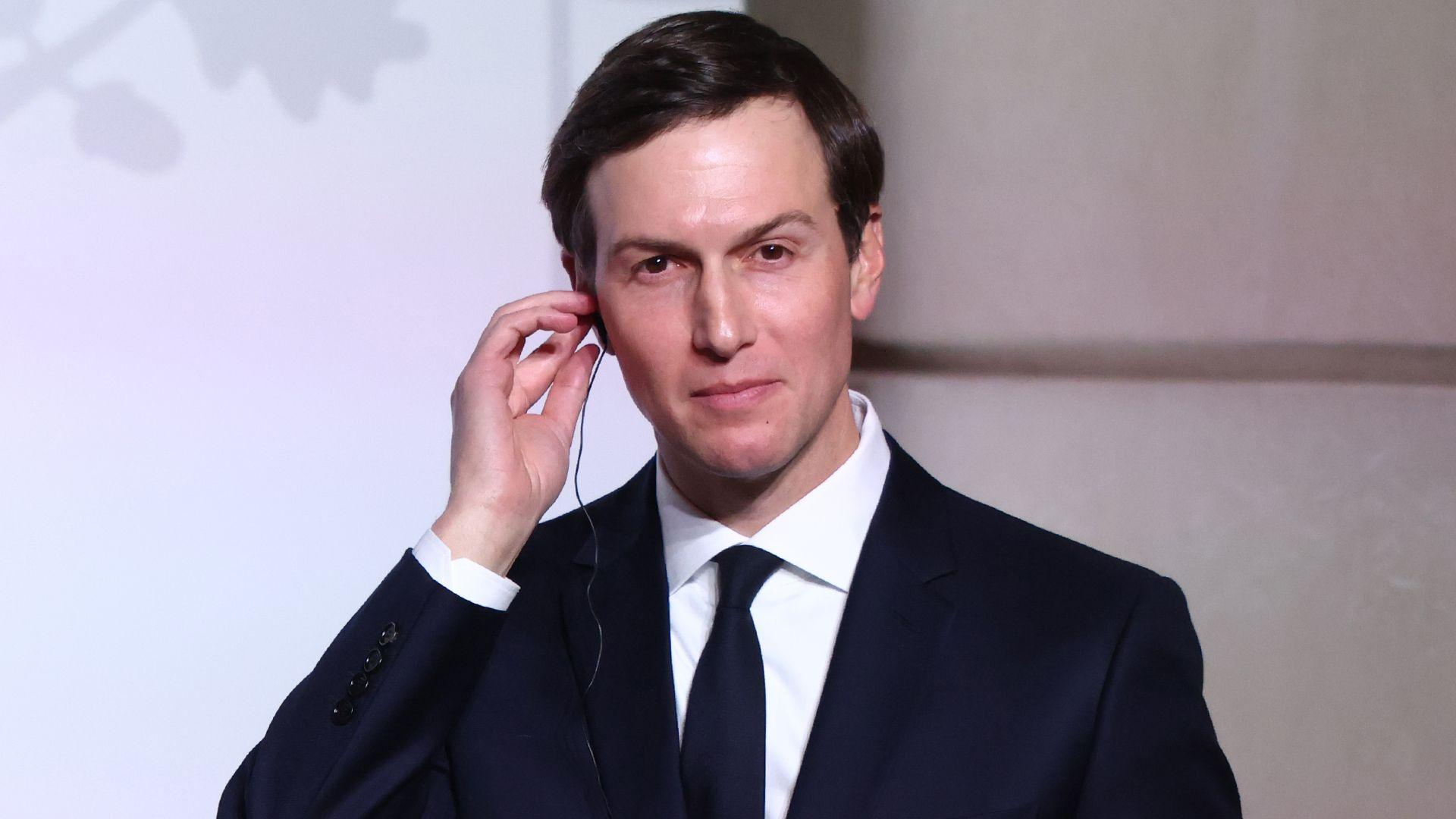
On October 22, 2026, the American magazine Vanity Fair published an excerpt from Matthew Cole’s forthcoming book, Princes and Thieves: Jared Kushner and Mohamed bin Zayed’s Secret Plot to Remake the Middle East. The excerpt levels serious allegations regarding secret bank accounts and billions of dollars—originating from the UAE and Saudi Arabia—to which Jared Kushner, son-in-law of U.S. President Donald Trump, had access.
According to the excerpt, Dutch intelligence (MIVD) gained access to screenshots and content from Kushner’s iPhone via files stored on a server belonging to a Russian GRU operative.
They observed that he was connected to an account at the First Abu Dhabi Bank—held by the Watani Al Emarat Foundation—into which approximately $750 million had been deposited via Azerbaijan.
Kushner is identified as a signatory on the “Alpha” account, which was intended to serve as a foreign policy fund.
The text also mentions a second account (“Beta”) in Israel, into which approximately $1 billion was transferred via Azerbaijan for Kushner’s personal benefit—with the encouragement of Benjamin Netanyahu and facilitated through communications involving the then-ambassador, David Friedman (who categorically denies any knowledge of this).
In total, the UAE and Saudi Arabia allegedly deposited at least $2 billion into accounts accessible to Kushner, as part of a “secret agreement” to exert influence over the policies of the first Trump administration.
Kushner himself responded immediately in a post on X, describing the accusations as “completely crazy,” “never happened,” and “outrageous fabrications”—a “mix of fantasy, fiction, and propaganda.” He emphasized that no evidence whatsoever (such as financial statements, wire transfers, or account numbers) was presented, and noted that these claims had not surfaced during previous Congressional or Special Counsel investigations in which he had cooperated.
His lawyer, Chad Mizelle, confirmed that a 13-page letter had been sent to the publisher, Simon & Schuster, prior to publication; in it, Kushner denied any involvement and threatened legal action against Vanity Fair and those responsible, citing a lack of independent verification.
The White House characterized the report as “baseless smears” and “fake news.” Conversely, Democrats on the Oversight Committee have demanded answers and an investigation into the matter. Reactions in the press have been mixed: some journalists (such as Barak Ravid of Axios) have described the claims as “highly questionable” or technically problematic (for instance, regarding accounts at the Bank of Israel), while the Jerusalem Post retracted a related report, citing “significant questions.” The book is set to be released on October 27, 2026.
The allegations concern the period of Trump’s first term, when Kushner served as a senior advisor and a key figure in Middle East diplomacy. They remain contentious and have not been independently verified through public documentation.
The White House Response
The White House’s reaction stems from the serious and contentious allegations contained in the Vanity Fair excerpt—claims it deems baseless, defamatory, and politically motivated.
Specifically, the White House characterized the report as consisting of “baseless smears” and “complete fiction.”
White House Communications Director Steven Cheung described it as “TOTAL FAKE NEWS”—a book of pure fiction, “concocted by the twisted mind of a failed thriller writer.” The administration’s stance aligns entirely with the categorical denials issued by Kushner himself and his attorney, who maintain that the accounts in question never existed and that no evidence has been presented to support them.
It should be noted that Kushner is Donald Trump’s son-in-law and has served as an active special envoy on critical issues (including the Middle East, Gaza, and Ukraine). Allegations regarding secret, multi-billion-dollar funds and potential misconduct during the first term strike directly at the credibility of the current administration. The White House emphasizes that the article relies on anonymous sources and allegations of wiretapping, yet lacks supporting bank documents, account numbers, or independent verification.
Trump’s inner circle views such accusations as a continuation of previous investigations and “attacks” against the Trump family—particularly those concerning ties to the UAE and Saudi Arabia.
Overall, the response is defensive and dismissive, aimed at undermining the credibility of the report ahead of the book’s release and protecting Kushner’s image. Beyond a blanket rejection, the administration has offered no detailed, point-by-point rebuttal.
The Allegations
According to the book’s author, the UAE and Saudi Arabia allegedly deposited at least $2 billion into at least two accounts for which Kushner is reportedly the beneficiary. Initially, a larger sum (exceeding $10 billion) was discussed for broader objectives—such as funding the construction of the wall along the U.S.-Mexico border. The context is a “secret agreement” aimed at reshaping the Middle East, normalizing relations with Israel, exerting pressure on Iran, and influencing the policies of the first Trump administration.
Furthermore, the excerpt from the book—published by an American magazine—states that funds from the UAE-linked account were allegedly transferred to individuals including a warlord, a mercenary, and a former hitman. Additionally, the text raises the issue of a potential failure to disclose access to a foreign government-linked account, which could constitute a violation of U.S. regulations.

