
An air force can prevent an adversary from operating over its territory without necessarily securing corresponding freedom of action for its own aircraft. This gap between protection and initiative lies at the heart of the debate regarding the future of air power.
Drones, loitering munitions, and air defense systems are expanding the range of available options. The question is what mission their combination can execute, against which adversary, and for how long.
Maximilian Bremer and Kelly Grieco have argued at the Atlantic Council that layered defense and lower-cost unmanned systems offer a more cost-effective deterrence strategy, particularly when the objective is to prevent the seizure of territory. These represent different responses to different needs.
What does air control mean?
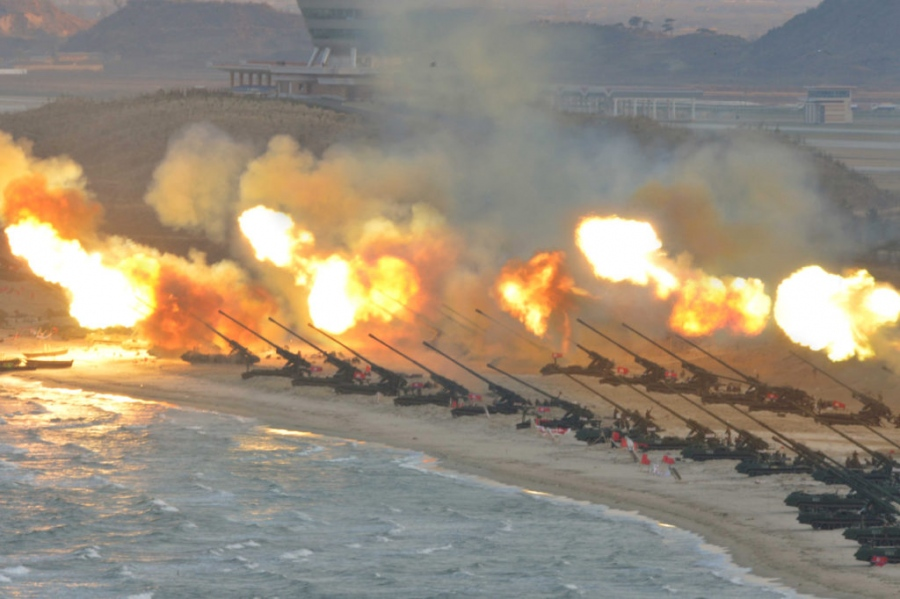
Area denial aims to make a specific region hazardous for hostile air forces. Mobile air defense systems, fighter aircraft, and electronic jamming can force an adversary to alter flight paths, altitudes, weapon choices, and operational tempo. Success is also measured by hostile missions that were never launched because the projected cost was deemed excessive. An anti-aircraft battery that remains concealed may influence enemy decisions more significantly than one that fires continuously, thereby revealing its position.
Furthermore, air superiority describes the capability to conduct friendly operations without prohibitive interference from aerial or missile threats. US air operations doctrine links this state to a specific time and place. Air supremacy represents a higher degree of control, wherein the adversary is unable to effectively interfere. Superiority does not require the elimination of every hostile threat; rather, it requires sufficient freedom of action to complete the mission.
Thus, a plan might aim to protect a maritime corridor for a few hours, provide cover for a resupply operation, or ensure the safer passage of a strike formation. The desired outcome is defined by the mission itself. A requirement for continuous control over an entire theater of operations could tie up forces disproportionate to the objective, leaving other needs unaddressed.
The distinction is illustrated by a hypothetical scenario. An island possesses air defense systems that prevent hostile overflights. At the same time, the adversary threatens the island’s approaches with fighter aircraft and missiles. Consequently, while the island’s garrison is protected, transport aircraft carrying reinforcements struggle to land, and supply ships require additional cover. Thus, deterring aerial bombardment and securing the arrival of reinforcements constitute two distinct operational requirements.
Ukraine highlighted the value—and the cost—of defense
Ukrainian air defenses demonstrated just how difficult it can be to capitalize on numerical air superiority. A RUSI study on the 2022 air war documents the importance of Ukraine’s dispersed, mobile air defense systems, which Russia failed to systematically neutralize. Attempts to penetrate airspace at low altitudes exposed Russian aircraft to other threats, including man-portable air-defense systems (MANPADS). Consequently, the survival of the defensive network drastically limited the operational utility of the Russian air force.
The same study notes that Russian fighter jets remained a threat to Ukrainian aircraft near the front lines. Ukraine’s success in hindering Russian flights did not automatically grant it the ability to operate in that same airspace at will; constraints on providing close air support to ground forces and executing strike missions persisted. While the denial of access ensured survival and bought time, making effective use of that time required other capabilities.
Small drones add yet another dimension. Low-altitude aerial observation, fire correction, and target engagement can continue in areas where manned aircraft face operational constraints. Air control requirements vary depending on altitude, location, and the nature of the threat. A fighter jet keeping enemy aircraft at bay does not absolve a unit of the need to protect itself against a small drone hovering over its position.
The Ukrainian experience offers specific lessons regarding dispersal, concealment, and the maintenance of a credible threat. However, it does not provide a ready-made shopping list of weapons for every nation. Geography, mission requirements, existing stockpiles, and the capacity to replenish losses determine what can be effectively utilized in any given country. Simply copying a conflict’s most prominent weapon often overlooks the organizational framework that made it effective.
Drones require a defined mission, support, and a place in operational planning
The term “drone” encompasses systems with widely varying capabilities. A small reconnaissance quadcopter, a loitering munition, a long-endurance aircraft, and an unmanned combat aerial vehicle are not interchangeable. They differ in terms of speed, payload, operational range, sensors, and resistance to interference. Grouping them into a single category creates the impression that purchasing a large number of them automatically fills every operational gap.
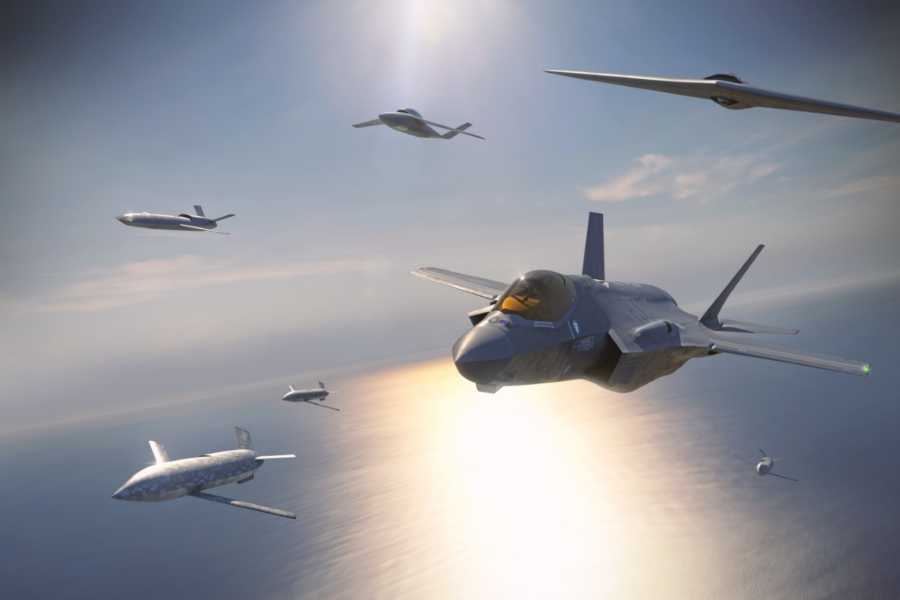
The USAF views collaborative unmanned combat aircraft as assets that will operate alongside manned aircraft and contribute to securing air superiority. This approach expands a formation’s options and allows for risk distribution. An unmanned asset can undertake a mission where the risk to the crew would be disproportionate to the expected benefit.
In mission planning, such assets could be employed as forward sensors, jammers, decoys, or additional weapons platforms. A decoy can trigger the activation of an enemy radar. The resulting emission must then be detected, evaluated, and exploited in a timely manner. The value lies in completing the detect-and-engage process; if the information arrives late or the appropriate weapon is unavailable, the target’s exposure goes unexploited.
The same applies to the suppression of enemy air defenses. Temporarily disabling a radar may suffice for a single pass, whereas protecting repeated sorties requires a different level of effort. Thus, the overall planning of air defense and offensive operations must integrate intelligence, electronic countermeasures, weaponry, timing, and post-engagement assessment. The number of available aircraft gains significance within this process.
There is also the economics of interception to consider. The systematic use of expensive anti-aircraft missiles against low-cost threats can deplete stockpiles intended for more challenging targets. Multi-layered protection requires appropriate assets for each threat category, ranging from electronic countermeasures and guns to guided missiles. At the same time, even an inexpensive offensive drone requires operators, maintenance, communications, and targeting data; the purchase price reflects only a fraction of the total cost of operation.
Finally, no aircraft generates operational results while grounded. Fuel, spare parts, personnel, hardened shelters, operational runways, and rearming capabilities determine the sortie rate. Base resilience is an integral component of air power. While expenditures for this aspect garner less public attention than new acquisitions, they determine how many assets will remain available on the second and third days of a conflict.
Deterrence is strengthened when an adversary must factor in both the potential failure of their attack and the prospect of a counter-response. Therefore, the evaluation of any new system must lead to the same practical requirement: enabling the Armed Forces to reach their objective, complete the mission, and remain capable of conducting further operations.