



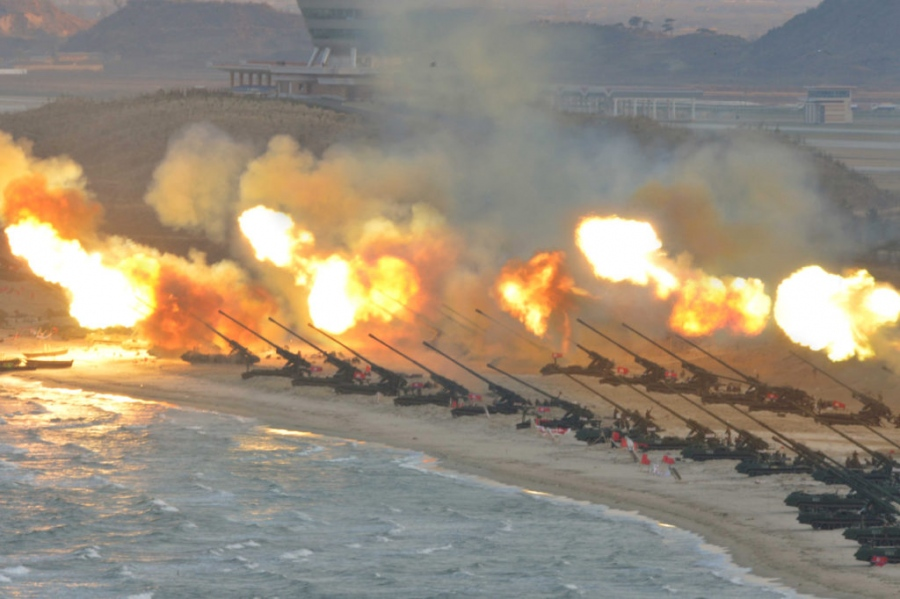
The details of Russia’s military alliance with North Korea are startling. According to a classified but leaked analysis by South Korea’s Defense Intelligence Agency, the Russian Armed Forces have received more than 12 million 152mm artillery shells from North Korea, with support deepening to the point where some Russian units are completely dependent on Korean supplies.
This is not just a simple transfer of shells. The scope of support from Pyongyang includes:
- New 170mm caliber projectiles, with a much greater range than what the Russian arsenal has.
- Fire-and-forget guided anti-tank missiles, with technology superior to their Russian counterparts.
- Tactical ballistic missiles with a greater range and payload than those produced by Russia.
Historical role reversal
What is now emerging is not just a tactical cooperation, but a role reversal between Russia and North Korea, with Pyongyang acting not as a satellite, but as a strategic supplier and possibly a supporter in the field.
According to the excerpt from the book Surviving the Unipolar Era, in 2021 North Korea had:
- 4 times more artillery than Russia,
- 6.25 times more rocket artillery.
This reveals the resilience of the Korean model of long-term military preparation. Earthquake in Western headquarters with the Russian-North Korean military alliance
The information that soldiers of the Korean People’s Army (KPA) participated in the battles to defend the Kursk region has already caused seismic tremors in Western headquarters.
Reports suggest:
- Possible transfer of Korean units to the Donetsk and Sumy regions in frontline roles.
- Rebalancing of military and diplomatic balances in Asia, with Pyongyang using the war in Ukraine as a test of military capability and technology.
New Axis in the East
Russia’s growing dependence on North Korea for ammunition, technology and now soldiers, heralds the creation of a new geopolitical axis in the East, including:
- Russia – North Korea – Iran with roles as military allies and reciprocal economic support,
- China as a silent observer and possibly a balance adjuster.
Overall, an anti-NATO zone of military self-sufficiency and resilience is being formed, which could survive even a prolonged conflict with the West.


