

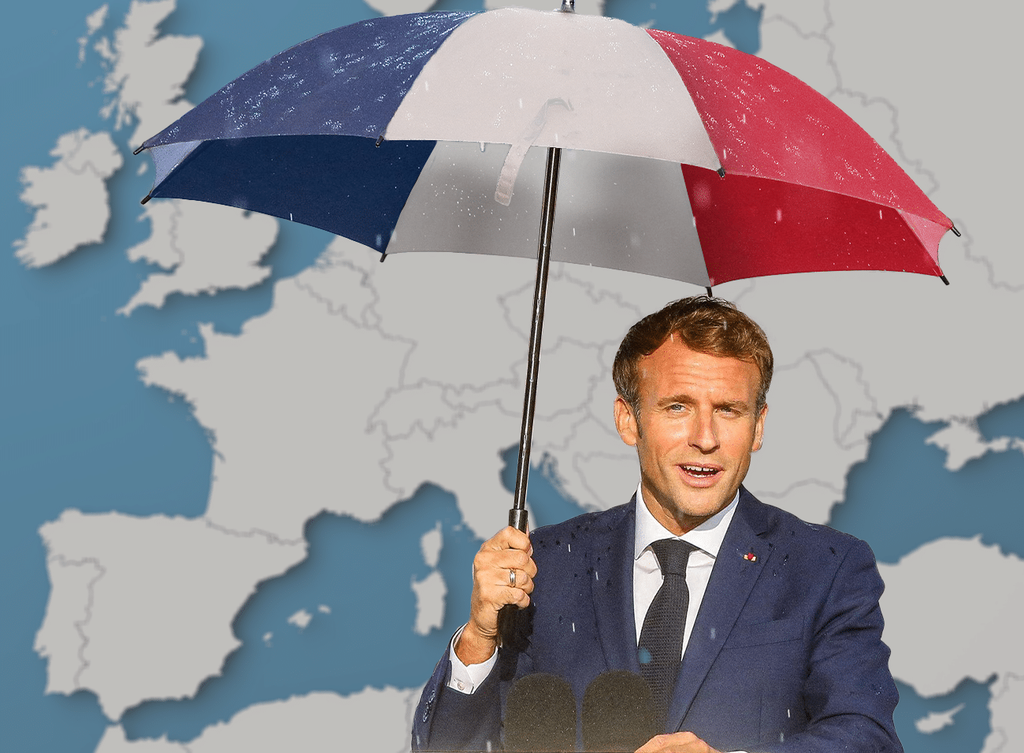
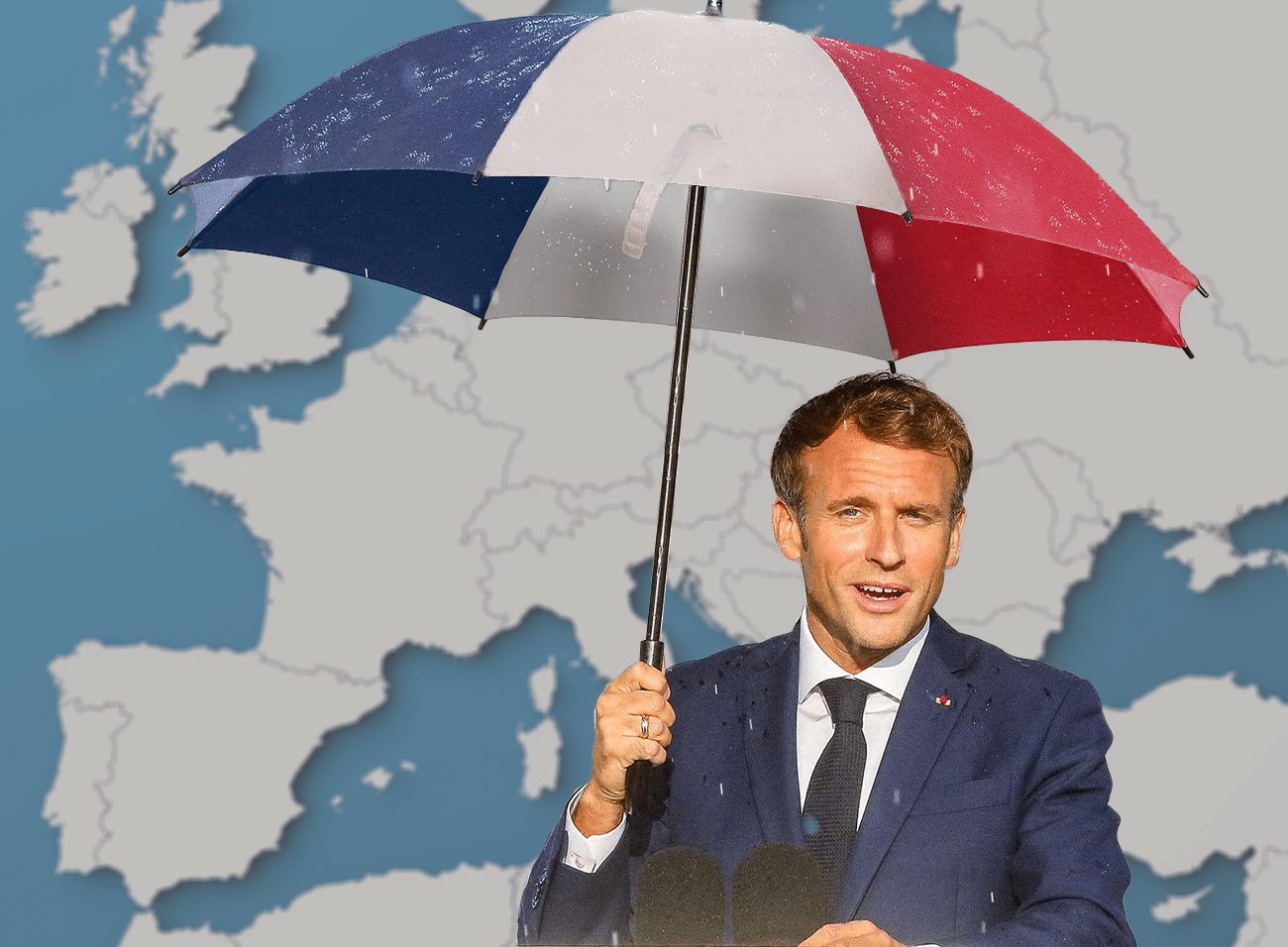
The Russian threat and American uncertainty have turned European attention toward France’s nuclear arsenal. Finland recently became the tenth European partner to join President Emmanuel Macron’s nuclear deterrence initiative, while Latvia requested to join this week as well.
Greece had responded to Paris’s invitation as early as last March—the only country from NATO’s southern flank to do so—leaving Athens to consider the implications of participating in the French nuclear umbrella and the commitments to France that such participation entails.
The Russian nuclear threat and uncertainty regarding the continued weight of American commitments have driven European governments toward the French arsenal; Paris seeks to more closely link its European partners’ security with its own while simultaneously maintaining its freedom of action. The French president unveiled the doctrine of “forward deterrence” on March 2 at the Île Longue submarine base in northwestern France. Initially, the United Kingdom, Germany, Poland, the Netherlands, Belgium, Greece, Sweden, and Denmark participated in the French nuclear umbrella. With the addition of Norway in May and Finland on September 14, the arrangement now covers a large part of the continent.
Paris’s Limits
Macron set the boundaries from the outset: there would be “no sharing of the final decision” regarding nuclear use—the employment, planning, and execution of missions remain exclusively French matters. The same applies to France’s “vital interests”; while Paris views them as having a European dimension, it deliberately avoids defining their exact scope.
The uncertainty regarding the circumstances under which France would respond is part of its deterrence strategy. Moscow must now factor in potential French involvement in a European crisis—alongside the American and British responses—meaning the initiative strengthens NATO’s deterrence. London participates in this “umbrella” arrangement as a nuclear power: the Northwood Declaration of July 2025 provides for the coordination of the two independent arsenals—French and British—and a joint steering group, offering both partners the capability for a joint nuclear response to an extreme threat.
Increase in nuclear warheads
The French proposal is underpinned by an arsenal of approximately 290 warheads (as of 2025) and relies on Rafale aircraft, each carrying an ASMPA-R cruise missile (set to be replaced in 2035 by the ASN4G) with a range of 2,000 kilometers and a 300-kiloton warhead. At Île Longue, Macron announced an increase in nuclear warheads and a decision to stop disclosing their exact number in the future, reiterating that French nuclear weapons are exclusively strategic and ruling out tactical use. However, the weapons carried by the Rafales are de facto tactical nuclear weapons, highlighting a discrepancy here.
Allies would be able to participate with conventional forces and support French missions—in coordination with Paris—in the event of a crisis. Provisions are also in place—subject to certain conditions—for the temporary deployment of French strategic aircraft to their territory. However, no permanent stationing of nuclear weapons has been announced.
For France, access to allied bases offers strategic depth; dispersing aircraft makes a surprise strike more difficult and complicates adversary planning. For the host nation, this presence ties its security to France’s: an attack could strike French forces, thereby making Paris’s involvement more likely.
The involvement of the North
Berlin is also actively involved, as the joint statement by Macron and Chancellor Friedrich Merz envisages a nuclear coordination group, a dialogue on doctrine, and consultations regarding the integration of conventional, anti-missile, and French nuclear assets.
Germany remains part of NATO’s nuclear planning while simultaneously establishing a structured channel with the EU’s only nuclear power. For Poland, the priority is deterring a Russian attack. The inaugural meeting of the Franco-Polish nuclear coordination group on July 10 resulted in a joint roadmap for consultations and military cooperation.
In the North, Sweden and Denmark are prioritizing regional security: Stockholm has activated a bilateral nuclear coordination group, with its contribution comprising air forces, surveillance assets, and air defense systems—enabling it to play a role despite not possessing its own nuclear arsenal.
Norway seeks to avoid reliance on a single security source—with NATO remaining central to its defense and the US its most important ally—yet its European ties are being strengthened through its agreement with France. In Helsinki, the agreement paves the way for strategic consultations and crisis management regarding the potential use of nuclear weapons, with a Franco-Finnish coordination group expected to become operational in the coming months. Both nations maintain a policy of not stationing nuclear weapons during peacetime.
For The Hague and Brussels, participation in the French initiative comes in addition to existing obligations—given that the Netherlands and Belgium host US nuclear weapons and participate in NATO planning—while simultaneously opening channels for military communication with Paris.


