



There is an image that captures the new reality of European organized crime better than any police report. One of Europe’s most wanted criminals is not necessarily hiding in some remote safe house. He could be thousands of kilometers away, in West Africa, while the operations attributed to him by European authorities span from the Atlantic to the ports of Spain, the Netherlands, and Belgium. Jos Leijdekkers, known as “Bolle Jos,” lies at the heart of this story.
The 35-year-old Dutchman is not merely a suspect; he has already been convicted in absentia in his home country. On June 25, 2024, a Rotterdam court sentenced him to 24 years in prison for the trafficking of a total of nearly seven tons of cocaine, an armed robbery in Finland, and ordering a murder.
Dutch authorities consider him a key figure in the international cocaine trade and are offering a €200,000 reward for information leading to his arrest. However, his story took on a much broader international dimension in 2026.
The 30 tons that revealed the new route
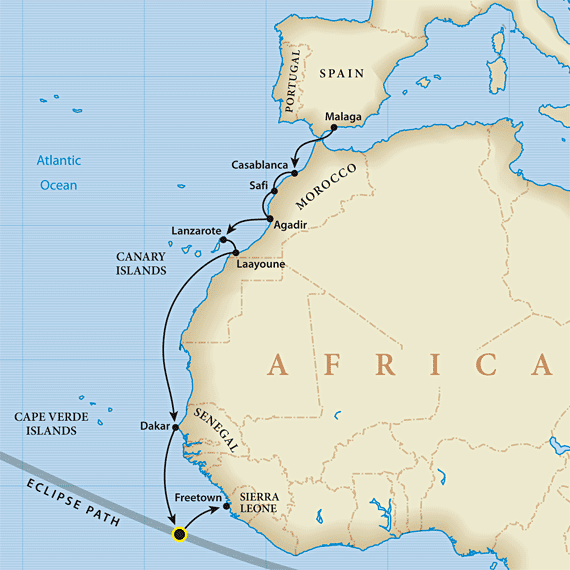
On May 1st, the Spanish Guardia Civil carried out one of the largest anti-cocaine trafficking operations ever conducted. The target was the cargo ship Arconian, which had departed from Freetown, the capital of Sierra Leone. More than 30 tons of cocaine were discovered in its holds—a shipment valued at hundreds of millions of euros. Twenty-three people were arrested, including crew members and armed guards protecting the cargo.
Spanish authorities believed the cocaine was intended to be transferred to smaller speedboats at sea and subsequently smuggled into the Iberian Peninsula.
This is where the name “Bolle Jos” surfaces again. Lieutenant Colonel Óscar Remacha, head of the Guardia Civil’s anti-narcotics unit, has stated that Spanish investigators consider Leijdekkers the likely mastermind behind the operation.
This is a significant distinction: Leijdekkers has not been formally charged in court regarding this specific shipment, and his involvement is based on the assessment of investigators. He himself denies any connection to the case. However, the investigation revealed something even more significant than a record-breaking shipment.
Other vessels linked by investigators to the same network had followed similar routes between 2024 and 2025. It is estimated that the Arconian may have been part of an established maritime drug-trafficking route.
Africa: Between Cocaine and Europe
This route reveals a significant shift in the global cocaine landscape. West Africa is no longer merely a transit point between Latin American producer nations and Europe; it is becoming increasingly important as a hub for storage, transshipment, and the organization of international shipments. Consequently, the fact that the Arconian set sail from Freetown is particularly significant—not least because Leijdekkers himself is based in Sierra Leone.
As early as January 2025, Dutch police and prosecutors announced they were certain the wanted man had settled in that country. For The Hague, his arrest and extradition are top priorities. The matter has now shifted to the diplomatic level as well. The Dutch government has formally requested his extradition and states that it is utilizing available diplomatic channels to secure his return. Thus, a drug trafficking case has evolved into an issue of international relations.
The Sierra Leone political dimension
Leijdekkers’ presence in Sierra Leone has sparked even greater debate due to reports regarding the ties he allegedly cultivated with individuals close to the country’s political leadership.
One thing is certain—and equally significant: Dutch authorities know the whereabouts of a convicted cocaine trafficker who is wanted internationally, yet to date, they have been unable to bring him back to Europe.
Spain as a European gateway
The Spanish dimension of the case also illustrates why the Iberian Peninsula remains a pivotal battleground in the fight against international networks.
Spain’s geographical location, vast coastline, major commercial ports, proximity to Africa, and extensive trade links with Latin America create numerous opportunities for criminal networks.
The operational model has also shifted. Cocaine is no longer transported solely in shipping containers arriving directly at major European ports. It can be carried by “motherships” across the Atlantic, remaining at sea before being transferred to smaller vessels that handle the final leg of the journey to European shores.
In this way, criminal networks seek to exploit the gaps between the jurisdictions of different states and agencies.
The empire of encrypted messages
Dutch investigations have also revealed another facet of how modern organized crime operates. A significant portion of the evidence against Leijdekkers emerged from encrypted communications via Sky ECC.
According to the Dutch police, these messages revealed his leading role in the cocaine trade and raised suspicions that he had laundered tens of millions of euros and hundreds of kilograms of gold, potentially derived from drug trafficking.
The financial power of such organizations explains why efforts to combat them cannot be limited to the seizure of narcotics.
Cartels require banking and financial channels, companies, transport infrastructure, ports, warehouses, international partners, and mechanisms to launder their proceeds. They increasingly operate like illicit multinational corporations.
The disappearance of Naima Jillal
There is also a darker side to the affair. Dutch police are investigating Leijdekkers’s possible involvement in the disappearance of Naima Jillal, who went missing in Amsterdam in October 2019.
Authorities consider it likely that Jillal was tortured and murdered, and evidence from encrypted communications has led investigators to Leijdekkers.
Here, too, a clear distinction must be made: this involves an investigation and suspicions held by the authorities, not a case for which he has been convicted.
Crime turns geopolitical
The case of “Bolle Jos” ultimately takes on significance far beyond the personal story of a wanted man. It demonstrates that globalization has not only created legitimate international trade chains; it has also established the infrastructure upon which illicit networks can operate.
A shipment might originate in Latin America, pass through West Africa, cross the Atlantic, and be destined for Spain before being distributed across the rest of Europe. The money involved can follow a completely different route.
This is why combating organized crime is gradually becoming a matter of foreign policy and national security.
The Netherlands needs the cooperation of Sierra Leone. Spain must monitor not only its ports but also hundreds of kilometers of maritime routes. European agencies require access to financial and digital data held across different jurisdictions.
Europe thus faces an adversary that recognizes no borders, while the authorities pursuing it are inevitably bound to operate within them.
And this is perhaps the most significant aspect of the “Bolle Jos” story. It is no longer merely the tale of a fugitive; it is the story of a global illicit trade linking Latin American cocaine, West Africa, and the European market into a single geopolitical chain.


