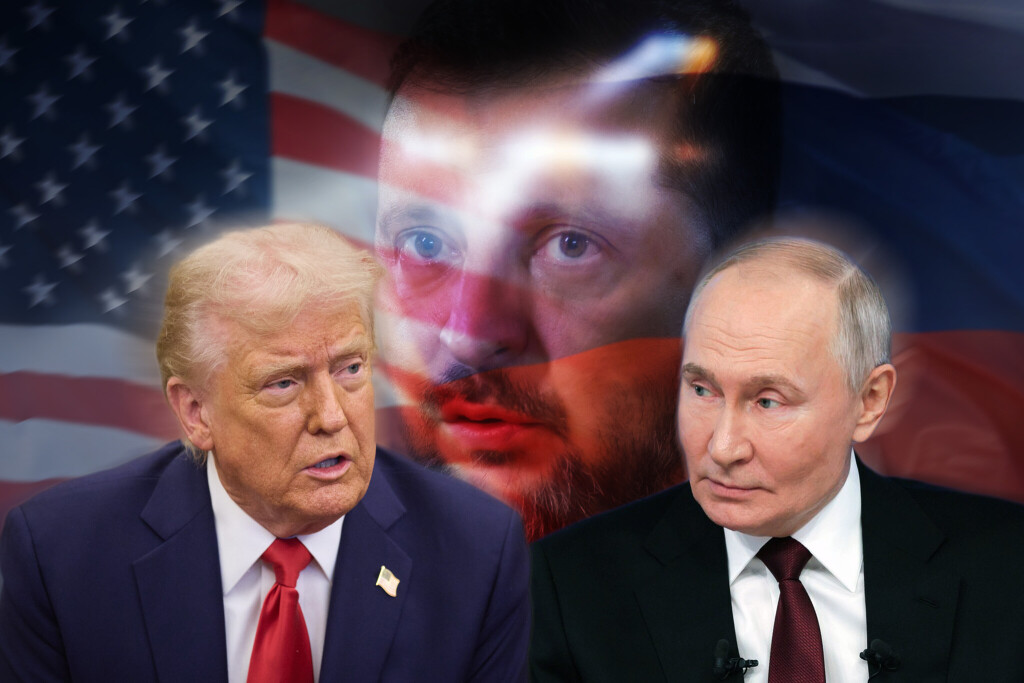
Can business deals succeed where sanctions and military pressure have so far failed to yield results?
Donald Trump’s administration appears to be considering precisely this possibility, opening a new and particularly interesting avenue in US-Russia relations. Washington is weighing the prospect of pursuing economic agreements with Moscow even before the war in Ukraine ends.
This marks a significant shift from Trump’s previous stance that substantive economic cooperation with Russia could only resume after the conflict was resolved.
Sources cited by The Liberal Globe indicate that the US administration now considers it likely that certain agreements could precede a final peace deal, thereby demonstrating to the Russian side that the United States is serious about the prospect of a new relationship with Moscow.
In other words, the economy may shift from being a post-peace reward to a tool for achieving peace itself.
The “Carrot” Alongside the Stick
The timing of the revelation is striking. Just two days earlier, the House of Representatives approved—by a vote of 262 to 159—the sweeping sanctions bill targeting Russia and Iran; the measure had already passed the Senate and is now before Donald Trump.
The bill mandates new sanctions against Russia’s energy and defense sectors, as well as financial institutions and networks that facilitate the circumvention of existing restrictions. At the same time, it empowers the U.S. President to impose tariffs of up to 100% on countries that purchase significant quantities of Russian oil or natural gas.
On the surface, these appear to be two contradictory policies. On one hand, Washington is preparing to dramatically ramp up economic pressure on Russia. On the other, it is considering deals that could bring American capital, technology, and businesses back into the Russian market.
In reality, however, this may well be the essence of Trump’s negotiating strategy: simultaneously placing the cost of continued conflict and the economic benefits of a deal on the table. The US government itself had supported the sanctions bill, noting specifically that it includes significant presidential discretion regarding exemptions and the possibility of lifting sanctions following a peace agreement.
This implies that pressure and economic incentives are not necessarily unrelated strategies; they could constitute two sides of the same negotiation.
What can Moscow offer?
The most important question is what exactly the United States and Russia could do together. The specific agreements being considered by the Trump administration have not been made public. However, the Russian side has already presented several ideas to Washington.
These include:
- joint projects in the Arctic,
- cooperation in the extraction of critical minerals and rare earths,
- investments in aluminum, and
- potential participation by American companies in the marketing of Russian natural gas to Europe.
The Arctic is of particular interest. Russia possesses vast reserves of energy resources and raw materials, while the United States has made access to critical minerals one of its key strategic priorities.
The Trump administration has already announced dozens of agreements and investments to bolster American access to critical materials, aiming to reduce reliance on foreign supply chains—particularly those involving China.
In this sense, economic cooperation with Russia is not entirely illogical from an American strategic perspective. However, it is extremely difficult.
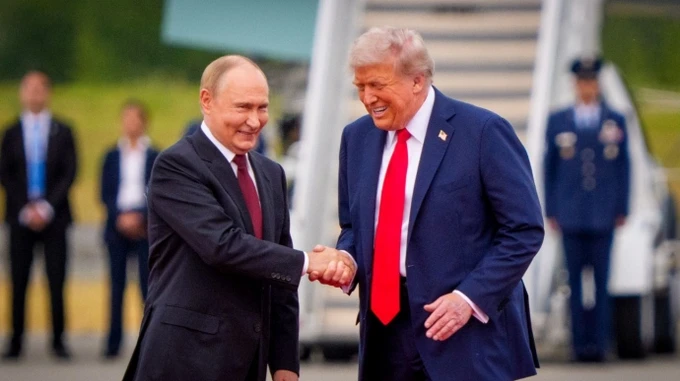
The Wall of Sanctions
This is perhaps where the greatest obstacle lies. Political intentions alone are not enough to reopen economic relations between the United States and Russia on a large scale. The web of sanctions constructed since 2014—and especially since 2022—is vast.
Banks, energy firms, technology companies, investments, transport, and financial transactions are all subject to various restrictions. While some of these can be eased by the executive branch, others rest on a solid legislative foundation; consequently, restoring extensive economic cooperation cannot be achieved through a single decision by the White House.
Potential agreements regarding rare earth minerals or the Arctic would immediately run up against the issue of sanctions. Without a fundamental change to the restrictive regime, ambitious plans for economic cooperation would struggle to materialize into actual projects.
Furthermore, there is a second issue: the economic relationship between the two countries was not particularly substantial even before the war. In 2019—before the current sanctions existed on their present scale—US exports of goods to Russia amounted to approximately $5.8 billion, while imports stood at $22.3 billion. In other words, total trade in goods amounted to approximately $28 billion—a small figure compared to U.S. trade relations with China, Canada, or the European Union.
So why is Trump interested?
This is perhaps where the most interesting aspect lies. The value of such agreements need not be exclusively economic; it can be primarily political and strategic.
For Moscow, a deal regarding Ukraine is not just about Ukrainian territory. It is linked to sanctions, NATO, energy relations, frozen Russian assets, and the overall framework of Russia-West relations.
If the U.S. administration truly wishes to convince the Russian leadership that a different geopolitical reality could follow an agreement, an economic project might carry greater symbolic significance than its actual monetary value.
As recently as September 9, following a conversation with Putin, Trump stated that he believes the Russian president wants a deal, even though significant differences remain between Moscow and Kyiv.
Moscow remains wary
The Russian side, however, does not appear willing to view a few business projects as a substitute for a broader political agreement.
On September 17, Dmitry Peskov warned that the adoption of new US sanctions would complicate the peace process and described the additional restrictive measures as an “unfriendly act” (for further analysis regarding Russia’s reaction, please read the article titled “Russia takes control of Nestlé, Lemana, Logistic, and Auchan – a $7.1 billion blow to the West“).
Washington, therefore, faces a difficult test of credibility: how convincing can the “carrot” be when the “stick” is simultaneously becoming heavier?
Business is not the biggest stake
There is, however, one area where Russia and the United States can hardly avoid cooperation, regardless of trade: strategic stability.
The two countries possess the world’s largest nuclear arsenals. Managing nuclear risks, strategic weapons, communication mechanisms, and the prevention of uncontrolled military escalation is far more important than any mining contract or energy project. And on this point, the Russian critique has a valid basis: trade agreements can help foster a political climate, but they cannot replace a new security architecture.
This is precisely what makes the new Trump approach so interesting. Washington appears to be considering a model in which business interests do not follow a geopolitical agreement but instead become part of the negotiation that could lead to one.
Sanctions on the one hand; investments on the other. Pressure and incentives at the same table. Whether this strategy can actually alter Vladimir Putin’s calculations remains to be seen.
For the first time in years, Washington is seriously viewing the economic relationship with Moscow not merely as something that might exist after the war, but as one of the tools that could be used to bring the war to an end.