



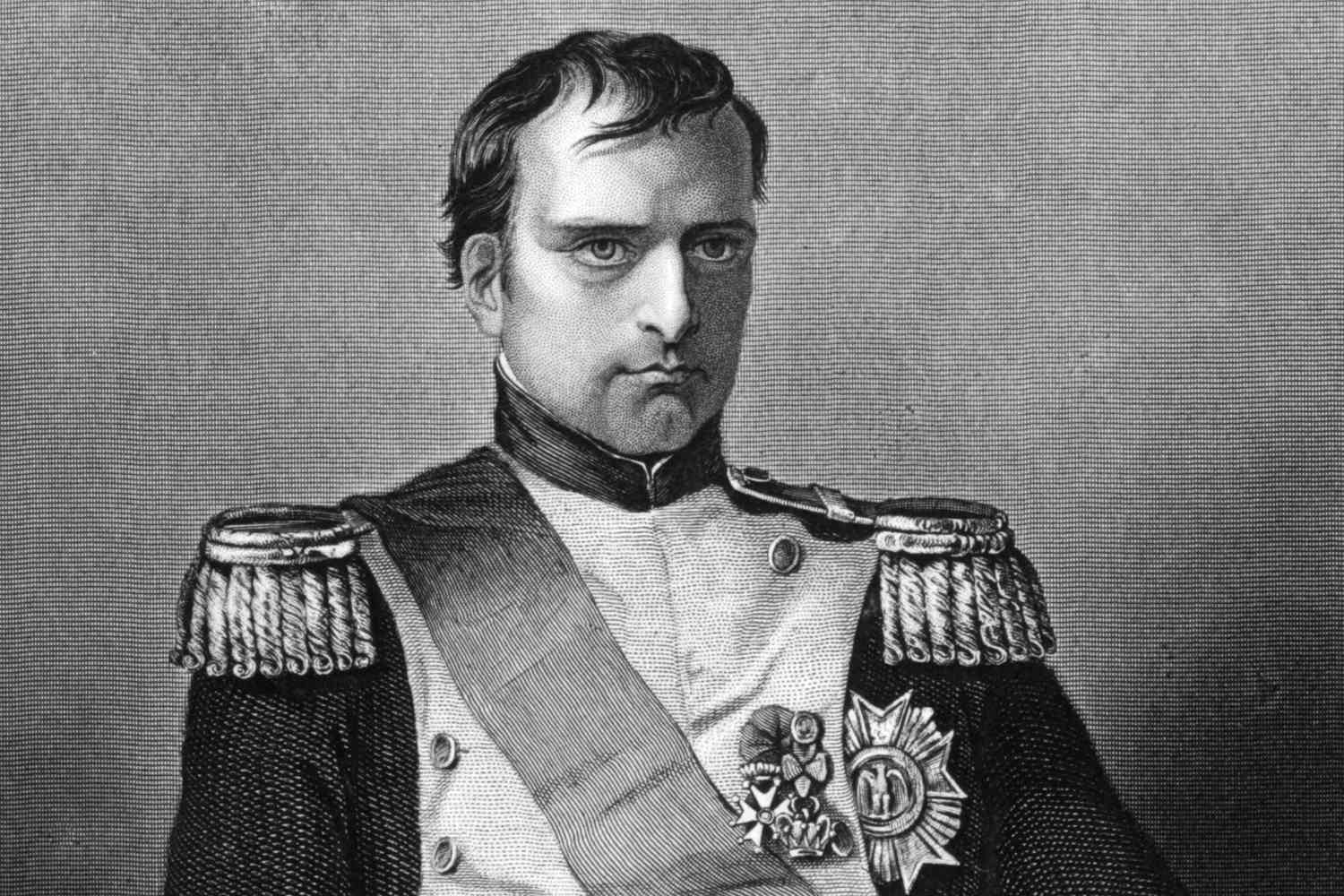
More than two hundred years after his death, Napoleon Bonaparte remains one of the most studied and controversial figures in European history. A military leader, emperor, legislator, reformer, and conqueror, he also left behind a vast body of letters, conversations, and aphorisms.
From Napoleon’s sayings, we have selected twenty that can still be read outside their historical context, for the insights they offer regarding knowledge, judgment, time, power, and the way we make decisions.
1. Leaving room for revision
“When it comes to systems, we must always reserve the right to laugh tomorrow at the ideas we held yesterday.”
This phrase captures a mindset that Napoleon himself frequently applied to strategy and politics: circumstances change, and certainties require re-examination. Today, we would view it as a reminder of the value of revision. New data, experiences, and knowledge can alter an opinion or a plan. While consistency has value, clinging to something that no longer works holds far less.
2. Time is a resource that is lost forever
“There is a type of thief whom the law does not pursue, and who steals from people what they hold most precious: time.”
The value of time was a matter of particular concern to a man who organized military operations based on speed and precise synchronization. Time is one of the few resources that can neither be stored nor replenished.
3. Responsibility presupposes knowledge
“The greatest immorality is to practice a profession one does not understand.”
Napoleon used this phrase in reference to his older brother, Joseph Bonaparte, whom he had placed on the Spanish throne. His criticism stemmed from Joseph’s lack of military experience; as king, Joseph had attempted to play an active role in commanding military operations during the Peninsular War. For Napoleon, assuming a responsibility without the necessary knowledge was a serious error.
4. Boldness Requires Judgment
“The art of being at times very bold and at others very prudent—in their combination—is the art of success.”
For a general, the key was correctly assessing the moment: attacking when conditions favored it, and exercising restraint when the risk outweighed the potential gain. This same principle applies to the decisions we make today. Risk-taking is valuable when calculated, and prudence is valuable when it guards against danger—not when it becomes a pretext for perpetual procrastination.
5. The line between the sublime and the ridiculous is a fine one
“There is but one step from the sublime to the ridiculous.”
Success, power, and self-confidence can easily lead to excess. Whether regarding one’s public image, work, or even everyday behavior, a sense of moderation serves as an effective counterweight to self-satisfaction.
6. The “Impossible” Requires Examination First
“‘That is impossible,’ you write to me. That phrase is not French.”
This phrase comes from a letter written by Napoleon to General Le Marois on July 9, 1813. Beyond the rhetorical flourish, there lies a useful distinction: the impossible is one thing, while the extremely difficult is another. Before abandoning a goal, it is worth determining which of the two categories it falls into.
7. The limits of imposition
“There are only two powers in the world: the sword and the spirit. In the long run, the sword always loses to the spirit.”
Here, the “sword” symbolizes armed might and coercion. Napoleon himself explained that by “spirit,” he meant political and religious institutions. This is a remarkable admission from a military conqueror: violence may impose a situation, but its longevity depends on institutions, beliefs, and social acceptance. Today, we would add persuasion, credibility, and trust.
8. Imagination precedes change
“Imagination rules the world.”
Napoleon was well aware of the power of symbols, imagery, and narrative. Imagination, in this sense, is the ability to conceive of a reality before it actually exists. This principle remains relevant in science, entrepreneurship, art, and technology: every new idea first requires someone capable of imagining it.
9. Knowledge is a conquest with no losers
“The true conquests—the only ones that leave no regrets—are those made at the expense of ignorance.”
Napoleon wrote the phrase in 1797, following his election to the Institut de France. The choice of the word “conquests” takes on particular significance coming from a military man. Knowledge is presented as a different form of expansion: the more one conquers one’s own ignorance, the larger the world one can comprehend becomes.
10. Timing Matters
“In war, as in politics, a lost moment never returns.”
Time was a decisive factor in Napoleon’s strategy. A sound move could fail simply because it was made too late.
This principle holds true beyond the battlefield as well: an opportunity, a professional decision, or a necessary conversation often has its own specific window of time. The quality of a decision is judged not only by its content but also by the moment it is made.
11. Know the Terrain Before You Act
“Study the terrain; local knowledge is invaluable—knowledge that proves its worth sooner or later.”
Napoleon wrote these instructions in 1805 as part of his military preparations. Underlying them is a broader principle: no general strategy can substitute for an understanding of specific conditions.
Today, this applies equally to a new market, a different country, a professional setting, or an organization. Understanding the environment is a prerequisite for effective action.
12. Composure Safeguards the Decision
“A statesman’s heart must be in his head.”
This phrase stems from an era when political and military leadership often demanded tough decisions.
Today, we can view it as a reminder that when we bear responsibility for others, emotion alone is not enough to guide us toward the right decision. We need to weigh the facts, the potential consequences, and the cost of each option before deciding.
13. An internal compass outlasts external approval
“They praise him, they blame him—he doesn’t care. He listens only to his conscience.”
This phrase speaks to independence from public opinion. In today’s world, where approval or rejection can be measured almost in real-time, it takes on unexpected relevance. While the reactions of others provide information, constantly adjusting to them can lead to a loss of personal judgment.
14. Decisiveness requires persistence
“True wisdom is a steadfast determination.”
Napoleon linked strategy to the ability to maintain a chosen course amidst changing conditions.
The enduring value of this insight lies in persistence: many goals fail not so much due to flawed conception as to a lack of consistency in their execution.
15. Trust is a form of power
“Whatever Machiavelli says, fortresses are not worth as much as the goodwill of the people.”
Napoleon was referring to political legitimacy: walls may protect a ruler, but the acceptance of the people constitutes a stronger defense.
In a modern context, this observation relates to trust. An organization or a leader may possess authority by virtue of their position, but credibility in the eyes of those they influence is a different matter entirely.
16. Success can be a trap
“Success makes the great man.”
At first glance, the phrase sounds like a paean to success. Yet, it also conceals an interesting observation about how we judge people: when someone succeeds, we tend to view all the choices that led them there as correct.
In reality, a positive outcome may well be due to circumstances, luck, or good timing. Success, therefore, does not in itself prove that every preceding decision was the right one.
17. Maintain independent judgment
“All the factions came to me, confided their plans in me, revealed their secrets, and sought my support. I refused to become the man of any single faction.”
Napoleon was referring to the political factions of turbulent post-revolutionary France, presenting himself as a figure who stood above their internecine conflicts.
Regardless of how well this image reflected his actual political practice, the idea offers an interesting modern perspective: belonging to a group, a professional field, or a social circle can easily sway our judgment.
The ability to evaluate a position based on the facts—rather than simply on who is advocating for it—remains invaluable.
18. Preparation includes the worst-case scenario
“To avoid being surprised when you win, you must think only of defeat.”
The statement may sound pessimistic, but its logic is strategic: consider first what could go wrong. Today, we would call this risk management and scenario planning.
19. Criticism is a sign of engagement
“When people stop complaining, they stop thinking.”
This phrase links criticism to active thinking. Dissent, questioning, and the voicing of complaints indicate that people continue to observe and evaluate what is happening around them.
Today, this insight applies beyond the realm of politics: within an organization or a team, a complete absence of objections can signal indifference or detachment.
20. Power requires self-control
“Composure is the greatest virtue of a person destined to lead.”
For Napoleon, leadership often entailed making decisions under extreme pressure. Composure allowed for a situation to be assessed before reacting.
This same ability remains essential in any position of responsibility: the greater the pressure, the more valuable the space between the stimulus and the decision becomes.

