


Canada has submitted a formal request to join the Joint Expeditionary Force (JEF), a British-led multinational rapid-reaction force focused primarily on Northern Europe, the Baltic region, and the North Atlantic. The decision was announced on September 16 by Prime Minister Mark Carney following his meeting with his British counterpart, Andy Burnham, in Liverpool. Britain supports Canada’s bid, though the accession process has not yet been completed.
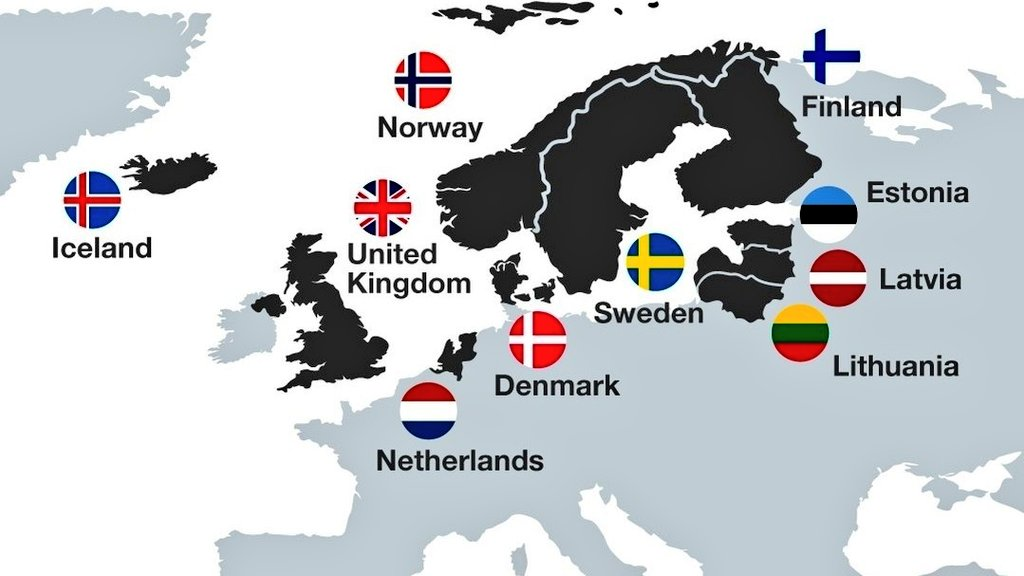
The JEF currently comprises ten nations: Britain, Denmark, Estonia, Finland, Iceland, Latvia, Lithuania, the Netherlands, Norway, and Sweden. Canada’s potential participation would significantly expand the force’s geographic scope to include the North American side of the Atlantic and the Arctic—regions of direct interest to Ottawa.
The JEF is not a standing force with a fixed composition; it is assembled according to the specific mission and can be deployed for exercises, crisis response, humanitarian operations, or military action. It operates in a complementary manner to NATO, utilizing the Alliance’s standards and procedures, while each participating nation retains control over the forces it contributes.
One of its key features is the ability to mobilize rapidly without requiring the participation of all ten member states. Following consultations, the UK can organize an operation alongside one or more JEF nations, a capability that allows for a faster response to regional crises.
Canada’s approach began prior to its formal application. Carney participated remotely in the JEF summit held in Helsinki in March 2026, where particular emphasis was placed on countering hybrid activities, drones, and other threats that may fall below the threshold for triggering NATO’s Article 5.
Operational cooperation is underpinned by the JEF LION series of exercises. Arctic training for British Royal Marines includes planning for “Lion Protector,” an exercise that addresses—among other things—rapid force deployment and the protection of critical infrastructure. Ukraine has also become more closely integrated into JEF activities through the enhanced partnership agreement reached in 2025.
The application for participation is part of Ottawa’s broader effort to strengthen its defense ties with Europe. In Liverpool, Carney and Burnham also discussed potential industrial cooperation on the GCAP next-generation fighter jet program—in which Canada has participated as an observer since July—as well as the future of the British training unit BATUS at the Canadian base in Suffield.
Joining the JEF would thus provide Canada with an additional mechanism for military cooperation with Northern European nations, holding particular significance for the security of the Arctic, the North Atlantic, and the maritime routes connecting North America to Europe.
The official Canadian announcement also confirms discussions regarding GCAP and BATUS.
