

The possibility of Tehran joining the new defense agreement between Saudi Arabia, Turkey and Pakistan is causing great concern in Israel, as a scheme already viewed with suspicion by the Israeli side could turn into an unprecedented regional security umbrella, reshaping the geopolitical data regarding the security doctrine that had been formed after the war.
However, Iran’s Foreign Ministry on August 24 said that the possibility was being considered, triggering a geopolitical thriller of much greater significance than a simple diplomatic leak.
On August 23, Mehdi Rahimi, head of the Iranian parliament’s news agency Khaneh Mellat, told Al Mayadeen that Iran has been invited to join the “Mecca Joint Defense Agreement,” the new joint defense agreement signed on August 7 by Saudi Arabia, Turkey, and Pakistan.
According to Rahimi, the proposal was under consideration in Tehran, while he presented the trend for a regional “security umbrella” as a justification for a position that Iran has supported for years.
Iranian Foreign Ministry spokesman Esmaeil Baghaei said that Tehran has not received an official invitation to join, but added that there have been proposals for discussions with the countries concerned on regional security.
The denial does not erase the geopolitical significance of the case. On the contrary, it reveals how sensitive the debate over the new Middle East security architecture has become.
Israel was already worried before Iran appeared
Israeli concern did not begin with the rumored invitation to Tehran. Already after the signing of the Mecca Accord, a senior Israeli official had stated to Ynet that “the agreement worries us,” and even considered that it was directed against Israel.
He also expressed fears about the possible future participation of Egypt. This means that the possibility of Iran appearing at the same table with Saudi Arabia, Turkey and Pakistan would not simply create another regional coalition. It would change its nature. It would destroy the Abraham Accords.
Israel would be faced with a context in which four of the largest military and political powers in the Muslim world could, in theory, coexist: Saudi Arabia with its economic power, Turkey with its large army and growing defense industry, nuclear Pakistan, and Iran.
The Israeli debate itself shows how seriously the new environment is being taken. Israeli analyses have already characterized the Mecca Pact as a source of concern and have examined its expansion as a critical scenario.
For decades, the Gulf’s core security architecture has relied on American military power. Now the region’s most powerful powers are trying to build mechanisms that are not solely dependent on Washington.
The Great Upheaval: From Anti-Iran Bloc to Regional Umbrella
The Mecca Pact would cease to resemble a “Sunni Axis” and could evolve into something much broader: a polycentric regional security mechanism, within which countries with deep ideological, religious and geopolitical contradictions would coexist.
This would perhaps be even more worrying for Israel than a purely anti-Iranian alliance. Because the main question would no longer be who would contain Iran.
It would be whether the major Muslim powers can create a regional balance without Israel and with less dependence on the United States.
The model that ends the old American order
The agreement must be seen in a much broader context.
Saudi Arabia, Turkey and Pakistan are not abandoning their relations with the West. But they are trying to gain greater strategic autonomy.
The official wording of the agreement speaks of collective deterrence and strengthening of all forms of defense cooperation.
Why does the scenario scare Israel
The strategic problem for Israel is that it is facing a region that is changing faster than its old alliances.
A Riyadh-Ankara-Islamabad axis already carries significant economic, military and diplomatic weight. If Iran is added to it, even through a loose or limited structure of cooperation, then a scheme with enormous geographical area, military power, energy resources and political influence is created.
And above all, a regional power center is created in which Israel does not participate. This explains why the agreement had already raised alarm in part of the Israeli establishment even before the reports about Tehran appeared. The possibility of Iranian participation would multiply this concern.
Israel’s response
- Given that such a development creates a collective security order in the Middle East in which the US will not be the sole guarantor and Israel will not necessarily be at the center of any regional planning.
- Given that in the future Saudi Arabia, Turkey and Pakistan manage to put even Iran in the same framework, then we will not be talking about simply expanding the Mecca Pact.
- Given that we will be talking about the attempt to create a new Middle East. And for Israel, this is perhaps the most worrying element of all.
We believe, as The Liberal Globe, that Israel’s answer should be its entry into the European Union as an associate member with the aim of entering the Eurozone. Israel’s economy satisfies most of the restrictions set by the Maastricht Treaty to become a member not only of the EU, but also of the Eurozone.
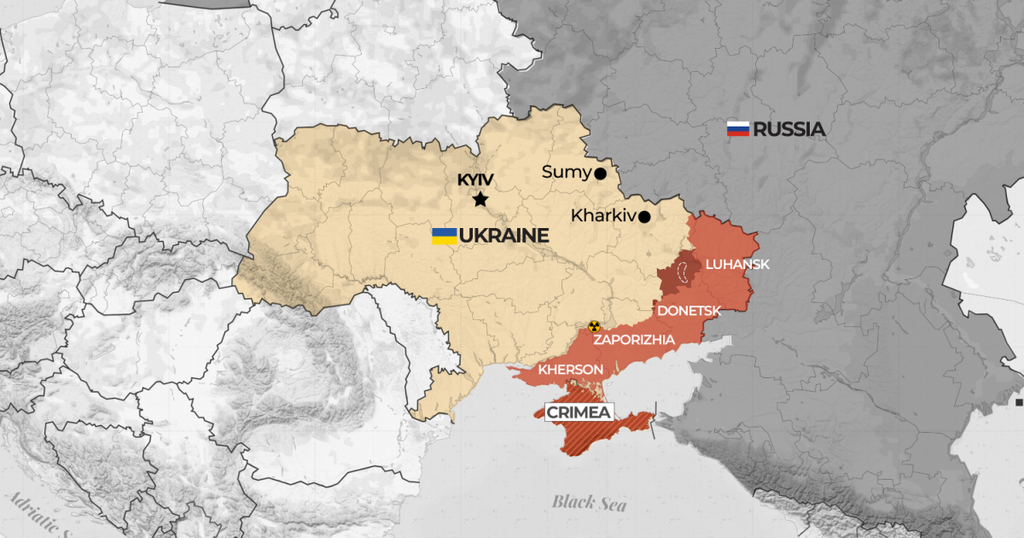
Just as the EU places Ukraine as an associate member, with Israel’s entry into the Eurozone and the EU, Israel acquires a strategic defense umbrella that cannot be challenged by any Mecca Defense Agreement. At the same time, the EU will have planted its flag in the heart of the new Middle East.
The US, which is trying in every way to extricate itself from the Iran War, should also assist in this effort.