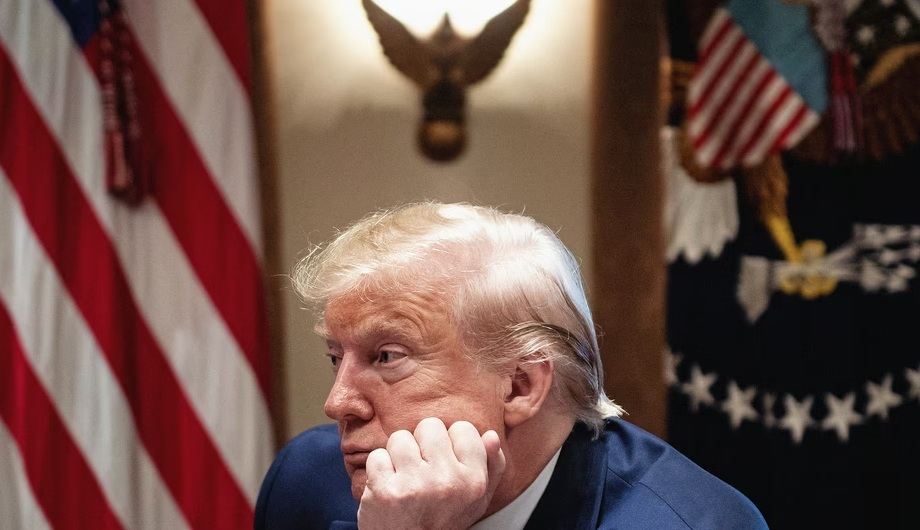
US President Donald Trump entered the war with Iran with the familiar certainty that accompanies almost every major political announcement: American power would quickly crush the adversary, Tehran would be forced to accept Washington’s terms, and he himself could emerge as the president who achieved in a few weeks what his predecessors had failed to achieve in decades.
More than five months after the start of the US-Israeli attacks on February 28, this image has collapsed. American military superiority is unquestionable. CENTCOM announced thousands of combat sorties and thousands of strikes against Iranian military targets in the first weeks.
Iran suffered heavy losses. But it did not capitulate. And today the most important question for Trump is not how to win the war, but how to get out of it without admitting that his initial assumptions were wrong. This does not constitute a military defeat for the United States in the conventional sense.
But it constitutes an increasingly obvious strategic impasse. Because real power is not measured simply by how many targets you can destroy. It is measured by whether the destruction of those targets leads to the political outcome for which the war was started. And that is precisely where Trump is failing.
From the bombings to the waiting
The administration is tightening sanctions, cracking down on financial networks linked to Tehran, and relying on a naval blockade to cut off Iran’s revenue. On August 7, the US Treasury Department announced a new package of measures against networks that Washington says are funneling hundreds of millions of dollars to the Iranian regime.
Trump himself claims that Iran is financially exhausted and that more pressure is all it takes to make it bend. But there is a huge irony.
Trump is returning precisely to the “maximum pressure” strategy he followed in his first term, when he withdrew from the Iran nuclear deal and reimposed tough sanctions.
In other words, after a war that was supposed to decisively solve the Iranian problem, Washington is once again using the same tool it used before the war. Sanctions have indeed caused great economic damage to Iran, but historically they have not led the Iranian leadership to the unconditional surrender that Trump expects.
US weapons stockpiles are also emptying
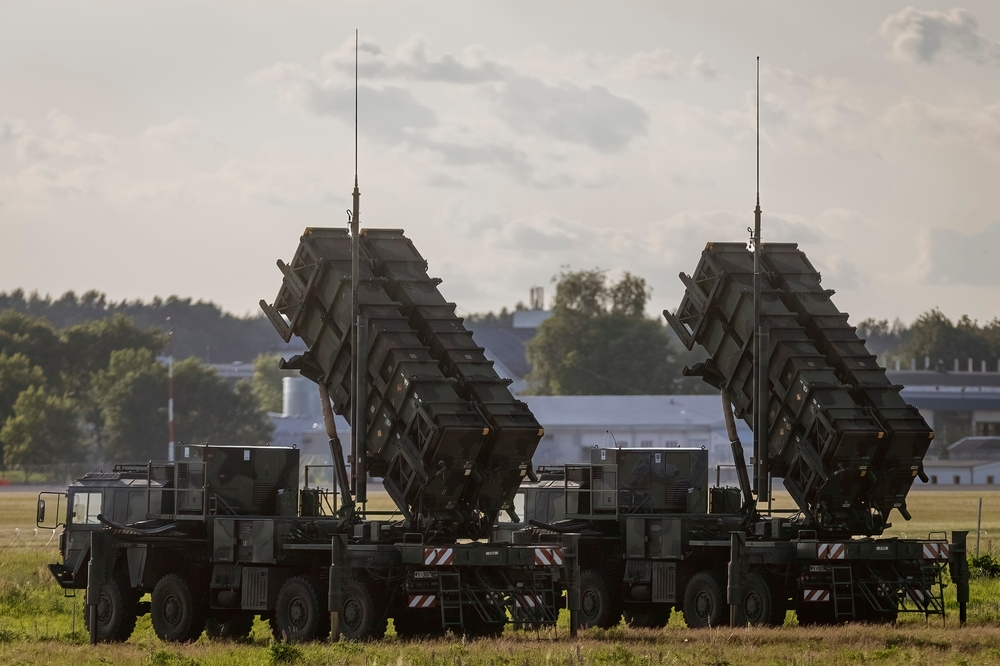
But there is another reason why Trump has suddenly discovered the value of “patience.” US stockpiles of critical munitions are under great strain. A CSIS analysis estimates that US Patriot stockpiles have been reduced to about 800 interceptors from about 3,100 before the conflict, while THAAD and other advanced systems are also under significant strain.
CSIS stresses that the US still has enough weapons to continue the war, but the real problem is about preparedness for other crises and the time it takes to replenish the stockpiles.
This has huge strategic importance. Every Patriot used against an Iranian ballistic missile is not available for Ukraine.
Every interceptor that runs out in the Middle East limits Washington’s margin for manoeuvre in the event of a crisis in Asia. Trump’s war is not just a waste of money. It is consuming the strategic reserves of a superpower with commitments across the globe.
The choice of economic pressure, therefore, is not just evidence of a new wisdom in the White House. It is also a recognition that relentless military escalation has costs that even the United States cannot ignore.
And in the background, the November 3rd elections are coming
Time is pressing for Trump, and for another reason: the midterm elections are on November 3rd. Rising energy costs and war fatigue with no clear end are political burdens for Republicans.
The conflict has already proven to be a vulnerable point for Trump, as disruption in energy markets transfers the costs of foreign policy directly to the pocket of the American voter.
And here lies the ultimate irony. Trump built much of his political identity on the promise that he would not lock the United States into “endless wars.”
He cultivated the image of a man who makes quick deals, terrifies opponents with his unpredictable behavior, and emerges victorious.
In Iran, however, unpredictable behavior has turned into inconsistency.
- Bombings.
- Threats.
- Announcements of an imminent deal.
- New strikes.
- Truce.
- The collapse of the truce.
- More threats.
- And now back to sanctions and waiting.
The key question remains unanswered: what is the ultimate geopolitical goal?
- To eliminate Iran’s nuclear program?
- To open the Strait of Hormuz?
- To change Tehran’s behavior?
- To economically collapse the regime?
- Or simply to find a deal that Trump can present as a victory?
This is the problem that no bomb can solve. Donald Trump started a war much more easily than he can now end it. The United States still has overwhelming military power. But power without a clear political goal turns into costly attrition.
And while Washington waits for sanctions to do what airstrikes have failed to do, Tehran is holding onto the Strait of Hormuz as leverage, American stockpiles of interceptors are dwindling, and elections are approaching.
The president who made unpredictable behavior a political trademark is now facing its limits. When your adversary doesn’t know what you’re going to do tomorrow, he can be afraid.
But when even your allies — and perhaps your own government — don’t know what the ultimate goal is, that’s not strategy. It’s deadlock.