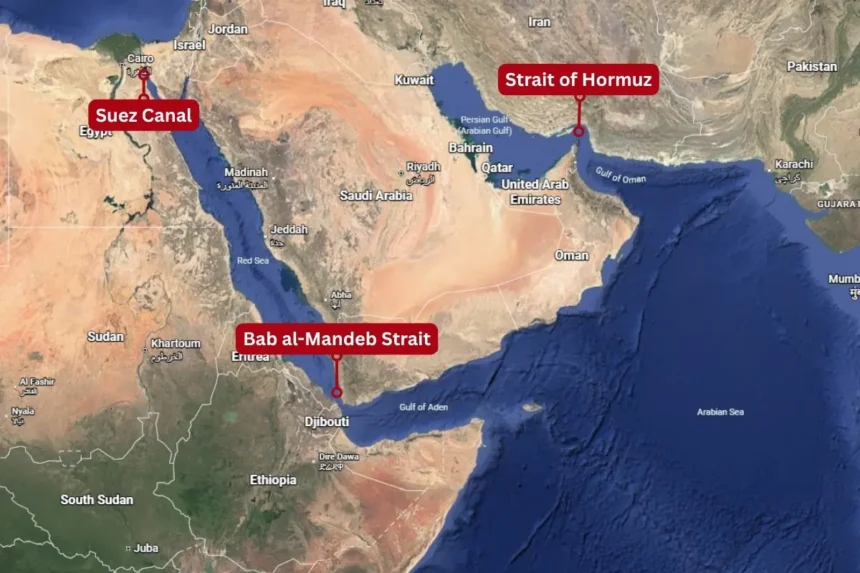
The epicenter is Saudi Arabia, which has not yet signed the Abraham Accords (perhaps this will “allay” concerns and eventually become a member of them), which has economic, energy power and a geographical position controlling two critical maritime trade routes. What does the kingdom ask for that it cannot have from its own resources and capabilities?
Mercenary services, military protection from third countries to maintain a geostrategic illusion. That with money it “buys security” and through the pact the other two signatories (Turkey, Pakistan) will rush to protect it as if it were an attack on their territory.
The ink did not have time to dry and the strength of the signatures and commitments – the exact text of the agreement has not been made public – was tested and proved to be a problem of implementation. From whom and from what is the kingdom practically in danger? From Iran’s proxies, the Houthis, who continue to inflict serious blows on the country’s energy infrastructure.
The “barefoot” (in terms of wealth) Houthis threaten to disrupt or even cut off the routes for transporting energy goods and ultimately demonstrate Riyadh’s operational weakness, casting complete doubt on the concept of any deterrence. The kingdom was not effectively protected by either the US or any other power.
Greece with the Patriot battery has produced and continues to produce a disproportionately large operational result, protecting strategic infrastructure in the west of the country. However, Saudi leader MBS (Mohamed Bin Salman) revealed his irritation and fear when he realized that no power could guarantee him invulnerability…
Riyadh turned to Pakistan, which deployed a force of 8,000 men, last April sent a squadron of JF-17 Thunder fighters (16 aircraft) and an HQ-9 anti-aircraft missile system (both Chinese-made) plus a number of drone systems. The agreement between the two countries provides for the deployment of up to 80,000 Pakistani soldiers in the kingdom. The exchange is petrodollars, financial support, energy support and other related things.
Let us recall that in 1998, when Pakistan was sanctioned for its nuclear tests, just two weeks after India’s, the kingdom provided 50,000 barrels of oil free of charge on a daily basis. It is worth noting that Riyadh has several dozen Chinese-made DF-3A liquid-fuel ballistic missiles (range 2,500 km) (secretly procured in 1988).
In 2007, it acquired the latest precision version, the DF-21. The missiles’ ground and underground installations have been recorded by satellites. Consequently, for its strategic security, Riyadh also relies on Chinese systems, the country of production and distribution of which is the main geopolitical target of the US aeronautical operation against Iran. The Houthis challenged the validity of the signatures and now it remains to be seen whether this is a verbal guarantee, that is, a mere token, or a practical implementation.
The kingdom failed in 2015 to limit Tehran’s representatives and withdrew in disgrace. It should be noted that even then, military assistance and involvement from Islamabad had been requested, receiving a negative response. In fact, the parliament (10/04/2015) argued that despite the presence of Pakistani forces in the kingdom, it would not get involved in the Yemeni War, but would support the country’s integrity if it were attacked.
What has changed since then is interesting to observe, as well as whether the roaring mouse (Houthi) has so terrified the Arab lion that it has requested the establishment of an alliance of a “Defense Pact” with shaky foundations since its signature.