



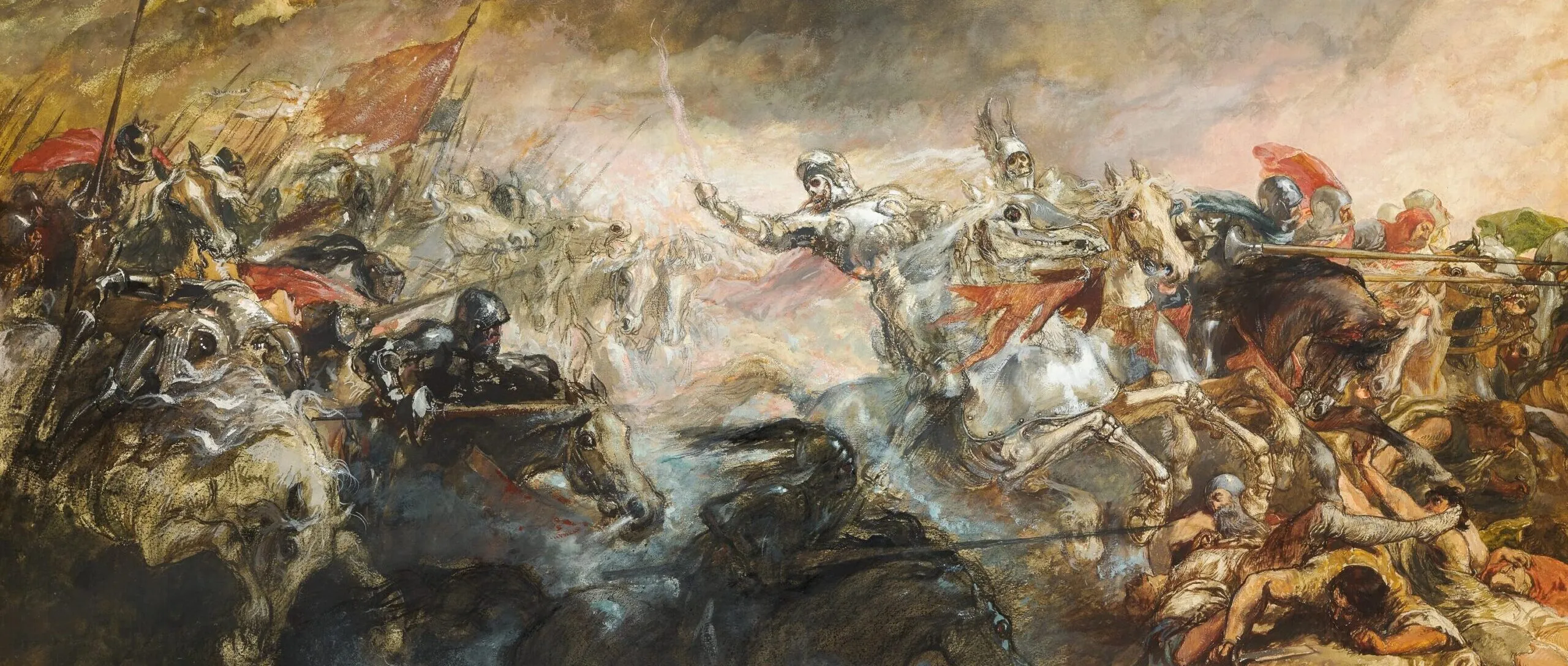
History reveals a disturbing pattern in European geopolitics—every hundred years, war returns just as the last major conflict fades from collective memory. This recurrence is not merely coincidental, but is largely driven by organizations and institutions that benefit from massive military conflicts. While public discourse often attributes wars to ideological conflicts, national ambitions, or national security concerns, an aggressive realist perspective suggests a much more pragmatic explanation: war is a tool of economic and strategic advantage for elites who profit from this situation.
This analysis examines the underlying factors behind the cycle of wars in Europe, the role of economic interests in perpetuating conflicts, and the heightened nuclear risks of future confrontations.
The Pattern of War in Europe
A historical analysis demonstrates a roughly century-long cycle of major European wars:
- Napoleonic Wars (1803-1815) – Marked by the pursuit of French dominance, which ended with the Congress of Vienna.
- World War I (1914-1918) – A devastating global conflict that followed decades of power competition.
- World War II (1939-1945) – A direct result of the unresolved tensions of the previous war.
- Cold War (1947-1991) and Post-Cold War Interventions – Although not a traditional war, it involved numerous proxy conflicts and military escalations across Europe and beyond.
- Russo-Ukrainian War (2022-Present) – A conflict that is gradually reshaping Europe’s military strategies and global balances of power.
Each of these conflicts emerged around the time that memories of the previous war began to fade. This cycle suggests that, as the economic, political, and military structures that profit from war lose their usefulness, new conflicts emerge to renew their influence.
The Economic and Strategic Impulses Behind War
War is often the continuation of disingenuous diplomacy—it is often a deliberate strategy that serves specific economic and geopolitical interests. Military-industrial complexes, financial institutions, and political organizations reap enormous benefits from ongoing conflicts. The recent European White Paper on Defense emphasizes the drive for increased militarization, reinforcing the idea that preparing for war is as much about economic expansion as it is about security ([White Paper, 2024]).
1. The Military-Industrial Complex
As seen in the Cold War and the War on Terror, arms manufacturers and defense contractors thrive during periods of increased military activity. Increased defense budgets lead to lucrative contracts, ensuring that war remains a profitable enterprise ([Mearsheimer, 2001]).
2. Economic and Political Control
War often justifies extraordinary government measures, including the expansion of executive powers, economic restructuring, and increased public compliance with state narratives. Institutions such as NATO, which require external threats to maintain their relevance, play a significant role in maintaining fear-based policies ([Waltz, 1979]).
3. Energy and Economic Competition
Contrary to dominant Western narratives, Russia has historically prioritized economic partnerships over military expansion. As a major exporter of energy, grain, and raw materials, Russia benefits from trade rather than territorial conquest.
4. The Nuclear Dimension: An Unprecedented Threat
Unlike previous European wars, the next major conflict presents an unprecedented existential risk. The United Kingdom, France, and Russia possess nuclear arsenals, making any direct confrontation potentially catastrophic. The existence of nuclear weapons has so far prevented a major war in Europe, but the rapid militarization of the EU threatens to introduce instability into this fragile equilibrium ([Schelling, 1966]).
The recurrence of war in Europe is not a random event but a product of calculated economic and strategic interests. As military and political structures seek to maintain their influence, new conflicts are either provoked or prolonged to justify the expansionist and conquering ambitions of warmongering elites.
Bibliography
- Mearsheimer, J. J. (2001). The Tragedy of Great Power Politics.
- Schelling, T. C. (1966). Arms and Influence.
- Waltz, K.N. (1979). Theory of International Politics.
- White Paper on European Defense (2024). https://www.eeas.europa.eu/eeas/white-paper-for-european-defence-readiness-2030_en


