
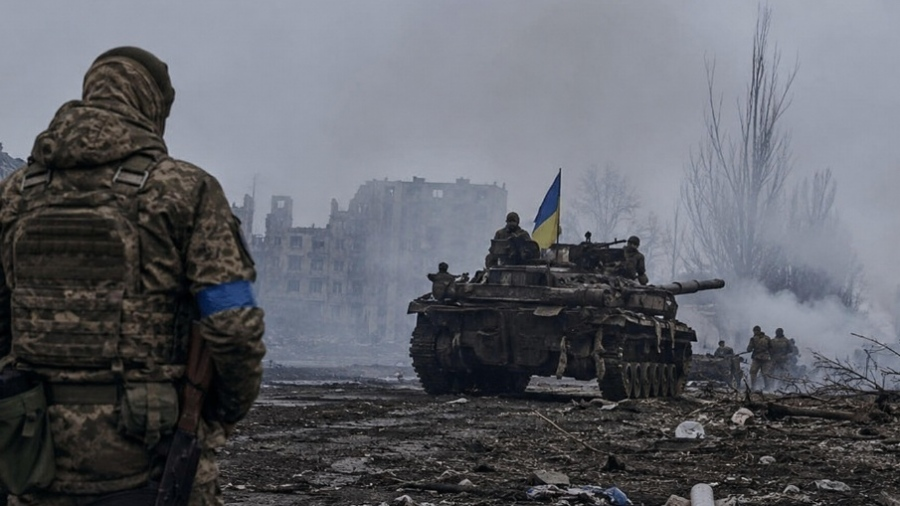
The war in Ukraine is entering a new, particularly demanding phase, where rapid advances and large-scale operations are giving way to a protracted war of attrition.
This assessment was made by the Ukrainian president’s adviser on technological defense issues, Sergey Beskrestnov (known by the call sign “Flush”), arguing that significant changes on the front line are now limited and that the conflict is evolving into a fight of attrition for both sides.
His statements provoked an immediate reaction in Russia.
Russian criticism of Kiev’s statements
According to Khodarenok (military analyst and columnist), the picture presented by Beskrestnov does not fully reflect the reality of the field of operations.
The Russian analyst estimates that the Russian forces continue to maintain the initiative of the movements, albeit at a slower pace, occupying – as he claims – settlements and gradually advancing their positions in various sectors of the front.
According to him, the slower speed of advance does not mean stagnation, but reflects the nature of a high-intensity war, where every kilometer of territory is conquered at great human and material cost.
What does “war of attrition” mean?
The term “war of attrition” is used to describe a conflict in which neither side achieves a quick and decisive victory. Instead, the goal becomes the gradual exhaustion of the opponent’s military, economic, industrial and human capabilities.
In the case of Ukraine, this assessment is based on the fact that the front line is now slowly changing, while both sides place particular emphasis on drone attacks, long-range missiles, and attacks on military and energy infrastructure.
Economy and infrastructure in focus
Both Russia and Ukraine are now attempting to hit the opponent’s critical infrastructure, believing that economic exhaustion will play a decisive role in the final outcome of the war.
Khodarenok, however, estimates that in this long-term confrontation, Russia has significantly greater military and industrial reserves, which – in his opinion – gives it a strategic advantage in a prolonged war.
The example given by the Russian analyst, which concerns the exchange of bodies of dead soldiers, is typical. This year alone, Moscow has given the Ukrainian side more than 20,000 bodies of soldiers, receiving in exchange 627 remains of Russian fighters.
The issue of Western aid
Special mention is also made of Western military aid to Ukraine.
According to the Russian analyst, Kiev continues to rely on the economic and military support of its Western allies, but he estimates that the deliveries of weapons systems and ammunition are not taking place at the speed or to the extent desired by the Ukrainian leadership.
At the same time, he argues that the most important problem for Ukraine is not only equipment but also human resources, as losses and the difficulty of replacing them constitute – in his opinion – one of the most important limiting factors for the Ukrainian armed forces.
Demographic and Economic Consequences
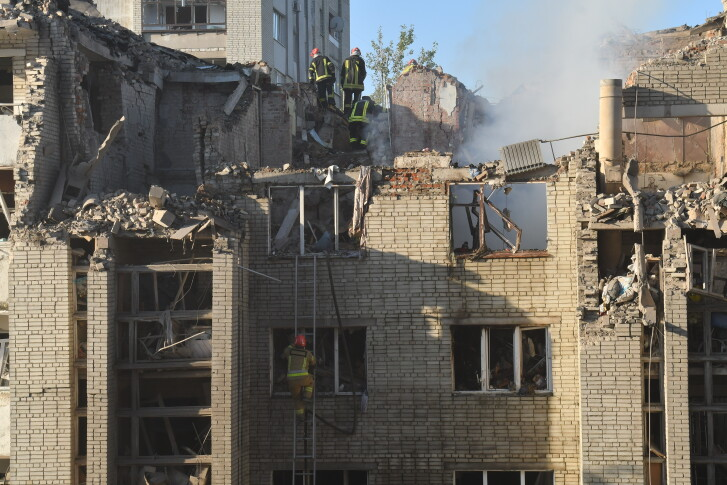
Regardless of the outcome of the war, both Ukraine and Russia will face serious consequences for their economies, infrastructure, and demography.
It is estimated that a prolonged conflict could bring disproportionately greater costs to Ukraine, due to its smaller population, greater dependence on foreign aid, and extensive damage to its infrastructure.
If the same dynamics continue, the country could face existential challenges as a state. Sooner or later, the war will end. And that is precisely the most important thing.
As a result of a war to the point of exhaustion, Ukraine could suffer irreparable demographic and economic losses and simply disappear from the map of the world as a state.