



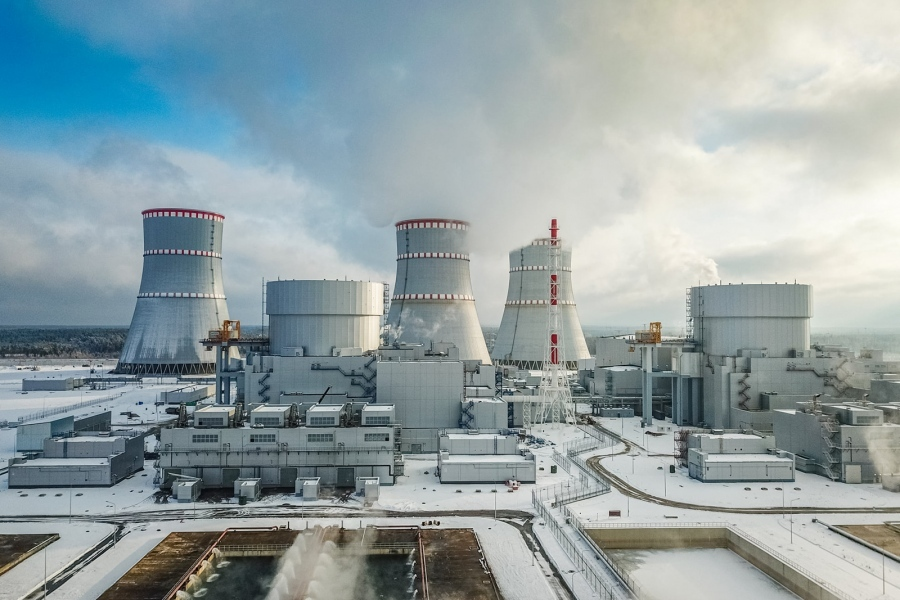
Despite the European Union’s tough stance on Russia, Germany has approved the production of nuclear fuel using Russian technology at the French Framatome plant in Lingen, highlighting Europe’s difficulties in weaning itself from the Russian nuclear industry.
The authorities of the state of Lower Saxony have given the “green light” for the production of fuel for VVER-type reactors, in cooperation with the Russian state nuclear energy company Rosatom.
New production line using Russian technology
The plant belongs to Advanced Nuclear Fuels (ANF), a subsidiary of the French Framatome. To start the new production activity, part of the facilities will be modernized, while new equipment for the assembly and quality control of nuclear fuel will be installed.
The equipment based on a Russian license has already been transported to Germany and placed in a separate building next to the main facilities, while ANF personnel have completed the necessary training to operate it.
Europe continues to buy Russian enriched uranium
Russia continues to hold a strong position in the European nuclear fuel market, not only as a supplier of fuel for VVER reactors but also through uranium enrichment services.
In the first four months of the year, imports of enriched uranium from Russia to the European Union were, according to Izvestia, eight times higher than in the same period last year.
France remained the largest buyer, with imports worth 141.2 million euros, followed by Germany with 13.8 million euros and the Netherlands with around 8.6 million euros.
Europe cannot immediately abandon Russian technology
Cooperation in the nuclear sector cannot be limited by national decisions, but only by sanctions at the European Union level.
There is currently no unanimity between member states to impose sanctions in the nuclear sector.
Europe cannot abandon Russian nuclear technologies overnight, as the safe operation of existing nuclear power plants is at stake.
Strategic benefit for Russia
The project is of particular technological and strategic importance for Russia. It confirms that Russian know-how is still in demand by European companies and helps to maintain Russia’s presence in the European nuclear energy market.

