
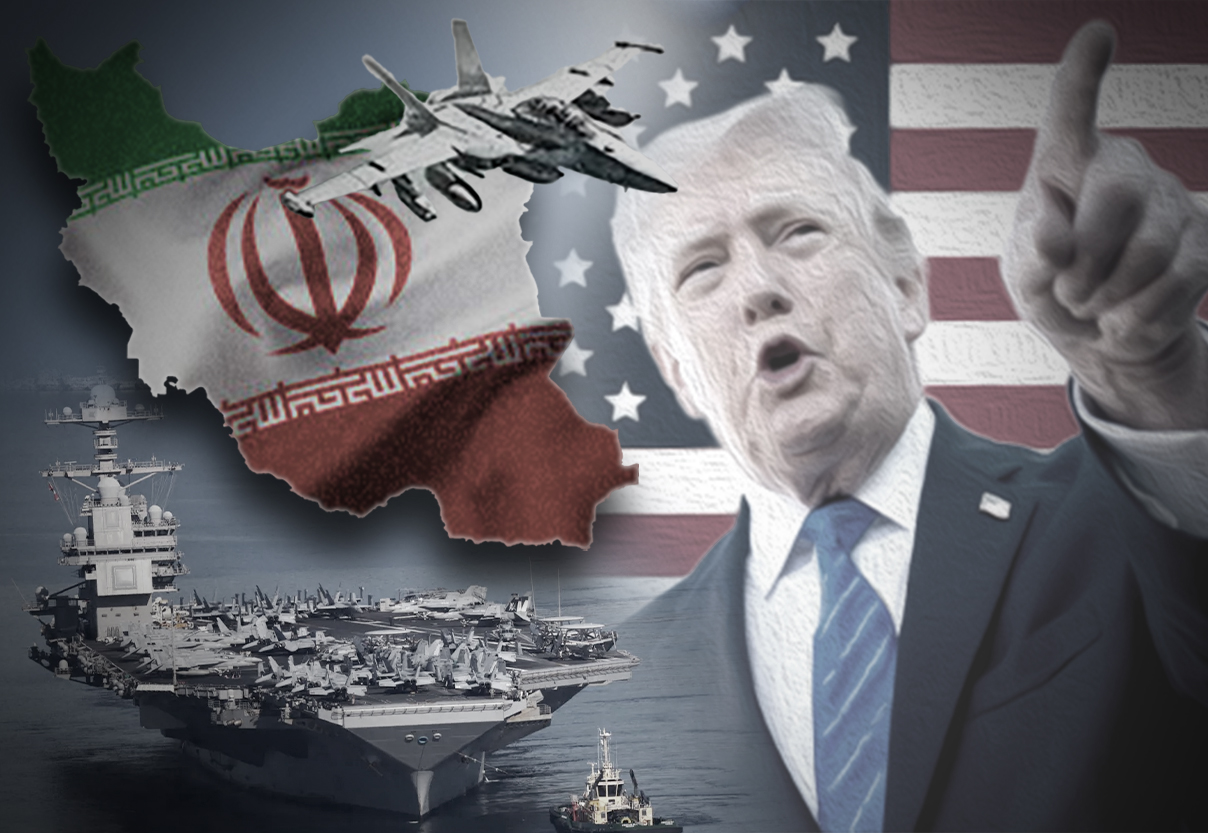
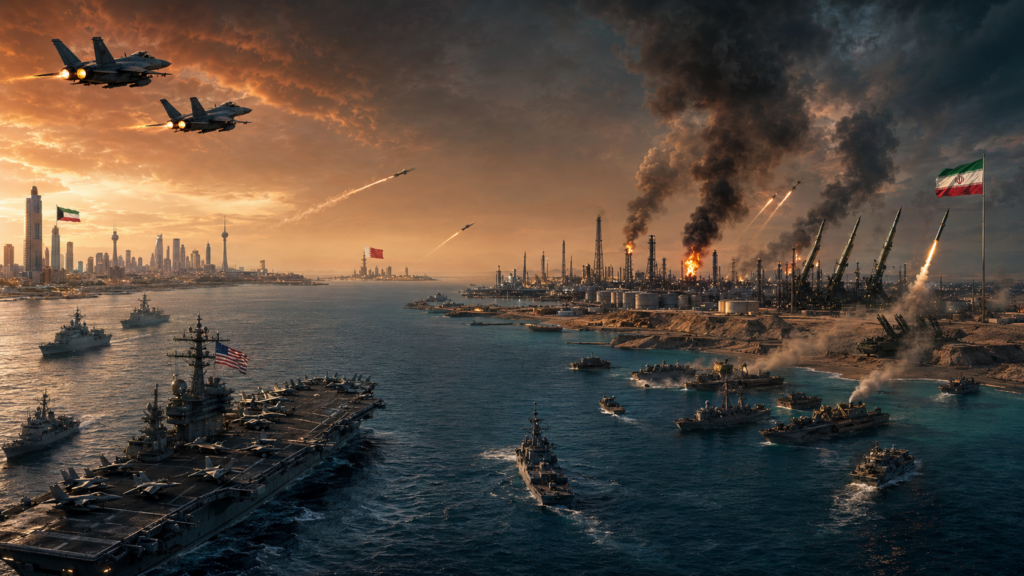
CENTCOM’s extensive strikes with new-generation smart weapons in Iran’s southern provinces, the blockade of ports, and the complete destruction of critical naval infrastructure, such as the control tower in Chabahar, demonstrate that Washington has entered a new, devastating phase of operations.
What is the American strategy hiding?
The Trump administration is not seeking a fleeting, tactical victory of impressions on the field. On the contrary, the US goal is the permanent reversal of the power equation in the region and the lifelong geopolitical and economic fixation of Iran.
The traditional doctrine of Iranian asymmetric resistance is reaching its limits, and Tehran is now forced to choose between radical diplomatic flexibility or a well-calculated “strategic shock” that will target the heart of American C4ISR systems.
Iran’s Tactical Approaches After the Memorandum of Understanding
The Memorandum of Understanding (MoU) can be considered a turning point in diplomatic contacts between Iran and the United States. Based on the diplomatic initiative of Asim Munir and other political figures in the region, the political leaders of the two countries tried to lay the foundations for a “regional peace” and for the “transition from military conflict”.
Although the memorandum was strongly criticized by “rival groups” both within Iran and the United States, the results of this bilateral agreement served as a springboard for a peaceful de-escalation of high-stakes regional tensions.
Under these circumstances, the crucial question for strategic analysts is: what model of tactical action should Iran’s military and diplomatic echelons adopt the day after the agreement with the US?
Iran’s Resistance Led to the Memorandum
Iran’s effective and extensive resistance to the invasion and general war by the US and Israel was what shaped the ground for the drafting of the memorandum.
This agreement is considered an example of Iran’s success in the “Ramadan War”. As the US and Israel failed to fulfill their objectives in that conflict (known as “Operation Epic Fury”), it was expected that they would seek mechanisms that would pave the way for the resumption of the war in a new tactical environment.
The strategic needs of the Islamic Republic imposed the memorandum as a “guide to lasting peace” and for a constructive stance in the region. However, some Iranian assumptions have led to the underestimation of the consequences of a generalized conflict with the US:
- The argument of deterrence
Many military commanders in Iran rely on “tactical capabilities” and “will to retaliate” against the US. - The reality of CENTCOM
Although Iran excels in these two areas, the military power of CENTCOM, due to its technological capabilities and the new generation of smart weapons, tends in the long term to nullify any balance of power. - Geopolitical constraints
Iran has the geopolitical capacity to connect the Persian Gulf with the Sea of Oman and the Indian Ocean. However, the possibility of exploiting this advantage during the “second wave” of the US attack has been significantly limited by the aggressive actions of the US, limiting Iranian countermeasures.
The Sea of Oman offers Iran a direct connection to the trade routes of East Asia (China, India, South Korea, Japan).
In peacetime, this would bring enormous economic benefits. In wartime, understanding the consequences of each operation is a primary need for planning tactical movements.
Tactical Consequences of the Second Phase of the US War
The United States, as a global superpower with a vast arsenal, seeks a definitive and complete victory over Iran. Although JD Vance and Donald Trump accepted the memorandum as a tactical way out of the war, their long-term goal remains the same.
CENTCOM’s model of action is based on “offensive defensive action”, which is designed to hit Iran’s economic and strategic infrastructure.
Applying this strategy against a country that lacks adequate air defense and modern defense means produces the desired results for the US.
Step 1 – The “smart” naval blockade
The first phase concerns a “smart naval blockade”. The US Navy strictly controls ships heading to Iranian ports, increasing economic pressure on Iran, without directly harming the interests of third countries that use the Persian Gulf.
Step 2 – Dismantling infrastructure with suicide drone strikes
The US attempted to change the control regime in the Strait of Hormuz, eliminating Iran’s chain of tactical capabilities in the south. Not only were vessels targeted, but also coastal installations, causing serious losses in manpower and inanimate resources.
Step 3 – Destroy Infrastructure and Logistics with Precision Strikes
CENTCOM used suicide drones against ship repair facilities in Bandar Abbas, while destroying air defense systems, coastal radars, cruise missile batteries, and command and logistics centers.
For these operations, CENTCOM deployed 2 aircraft carriers, 20 warships, 10,000 regular personnel, and more than 100 fighter jets and drones.
Under these circumstances, Iran’s ability to influence the regional environment has been severely damaged. Iran should have used diplomatic mechanisms more effectively to prevent this new phase of deterioration of its strategic resources.
Iran’s unstable deterrence in the post-memorandum era
Iran, due to its geopolitical position, retains the ability to resist. During the US-Israeli pressure, the conditions were created for the activation of a “maritime security architecture”.
Despite the heavy blows from CENTCOM, the Islamic Republic’s defense structure maintains a level of decentralized command, capable of striking American installations in the region.
However, Trump’s military diplomacy policy has significantly limited Iran’s ability to export oil to China and India.
Although the possibilities for broad action are now limited, Iran’s geopolitical position remains crucial for connecting the countries of Central Asia and the Caucasus (Afghanistan, Uzbekistan, Azerbaijan) to international mineral wealth markets.
The Strategic Nature of Resistance
Resistance is an effective tactic for achieving intermediate phase objectives, but it cannot by itself fulfill a country’s entire strategic aspirations.
To overcome its current security challenges, Iran must demonstrate diplomatic flexibility and change the context of its actions.
Maintaining the structure of the political system, national cohesion, and territorial integrity are the basic prerequisites; if these are ignored in the name of blind tactical resistance, the country’s future becomes extremely risky.
The Need for a Strategic Paradigm Shift
The objective conditions show that the United States is not simply seeking a fleeting victory on the battlefield. Its goal is to permanently change the balance of power in the region, turning Iran into a state incapable of reacting immediately and in a balanced manner.
The US is systematically reducing Iran’s defenses to eliminate the possibility of effective counter-operations.
To escape this war of attrition, Iran needs a “tactical paradigm shift.” This can only be achieved by developing the ability to strike the enemy’s regional command, control, communications, computers, intelligence, surveillance, and reconnaissance (C4ISR) centers.
Only such a “strategic shock” to US assets and facilities could turn the tables and create a new balance of power in the region.
For now, the US is learning a hard lesson: war is not a video game
Iran’s missiles made Trump realize that war is not a video game. If Trump has imagined that he can carry out attacks against Iran and his soldiers remain protected from retaliation, one should doubt his logic even more.