



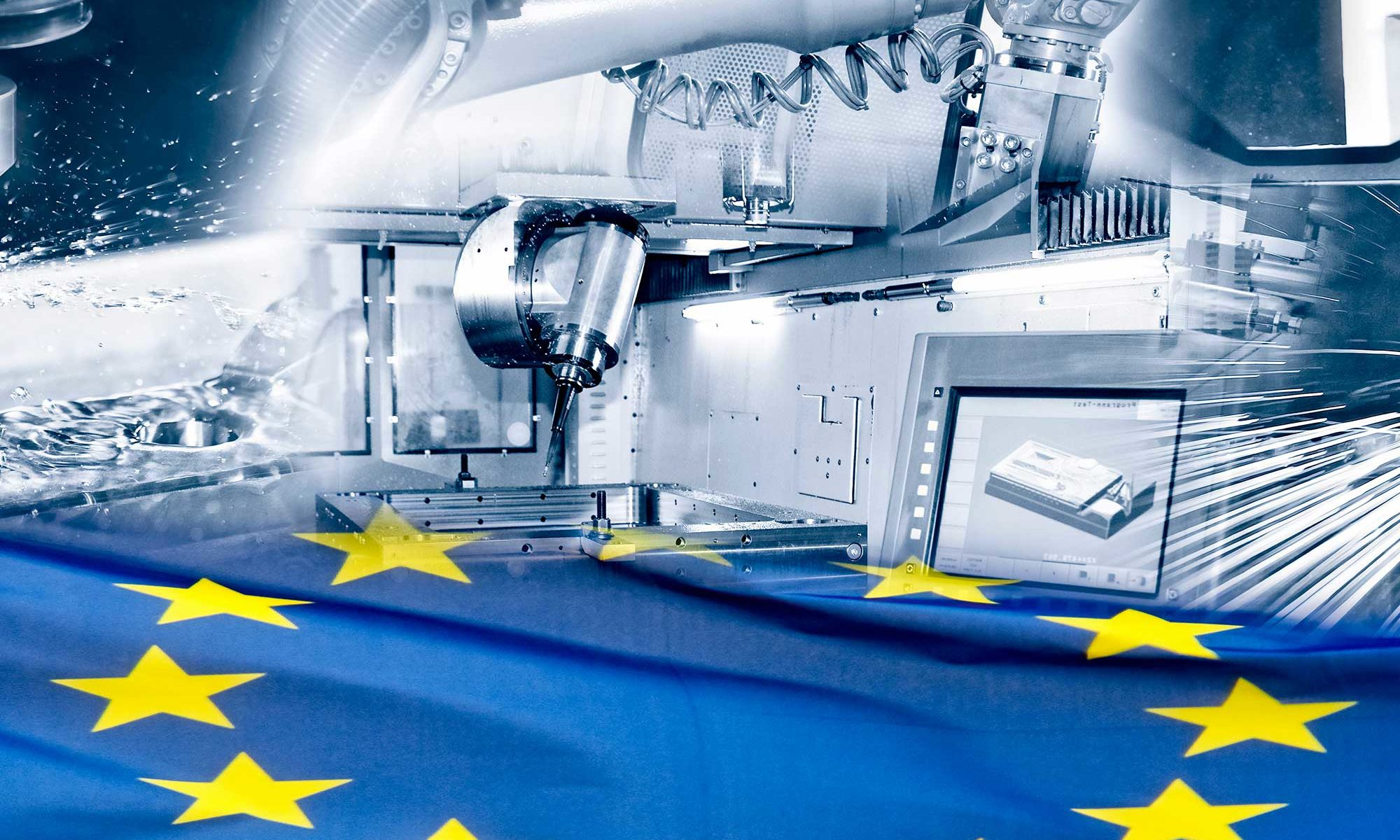
The agenda to boost productive investment is dynamically returning to the European spotlight, as the industrial sector is repositioned at the core of economic resilience, green transition and strategic autonomy.
In this environment, experience shows that broad policy guidelines alone are not sufficient. Targeted tools are needed that reduce investment costs and accelerate the renewal of productive equipment.
At the heart of the relevant debate is the role of accelerated depreciation.
n today’s era, if in a member country’s economy the depreciation of machinery and mechanical equipment is carried out at fixed annual rates, this policy in itself becomes a problem. In practice, such a policy means that an industrial investment can take up to ten years to be fully depreciated, while in many cases the equipment is already technologically obsolete before its tax depreciation is completed.
This framework acts as a brake on businesses with high capital needs, especially in conditions of increased borrowing costs, energy pressure and intensified international competition.
Accelerated depreciation as a liquidity tool
Accelerated depreciation allows for faster recovery of the cost of investments in fixed assets. In this way, the liquidity of businesses is enhanced in the first and most critical stages of the investment cycle.
In practice, the measure is not treated only as a tax facility, but as an industrial policy tool that directly affects the pace of modernization of the productive base.
International experience and investment incentives
International organizations, such as the International Monetary Fund (IMF), the OECD and the Tax Foundation, have pointed out that accelerated depreciation is associated with increased private investment.
In European practice, more than 20 member states have already incorporated similar tools into their investment support policies. These include France, Germany and Norway, which use flexible depreciation schemes to enhance the competitiveness of their industrial base.
In the United States, the Tax Cuts and Jobs Act introduced more favorable depreciation rates, enabling businesses to accelerate the recognition of investment costs and enhance their short-term investment momentum.
Fiscal dimension and investment cycle
On the other hand, accelerated depreciation does not entail a permanent loss of tax revenue for the State treasury. On the contrary, it is a temporal shift of the tax burden.
In this light, the measure functions as a kind of interest-free “fiscal loan” to businesses. The tax burden is transferred to later years, when the investment has matured and generates higher revenues.
Impact on growth and employment
The temporary shortfall in public revenues is offset, according to the findings, by the multiplier effects on the economy. The increase in investments leads to a strengthening of employment and a broadening of the tax base.
It is estimated that the implementation of a more flexible depreciation framework can boost GDP by approximately 0.5% of GDP, yield over 0.1% of GDP in additional public revenues and create positive dynamics in the labor market.
Market positions
Accelerated depreciation is one such tool that enhances productive investments in a country’s economy.
Essentially, it is a practical way to support the liquidity of businesses, accelerate the modernization of production equipment and strengthen the competitiveness of an economy.
The debate on accelerated depreciation highlights a crucial point in industrial policy: the transition from general incentives to targeted tools that directly affect the pace of investment. In an environment of increased pressure on European industry, the speed of capital depreciation is becoming a factor of competitiveness.

